My Daughter Thanked My Mother For Basically Raising Her—Then Grandma Refused To Take The Credit

PART 10
Leah did not call me that night.
Or the next morning.
By Friday, I had to physically move my phone into the bakery office so I would stop checking it every time I heard a vibration that belonged to somebody else.
Kayla watched me do it.
“Waiting for something?”
“No.”
“You put your phone in a drawer.”
“I am protecting it from flour.”
“You have worked here twenty-four years and never protected a phone from flour.”
“Please return to your ganache.”
She did, with the expression of a person storing information for later entertainment.
Leah called Sunday afternoon.
“I accepted it.”
I was in the laundry room matching socks.
“Okay.”
“Do not do that.”
“What?”
“The bomb voice.”
I smiled.
“Congratulations.”
“Thank you.”
“How do you feel?”
“Like I signed something before I was fully done panicking.”
“That also sounds normal.”
“They agreed I can block the first Tuesday night of each month because Matt has an out-of-town rotation that week. The other late meeting is mine to solve.”
“Sounds like you asked useful questions.”
“I did.”
She paused.
“Matt told me something annoying.”
“I like him already.”
“He said I keep talking like good parenting means nobody ever has to adjust to my job.”
I sat on top of the dryer.
“That does sound annoying.”
“He said he has adjusted to my job for eight years and I have adjusted to his, and we’re allowed to keep doing that.”
“Very suspiciously reasonable.”
“I told him not to enjoy himself.”
We laughed.
Then Leah said, “Ava and I talked about the assembly.”
I waited.
“I told her I was sorry I missed her part.”
“And?”
“She said okay. Then she showed me the poster she made.”
“That’s it?”
“Apparently children do not hold formal sentencing hearings.”
“News to our family.”
A small silence settled.
“I’m still mad about things from when I was little,” Leah said.
“I know.”
“I don’t want you to think taking this job means I suddenly agree you were right about everything.”
“I was hoping for a notarized statement.”
“Mom.”
“I don’t think that.”
“Good.”
“I also don’t want you calling Grandma every time we disagree.”
“I did that once.”
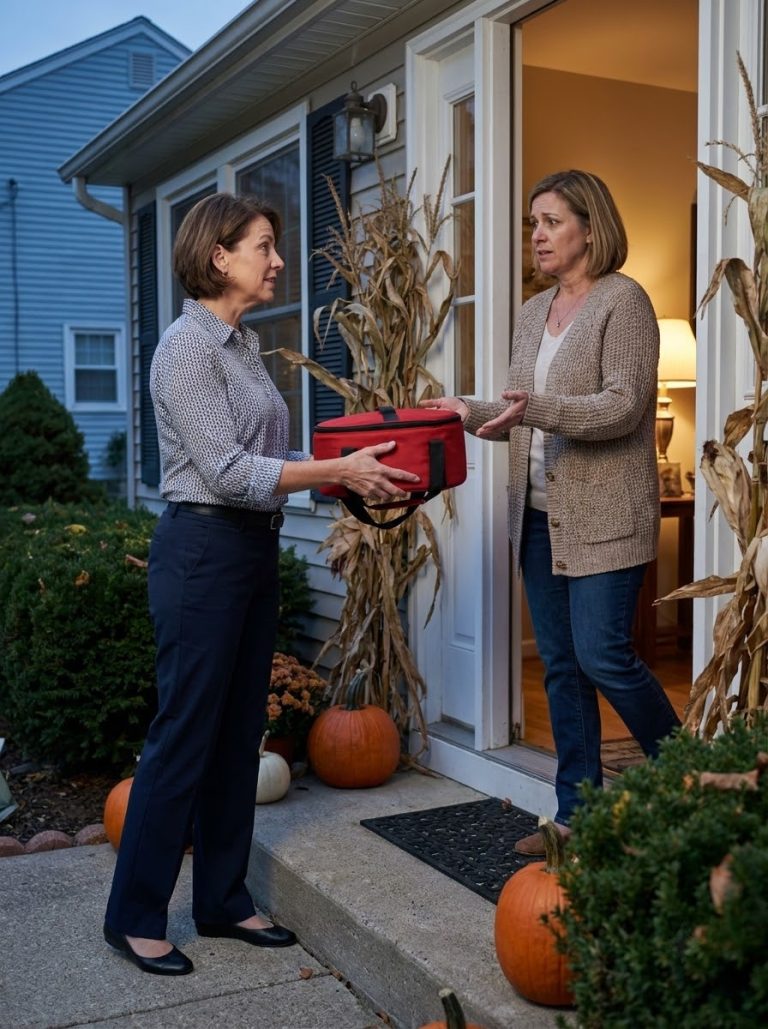
“You followed her home from my birthday.”
“Twice if you count parking lots.”
She laughed.
“I’m serious.”
“I know. Your grandma is out of the witness business.”
The first month of Leah’s new job was messy.
One late meeting ran to seven forty-five. Ava ate dinner with Matt and told Leah the pasta was better than hers, which Leah chose to view as a separate betrayal.
Another week, Leah left work early for a school conference and finished a presentation after Ava went to bed.
She did not become a saint of balance.
She became a supervisor with a family.
I liked watching that more than I expected.
Not because it proved anything about my choices.
Because it was hers.
Our own conversations remained uneven.
One Saturday, we were driving to Ruth’s when Leah said, “I still think Grandma was my steady person when I was little.”
My hands tightened on the steering wheel.
Then I loosened them.
“She probably was.”
Leah looked at me.
“That doesn’t hurt?”
“Yes.”
“Oh.”
“Did you want me to lie?”
“No.”
“It hurts less when steady doesn’t mean only parent who mattered.”
She turned toward the window.
“I never meant that.”
“I know. You got close.”
“I know.”
We were getting very good at that phrase.
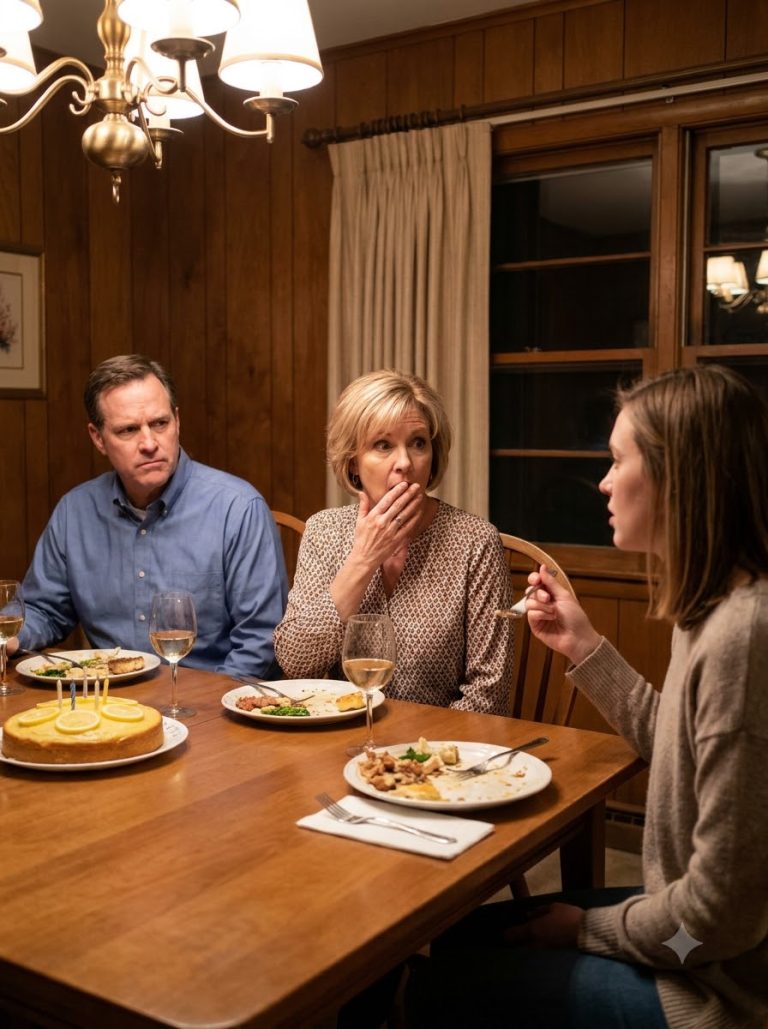
At Ruth’s, my mother had put the birthday cake knife on the table beside a small chocolate cake she had bought for no occasion.
“Why are we having cake?” Leah asked.
“I am seventy-seven and have access to money.”
Ava applauded.
Ruth cut five uneven pieces.
Nobody made a speech.
After dessert, Leah helped her grandmother carry dishes to the kitchen.
I watched them from the table.
For years, I had seen their closeness and translated it into a measurement of what I lacked.
Leah had seen the same closeness and translated it into proof of who had been there.
Ruth, as far as I could tell, had mostly seen a child she loved and a daughter who needed help.
She had been the least complicated person in the triangle and had suffered for it.
Before I left, I apologized again.
“For what now?” she asked.
“Making you defend me.”
Ruth wiped her hands on a dish towel.
“I defended you when you needed defending.”
“I didn’t always.”
“No.”
“Could you stop agreeing so efficiently?”
“I’m seventy-seven. I have limited time.”
I hugged her.
On the drive home, Leah texted me even though she had left five minutes earlier.
Dinner next Thursday? Just us?
I wrote: Yes. But no childhood depositions.
She replied: Fine. Current complaints only.
That felt like a relationship I could live inside.