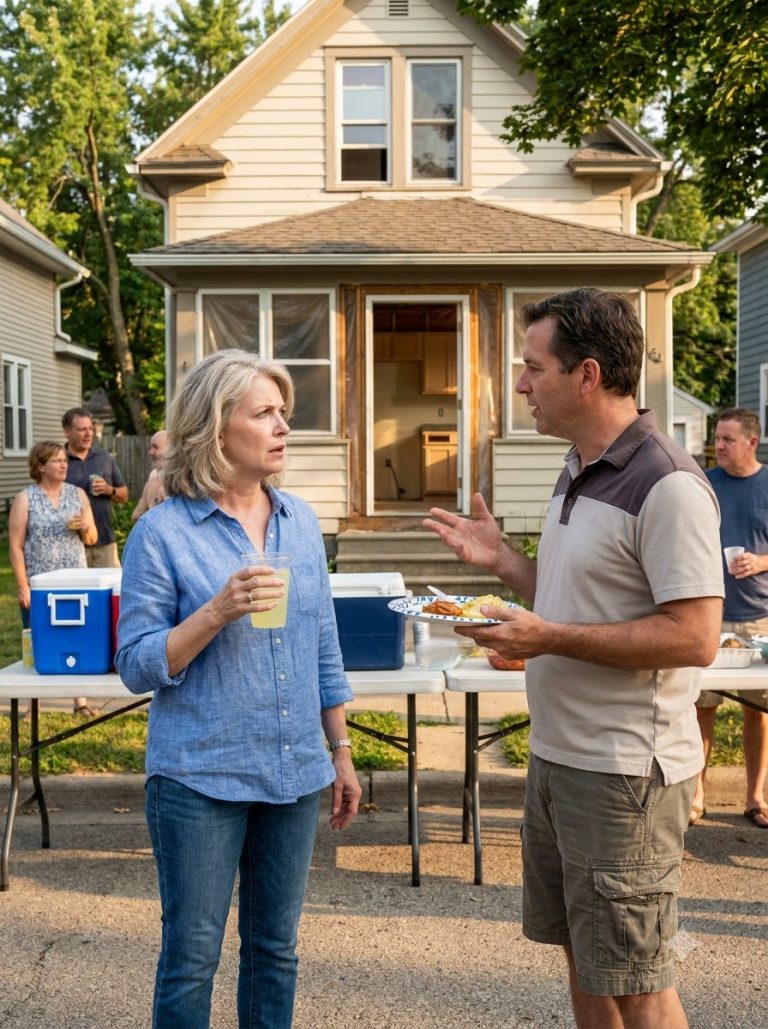
My Daughter Thanked My Mother For Basically Raising Her—Then Grandma Refused To Take The Credit

PART 5
For the next week, Leah and I behaved like people who had completed a difficult conversation and expected credit for it.
We sent normal texts.
She sent me a picture of Ava asleep with a library book open on her chest.
I sent her a picture of a wedding cake a customer had requested in “dusty rose” that looked, in my opinion, like ham.
Neither of us mentioned childhood.
It was peaceful in the way a room is peaceful after someone hides the smoke alarm.
Saturday morning, Leah called while I was wiping flour off the bakery office phone.
“Ava wants to know if you can come to her school reading picnic Tuesday.”
“What time?”
“One fifteen.”
“I can probably take my lunch late.”
“Only if it works.”
The carefulness in her voice annoyed me.
“You can ask me a normal question.”
“I am trying.”
“Then ask.”
“Can you come to Ava’s reading picnic Tuesday at one fifteen?”
“Yes.”
“Thank you.”
“And if I couldn’t?”
There was silence.
“Sandy,” Kayla called from the decorating table. “The bride’s mother is here early.”
I covered the receiver.
“Tell her the laws of time still apply.”
Leah heard me.
She laughed.
“If you couldn’t, I would tell Ava you had work.”
“And?”
“And she would be disappointed.”
There it was again. A word I had spent half my life trying to prevent.
Disappointed.
I had treated my child’s disappointment like a verdict instead of a feeling.
“Okay,” I said.
“Okay what?”
“Nothing. I’ll be there Tuesday.”
I was.
The picnic was held in the school library because it rained. Forty adults sat in miniature chairs while second-graders read from books about sharks, astronauts, and one surprisingly judgmental raccoon.
Ava read me four pages of a chapter book and corrected my pronunciation of a dragon’s name.
Leah came in twelve minutes late wearing her office badge and carrying her laptop bag.
Ava waved so hard her whole arm moved.
Leah dropped into the chair beside us.
“I’m sorry,” she whispered.
“You’re here.”
“I had a client call.”
“You’re here.”
She looked at me sharply.
“What?” I asked.
“Nothing.”
She read with Ava for twenty minutes before her phone buzzed. Leah glanced down, turned it face down on the table, and kept reading.
I noticed because I had spent the previous week noticing everything about her motherhood against my own.
That was not healthier than her doing it to me.
Afterward we walked across the wet parking lot.
Leah said, “I hate being late to things.”
“Most people do.”
“I mean for her.”
“I know.”
“My department might open a supervisor position.”
“Do you want it?”
She frowned.
“That was fast.”
“It was a question.”
“I don’t know. It would be more money and better long-term options. More meetings too.”
I unlocked my car.
She looked at me as if waiting for the obvious warning.
I did not give it.
“You’re not going to say anything?”
“You said you don’t know.”
“Usually you have opinions before I finish the sentence.”
“I am diversifying.”
She smiled, but it faded quickly.
“I just don’t want Ava remembering me as somebody who was always somewhere else.”
There was my invitation.
I could have said she would not.
I could have said children remember what they remember and adults survive it.
I could have told her I had worked because I had to, while she had choices I had not had.
Instead I said, “It sounds like you’re scared of the job before it exists.”
Leah looked toward the school entrance.
“Maybe.”
“I was scared of work too.”
She turned back to me.
“You never acted like it.”
“I acted irritated. That was cheaper.”
She laughed.
Then she said, “Grandma told me once you used to sit in your car before the closing shift and cry.”
I stared at her.
“She told you that?”
“Years ago.”
“That woman has very selective privacy standards.”
“She wasn’t criticizing you.”
“I know.”
Leah watched my face.
“I didn’t know you hated it sometimes.”
“I didn’t hate the job. I hated what it cost on certain days.”
“Then why did you always defend it?”
Because nobody else was going to defend the thing that paid for our life.
Because I had needed the job to be honorable if it was going to take that much from me.
Because if I admitted it hurt, I was afraid somebody would decide the whole arrangement proved I had failed.
I said the shortest true version.
“Because I thought if I admitted there was a cost, you would think I had chosen the wrong thing.”
Leah’s expression softened.
“I was a kid.”
“I know.”
This time we both heard the phrase and smiled.
Tuesday night, I called Ruth.
“Did you tell Leah I cried before closing shifts?”
“Probably.”
“Mother.”
“You cried in my driveway. It was not classified information.”
“I am beginning to understand where Leah gets her speech habits.”
Ruth laughed so hard she coughed.
Then she said, “You sound better.”
“I am less convinced somebody has to lose the childhood argument.”
“That is better.”
“Do not get excited.”
“I would never.”
I could hear her smiling.
For once, I let that be enough.