A Neighbor Thanked Me for Finally Approving Her Meal Train—But I Had Never Denied Her Help

PART 1
Andrea Mills knew something was wrong when Marcy Nolan hugged the casserole dish before she hugged Andrea.
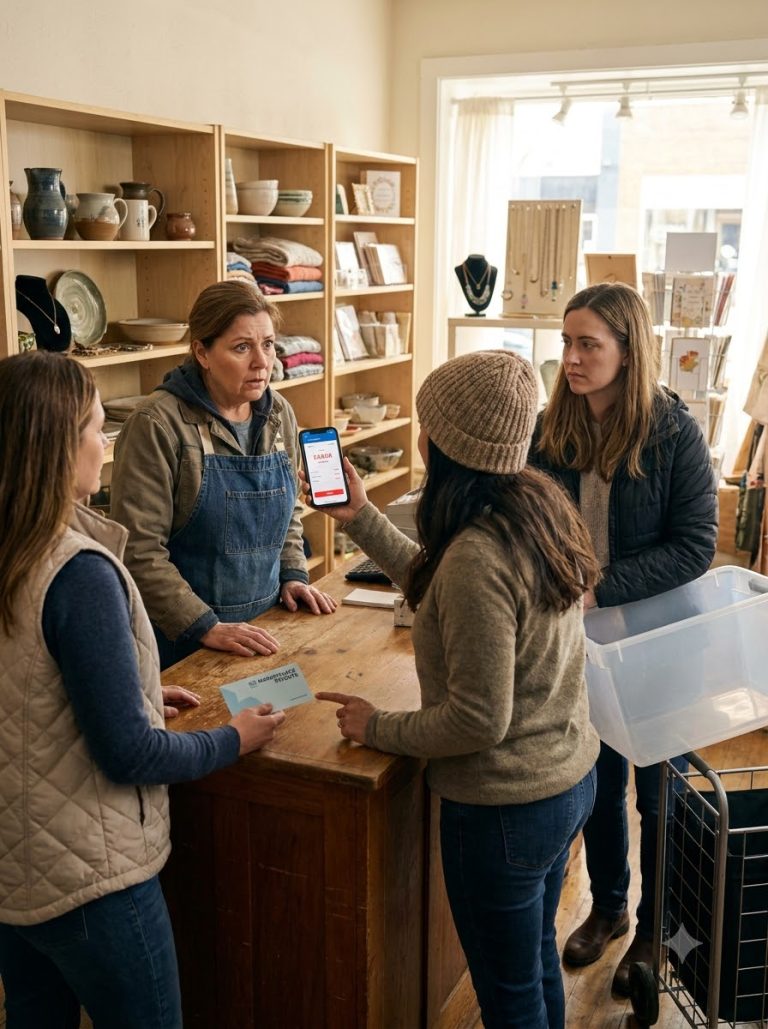
“Thank you,” Marcy said. “And thank you for changing your mind.”
Andrea still had one hand under the insulated red carrier. “About baked ziti?”
Marcy gave a tired laugh. She was moving carefully after a minor outpatient procedure and had spent the week accepting help with the embarrassed politeness of somebody who hated needing anything. “About putting me on the meal train.”
Andrea stopped on the front step.
It was a cool Tuesday evening, the kind of October night when everyone on Birchwood Circle seemed to be walking a dog or dragging a recycling bin to the curb. Andrea had come straight from work, still wearing navy slacks and the black flats she regretted by four every afternoon. She had signed up for Marcy’s Tuesday dinner slot on Sunday.
“I didn’t change my mind,” Andrea said. “I saw your request Sunday and took a meal.”
Marcy’s expression shifted. “Brooke said you approved it this time.”
Andrea set the carrier on the small table just inside the door.
“Approved what?”
“The request.”
“There’s no approval.”
Marcy stared at her.
Andrea had built the scheduling sheet for Neighbor Table two years earlier when a winter storm had turned a loose neighborhood text chain into something more organized. The idea was simple: if someone needed meals for a week, rides to an appointment, a grocery pickup, or help moving a few boxes, they filled out a short form. Volunteers chose open tasks. Andrea had built the spreadsheet because the original version had twelve tabs, three colors nobody could explain, and a habit of double-booking Thursdays.
She did not decide who deserved help.
No one was supposed to.
Marcy lowered her voice, although the only other person in the room was her sleeping terrier. “I asked three weeks ago, right after I got the procedure date. Brooke said there weren’t enough volunteers that week.”
“That could have been true.”
“Then I asked again for the following week. She said you were trying to keep things fair.”
Andrea felt a small, precise click in her mind. Not panic. Not anger yet. The same click she felt at work when a project schedule contained a date that could not possibly follow the date above it.
“What exactly did she say?”
Marcy hesitated. “I don’t want to start something.”
“You’re not.”
“She said you were reviewing requests because the same people were always receiving help and the same people were always giving it.”
Andrea looked toward the casserole carrier.
Marcy saw her face. “You didn’t say that.”
“No.”
“I thought maybe the group changed the rules.”
“No.”
“Oh.”
That single syllable held more embarrassment than accusation, and Andrea hated that part most.
She took out her phone. The public Neighbor Table sheet showed Marcy’s current request, seven dinner slots, one grocery run, and one ride. Four tasks were already claimed.
Nothing about an approval.
Nothing about prior volunteering.
Nothing about Andrea.
“I’m going to look at the intake log,” she said.
Marcy folded her arms. “Please don’t make me prove I deserve lasagna.”
Andrea met her eyes. “I won’t.”
She drove home with the empty passenger seat smelling faintly of tomato sauce and oregano from the casserole carrier. At fifty, divorced for six years and living alone by preference rather than emergency, Andrea had learned that a quiet house could be either relief or accusation depending on what she brought into it. Tonight it felt like a workroom.
She left her shoes by the back door, reheated soup, and opened her laptop at the kitchen counter.
Neighbor Table lived in a folder under an account Andrea had set up for the group. There was the public schedule, the intake response sheet, the volunteer list, and the archive by month.
She opened the intake log.
Marcy’s current request appeared Sunday at 8:14 p.m.
Andrea scrolled backward.
No earlier Marcy request.
That was strange.
The form responses were supposed to remain even if a request could not be filled.
She checked the trash. Nothing.
Then she noticed a second file near the bottom of the folder.
NT_Intake_Backup_Current.
Andrea frowned. She had never named files with “Current.” Current was a promise nobody could keep.
She opened it.
At first it looked like her original intake sheet. Name. Address. Request type. Dates. Dietary notes. Contact preference. Volunteer capacity.
Then she scrolled right.
There were four columns she had never created.
Prior Help Received.
Prior Volunteer Activity.
Reciprocity.
Andrea Review.
Under Reciprocity, households were marked Green, Yellow, or Red.
Marcy Nolan was Yellow.
Under Andrea Review, the cell beside Marcy’s first request said DEFER.
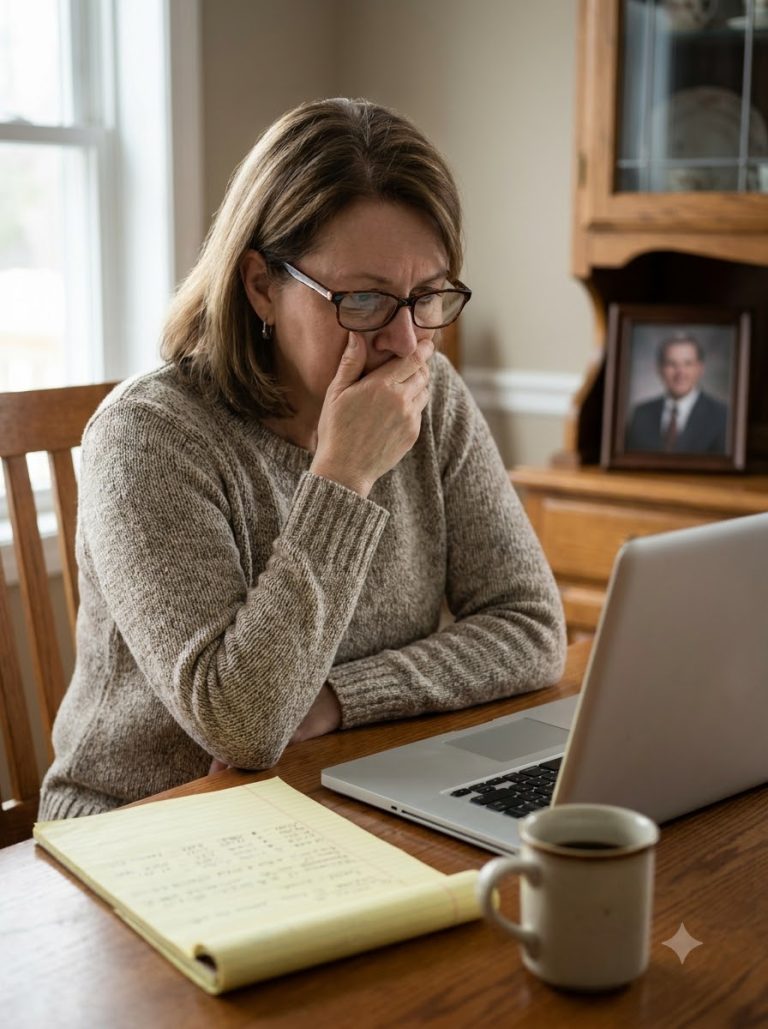
Andrea sat perfectly still, one hand resting on the trackpad.
The second request said DEFER — LOW RECIPROCITY / LIMITED CAPACITY.
The current request said APPROVE.
She clicked the small history icon.
The file had been created seven months earlier by Brooke Ellis.
Andrea’s closest friend in the neighborhood.
Her co-organizer.
And beside Andrea’s name, in rows she had never seen, people were being told yes or no.