At Dinner, His Daughter Thanked Me for Refusing Marriage—But He Had Never Asked Me

Laura Bennett had just taken a second bite of roast chicken when Megan lifted her wineglass and said, “I really do appreciate how honest you’ve been about not wanting to do the marriage thing again.”
Laura stopped chewing.
Across the table, Paul’s fork touched his plate with a small, bright click.
Megan smiled as if she had offered something kind. At thirty-one, she had her father’s dark eyebrows and the same habit of talking faster when she was trying to smooth a social edge. Her husband, Chris, looked from Megan to Paul and then quietly reached for the water pitcher.
Laura swallowed.
“I’m sorry,” she said. “What marriage thing?”
Megan’s smile changed.
Paul said, “Laurie.”
She turned to him. “No. Let her answer.”
They were in Megan and Chris’s dining room in Worthington, celebrating Megan’s promotion at the architecture firm where she had worked since college. There were flowers on the sideboard, two bottles of red wine on the table, and a lemon cake waiting in the kitchen. It was not a room built for a confrontation, which meant everyone except Laura suddenly looked as if they were trying to keep one from happening.
Megan set down her glass.
“I just meant I know you’ve been clear with Dad about wanting to keep your own place and not remarry. I think that takes pressure off everybody.”
Laura looked at Paul.
He gave her the expression he used when traffic changed, dinner reservations fell through, or a hotel room was smaller than expected: calm, mildly apologetic, as if the inconvenience had arrived from outside the relationship.
“That’s not exactly what I said,” he told Megan.
“It’s what you said she said.”
Chris picked up the water pitcher and began filling glasses nobody had asked him to fill.
Laura put her napkin beside her plate.
“What exactly did your dad tell you?”
Paul’s hand moved toward hers under the table. She shifted her hand into her lap.
Megan looked miserable now.
“Maybe this is something you two should talk about later.”
“No,” Laura said. “I’m asking what you were told about me.”
She heard the edge in her own voice and did not soften it.
Four years earlier, when she and Paul first started dating, she had done a great deal of softening. She had been forty-nine and eighteen months out of a divorce that had ended without betrayal, catastrophe, or any satisfying villain. Her marriage had simply become a place where two people worked very hard to make each other feel wrong. After twenty-two years, she had moved into a townhouse with a narrow patio, a small upstairs office, and exactly one closet no one else expected to use.
She had loved the quiet before she trusted it.
Paul had seemed to understand that.
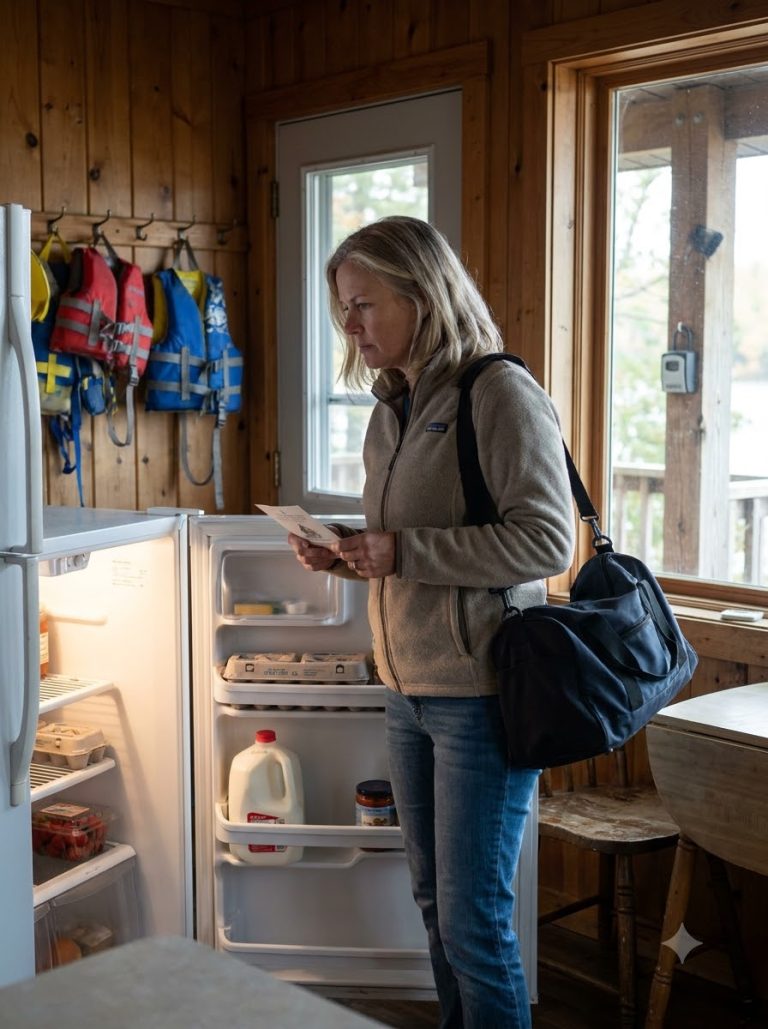
He was fifty-eight now, a commercial insurance broker with an old brick house in Clintonville, a widowed mother in Dayton, and one adult daughter whose opinion mattered to him in ways Laura had always respected. He and Laura spent most weekends together. They had taken trips. They had keys to each other’s houses. A canvas weekend bag lived half-packed on the bench at the foot of Laura’s bed because some weeks she slept at Paul’s house three nights and some weeks he slept at hers.
They had talked about the future.
At least Laura had believed they had.
Not in one dramatic conversation. In pieces.
What would happen when one of them retired. Whether two houses made sense long term. Whether Paul wanted to stay in the city forever. Whether Laura would ever want to marry again.
Her answer to that last question had been, “I don’t know. I know I won’t marry because somebody thinks four years is a deadline.”
Paul had kissed her forehead and said, “Good. I don’t want a deadline either.”
That was not the same as never.
And it certainly was not the same as telling his family she had refused.
Megan rubbed her thumb along the stem of her glass.
“Dad said you two talked about it last fall.”
“Talked about what?”
“Living together. Marriage. All of it.”
“We talked about combining houses someday.”
Paul exhaled. “Laura, we don’t need to dissect every word at the table.”
She looked at him.
“Did you tell Megan I said I never want to live with you?”
He did not answer fast enough.
Megan did.
“Yes.”
The word landed quietly.
Laura felt something inside her go still.
“When?” she asked.
Megan glanced at Paul, then back at Laura.
“October, I think. The weekend of the Ohio State game. Dad came over Sunday morning and said you’d both finally talked it through. He said you told him you were happy the way things were and didn’t want to combine households or get married because you couldn’t go through another divorce.”
Laura did not look at Paul.
She was remembering that weekend.
On Saturday night, standing in his kitchen with takeout containers between them, Paul had told her Megan was having a harder time with the idea of him marrying again than she admitted. He had asked Laura to be patient.
Laura had said, “Of course. I’m not asking you to force her into anything.”
Paul had taken her hand and said, “Thank you for understanding.”
Now Megan was telling her that the next morning, Paul had driven across town and told his daughter Laura was the one who had closed the door.
Laura looked at him at last.
“Which one of us was supposed to be the problem?”
Paul closed hiseyes for half a second.
“Nobody was the problem.”
“That is not an answer,” Laura said.
Megan pushed her chair back. “Dad, did you tell her I was uncomfortable with you two living together?”
Paul looked at his daughter. “You had concerns.”
“I had questions.”
“You said it would be a big change.”
“Because it would be.” Megan’s face flushed. “I never asked you not to do it.”
Laura stood.
Paul stood too. “Laura, please. I was trying to keep everybody from feeling pressured.”
“By telling each of us the other one was applying the pressure?”
“That is not what happened.”
“Then tell me what happened.”
He looked around the table as if the room itself had become unfair.
“This is Megan’s night.”
Laura almost laughed.
“Exactly. So I’m leaving.”
She picked up her purse and kissed Megan’s cheek before Megan could apologize again.
“You did nothing wrong,” Laura said.
Paul followed her onto the front porch.
The October air was cold enough to make Laura wish she had worn a heavier coat.
“Let me drive you home,” he said.
“I have my car.”
“Can we talk?”
“Tomorrow.”
“Laurie.”
She turned.
He looked genuinely frightened now, which made the next thing harder, not easier.
“If you tell me tonight that I’m reacting this way because of my divorce,” she said, “we are going to have a much bigger problem than the one we already have.”
He said nothing.
Laura drove home alone.
At 10:18, while she was brushing her teeth, her phone lit up with a message from Megan.
I’m sorry. I know you said I did nothing wrong, but I think you need to see this.
A screenshot followed.
It was a text from Paul dated October 16 of the previous year.
Laura has been very clear that she wants us to keep separate homes permanently. After what she went through, marriage is not something she wants to risk again. I need you to understand this is her decision, not yours and not mine.
Laura sat on the edge of her bed.
October 16.
She opened her own message history with Paul and scrolled back.
On October 16, at 8:42 that evening, Paul had written to her:
Megan and I talked. She needs more time with the idea of us changing the family structure. I hope you can be patient with me while I give her that.
Laura read the two messages side by side.
Same day.
Same man.
Two women being asked to be patient with a decision neither of them had made.
Laura slept badly and woke at five-thirty with the two October messages still open on her phone.
She did not send either one to Paul.
That restraint was less noble than it looked. She knew herself well enough to understand that if she started an argument before she had decided what question mattered, she would spend the entire morning proving contradictions instead of figuring out what they meant.
At seven, she showered, dressed, and drove to the distribution company where she managed regional sales operations. Her job involved forecasts, territory changes, commissions, and the kind of meetings where five people could leave believing they had agreed to three different things. Laura had learned years ago that the quickest way to make confusion worse was to argue about intention before writing down what each person had actually said.
So she opened a blank note on her computer.
October 16.
To Megan: Laura chose permanent separate homes.
To Laura: Megan needs more time with the family changing.
She stared at the two lines.
Her phone buzzed on the desk.
Paul.
She let it ring once, then answered.
“Good morning.”
“Are you still angry?”
Laura leaned back in her chair.
“That is an interesting first question.”
He sighed. “I did not sleep.”
“Neither did I.”
“I should not have talked about you like that without being more precise.”
“More precise about what?”
“That you were cautious.”
“I was cautious.”
“Exactly.”
“That does not explain why you told Megan I made a permanent decision and told me Megan needed time.”
Paul was quiet.
Finally he said, “Because there was no point making either of you feel responsible for something we were not ready to do anyway.”
“We?”
“Yes, we.”
“Did I say I was not ready?”
“You did not say you were ready.”
Laura almost smiled, but there was nothing funny in it.
“That is a very useful sentence for you.”
“What does that mean?”
“It means you are turning absence of a yes into a no, and then using the no as if I gave it to you.”
He lowered his voice. “I am not trying to manipulate language.”
“I did not say you were. I said that is what you are doing.”
“Can we have dinner tonight?”
“No.”
“Tomorrow?”
“I need to talk to Megan first.”
There was another pause.
Paul said, “Why?”
The question was too quick.
Laura wrote it down.
“Because you have been explaining her to me and me to her. I want one conversation without you in the middle.”
“That sounds like you two are comparing evidence against me.”
“It sounds like two adults speaking directly.”
“Laura.”
“You have done that before, haven’t you?”
“What?”
“Made direct conversation sound disloyal.”
His silence lasted just long enough to answer without answering.
They agreed to speak the next day.
At ten-fifteen, Megan texted and asked whether Laura wanted coffee after work.
They met at a shop halfway between Laura’s office and Megan’s apartment. Laura arrived first and chose a table near the front window. She told herself not to turn the meeting into an interview.
Then Megan sat down and said, “I brought receipts,” and placed her phone on the table.
Laura laughed despite herself.
“Your father would hate that phrase.”
“I know.”
The laugh helped for about ten seconds.
Megan wrapped both hands around her coffee cup.
“I need to say something before we start.”
“Okay.”
“I like you.”
Laura waited.
“I have always liked you. The first year, I was weird about Dad dating because Mom had only been gone from his life for a few years and I was still sorting out what family was supposed to look like.”
Paul’s ex-wife, Megan’s mother, lived in Arizona and had remarried. There was no dramatic history there either. Paul and his ex had divorced when Megan was in college. Laura had met her twice. Both times had been civil.
Megan continued.
“But by the time you and Dad had been together two years, I was not sitting around hoping you would stay in your own townhouse forever.”
“Did you ever tell him you would be upset if we lived together?”
“I told him it would be different.”
“That is not the same thing.”
“I know.” Megan looked down. “I also told him I did not want to lose Christmas morning at his house.”
Laura remembered that conversation because Paul had repeated it to her almost word for word.
“She does not want to lose Christmas morning here,” he had said.
Laura had answered, “Then we do not have to take it away.”
She had suggested that if they ever combined homes, traditions could travel with them.
Paul had smiled like she had solved something.
“Did he tell you what I said about Christmas?” Laura asked.
Megan shook her head.
“He told me you hated the idea of the old traditions coming into a new house because you wanted a clean start.”
Laura set down her cup.
“I never said that.”
“I figured.”
“How?”
“Because you are the person who still makes his mother’s cinnamon rolls even though you think they are too sweet.”
That detail landed harder than the accusation.
Laura looked out the window at traffic moving through the late-afternoon light.
Megan said, “I think Dad has been making both of us easier to manage.”
Laura turned back.
“That is a strong conclusion.”
“I know.”
“Let’s not get ahead of what we know.”
Megan smiled faintly. “That sounded exactly like you.”
“It sounded exactly like my job.”
Megan opened a message thread.
There were more than twenty texts across three years where Paul had mentioned Laura’s supposed comfort with separate homes, Laura’s supposed fear of legal commitment, Laura’s supposed desire not to blend family traditions.
None alone looked dramatic.
Together they formed a person Laura recognized only in outline.
A woman who liked Paul deeply but had built a fence around the future.
Laura said, “He has made me sound very consistent.”
Megan looked at her carefully.
“Aren’t you?”
“In some ways.”
“Do you want to marry him?”
Laura felt the old reflex arrive: do not answer while angry, do not say too much, do not give anyone a sentence they can repeat.
Then she recognized how close that instinct came to letting Paul continue defining the blank space.
“I do not know,” she said. “But I wanted to be asked what I wanted. Those are different things.”
On the drive home from coffee, Laura thought about how often people treated uncertainty as a weakness that needed to be translated.
Her sister had done it after the divorce.
“You are not ready to date.”
Her mother had done it differently.
“You just need to remember not every man is your ex-husband.”
Even kind people seemed uncomfortable with a woman in her fifties saying, I have not decided yet.
They wanted the sentence to finish itself.
Not ready meant afraid.
Not sure meant no.
Independent meant wounded.
Laura had worked hard not to confuse recovery with performance. She liked her townhouse. She liked sleeping alone some nights. She liked that when she bought a lamp, she did not have to negotiate where it went. She also liked waking at Paul’s house when he had already started coffee. She liked the way he saved the crossword until they could do it together. She liked his daughter. She liked that his mother called her directly when she needed a ride from Dayton.
She had not been waiting desperately for those lives to become one.
But she had been willing to consider it.
That was the part Paul had removed.
The next evening, he came to Laura’s house carrying Thai food and looking as if he had rehearsed his first sentence in the car.
“I owe you an apology.”
Laura opened the door wider.
“That is a good first sentence.”
He stepped inside.
Her townhouse was warm from the October sun. The living room still held the blue throw Paul had used the previous weekend. His reading glasses were on the side table because he kept a pair at her house now.
Those ordinary signs of him made Laura angrier than an empty room would have.
They sat at the kitchen table without opening the food.
Paul folded his hands.
“I made things sound more settled than they were.”
“To Megan.”
“Yes.”
“And to me.”
He looked down.
“Yes.”
Laura waited.
He rubbed his thumb over his wedding-band finger, a habit left over from a marriage that had ended almost a decade earlier.
“I thought I was protecting everybody from a conversation before there was anything concrete to decide.”
“What conversation?”
“Living together. Marriage. Changing houses. All of it.”
“You could have protected us by not inventing decisions.”
“I did not invent everything.”
Laura kept her voice even. “Tell me the part you think I decided.”
“You have always been hesitant about marriage.”
“True.”
“You have said you love your house.”
“True.”
“You said you never wanted to feel trapped by a mortgage or a household again.”
“I said that two years ago after my ex called me about refinancing paperwork he had forgotten to finish. It was not a declaration of permanent policy.”
Paul’s mouth tightened.
“This is what I mean. Every sentence has context with you.”
“Yes,” Laura said. “That is usually where meaning lives.”
He leaned back.
“I am trying to apologize.”
“Then apologize for what you did, not for the fact that I noticed it.”
That landed.
Paul looked toward the window.
After a moment he said, “I told Megan you preferred separate homes because she seemed anxious about change. I told you Megan needed more time because I thought if you believed she was anxious, you would not feel like I was dragging my feet.”
Laura stared at him.
“That is the closest you have come to answering me.”
“I know.”
“Were you dragging your feet?”
“I did not know what I wanted.”
Laura felt something soften despite herself.
There.
A sentence she could understand.
“You could have said that.”
“I know that now.”
“You knew words for it then.”
He sighed. “Fine. I was scared of disappointing you.”
“By saying you were unsure?”
“Yes.”
“I was unsure too.”
“That is easy to say now.”
Laura sat very still.
Paul immediately looked sorry.
“I did not mean that the way it sounded.”
“How did you mean it?”
“I mean I did not know whether your uncertainty was temporary or structural.”
“And instead of asking me, you decided it was structural when you talked to Megan and temporary when you talked to me.”
He closed his eyes.
“Yes.”
Laura could see the shame in him now, and because she loved him, shame still reached her.
That was dangerous in its own way. Not because compassion was weakness, but because compassion could make a person rush toward explanation before consequence had done its work.
Paul said, “I will talk to Megan. I will tell her I put words in your mouth.”
“And Chris?”
“Yes.”
“Your mother?”
He looked surprised.
Laura raised an eyebrow.
Paul said, “I may have told her some version too.”
“How many people believe I made this decision?”
“I do not know.”
“That answer is not comforting.”
“I know.”
Laura finally opened the takeout bag. The smell of basil and curry filled the kitchen.
They ate because people still needed dinner while relationships were under review.
By the time they finished, Paul had promised to correct the story with his family and stop using Megan’s feelings as an explanation for his own uncertainty.
He asked whether they were okay.
Laura said, “We are not broken up.”
He gave her a pained look.
“That is a very Laura answer.”
“It is an accurate one.”
He reached across the table.
This time she let him take her hand.
For a few days, the problem seemed smaller.
Megan texted Saturday morning:
Dad called. He apologized. He said he exaggerated where you stood because he was afraid of rushing us. I told him I am not a committee he needs approval from.
Laura smiled at that.
On Sunday, she and Paul walked through the farmer’s market, bought apples, argued lightly about whether they needed another jar of local honey, and ate lunch at a food truck.
He was attentive without being theatrical. He did not push the future conversation. Laura did not either.
She allowed herself to believe they had found the ugly corner of an otherwise good relationship.
That night, she went to pack for Monday morning and realized her canvas weekend bag was not at the foot of her bed.
It was still at Paul’s house.
For four years, the bag had traveled back and forth often enough that Laura rarely noticed which house contained it.
She stood looking at the empty bench.
Then she smiled at herself.
A missing bag was not evidence of anything.
She was determined not to become a woman who turned every object into a clue.
Three days later, Megan called and asked, “Did Dad ever tell you about the house on Milton Avenue?”
Laura had never heard of a house on Milton Avenue.
She stood in the stockroom at work with a clipboard under one arm, listening to Megan through one earbud while two warehouse employees counted promotional displays behind her.
“What house?”
Megan hesitated.
“Dad sent me a listing last spring. Three bedrooms, first-floor office, small yard. He said you two were thinking about looking at places that would feel neutral instead of one person moving into the other person’s house.”
Laura closed her eyes.
Last spring, Paul had suggested they spend a Saturday driving through neighborhoods north of downtown. He had called it a curiosity exercise. They had stopped for coffee, looked at two open houses from the street, and gone home without discussing either one seriously.
“What did he tell you about Milton Avenue?”
“That he had scheduled a private showing and then you decided it was too much too soon.”
Laura’s grip tightened on the clipboard.
“I never knew there was a showing.”
Megan swore softly.
The warehouse employees glanced over. Laura turned away.
“When?”
“April fifth.”
Laura knew that date because the next day had been Paul’s mother’s birthday lunch in Dayton.
On April fifth, Paul had texted Laura at noon and said he needed to spend the afternoon helping his mother with insurance forms before the birthday weekend. Laura had gone to a movie with her sister.
“Send me the listing,” she said.
Megan did.
The house was no longer on the market, but the old page remained online. It was exactly the kind of place Laura and Paul had discussed in theory: smaller than Paul’s house, more storage than Laura’s townhouse, two home-office spaces, a neighborhood they both liked.
Laura felt foolish for caring about the details.
The point was not that she wanted that house.
The point was that somebody had converted a possibility into a plan, then converted her absence from the plan into refusal.
She called Paul from her car at lunch.
He answered cheerfully.
“Hey. How’s your day?”
“What happened with the house on Milton Avenue?”
Silence.
Not confusion.
Recognition.
Laura wrote that down mentally.
Paul said, “Megan told you.”
“Yes.”
“It was nothing.”
“You scheduled a showing.”
“I scheduled a showing because the agent had one slot and I thought we might go.”
“Why did you not tell me?”
“Because by the time I had it arranged, I realized it was premature.”
“Then why did you tell Megan I decided it was too much too soon?”
Another pause.
“I was embarrassed.”
Laura leaned her head against the car seat.
“About what?”
“About getting ahead of myself.”
“So you made me the person who pulled back.”
“I did not make you anything.”
“You told your daughter I canceled a showing I did not know existed.”
“I told her you were not ready to look.”
“You did not know that.”
“I knew enough.”
There it was again.
Not cruelty.
Certainty on her behalf.
Laura said, “You told me that day you were helping your mother.”
“I did help her.”
“After canceling the showing?”
“Yes.”
“Why not tell me you had scheduled it?”
“Because I had already canceled it.”
“That is circular.”
“Laura, we are turning every awkward decision I made into evidence of some plan.”
“I am asking why your awkward decisions always made another woman responsible for your hesitation.”
He went quiet.
Laura continued.
“Last October, Megan was supposedly the reason we needed to wait. You told her I was. In April, you scheduled a house showing, canceled it yourself, and told Megan I was the reason. That is not one bad summary.”
“What do you want me to say?”
“The truth would be useful.”
“I am telling you the truth.”
“Then answer a simpler question. Did you want to see the house?”
“At first.”
“Why did you change your mind?”
“I got nervous.”
“About what?”
“Everything.”
“That is still vague.”
He sounded tired now.
“About selling my house. About your house. About money. About whether Megan would feel displaced. About whether you would wake up six months later and feel like you had given up the life you built after your divorce.”
Laura felt something painful move through her because the last fear was not ridiculous.
She could imagine that version of herself.
She could also imagine the opposite: waking in a shared house and being glad she had chosen it.
The fact that both futures were possible was exactly why she resented Paul turning one into settled fact.
She said, “Did you ever ask me that?”
“I thought I knew you.”
“That is not the same thing.”
“No. Apparently not.”
His defensiveness had thinned into something closer to shame.
Laura did not want to punish him for finally sounding honest.
So she said, “I am not asking you to prove you wanted the house. I am asking you to stop using what I might feel as permission to decide what I already chose.”
Paul said, “I understand.”
Laura was not sure he did.
That evening she took her weekend bag out of the trunk of Paul’s car when he stopped by to return a sweater.
He noticed.
“Are you not staying Friday?”
“I do not know yet.”
The answer made him flinch.
Laura saw it.
For the first time, she wondered how often her uncertainty had frightened him enough that he had tried to finish the sentence before she could.
She carried the bag upstairs and emptied it onto her bed.
Two blouses. Jeans. Toiletries. A paperback she had forgotten she was reading. Chargers for devices she owned in duplicate because of Paul’s house.
At the bottom was a folded grocery list in his handwriting.
Milk. Coffee. Bananas. Laura yogurt.
The ordinary intimacy of it made her sit down.
She did not want to erase four years because one pattern had become visible.
But she also knew what happened when she minimized a pattern because the rest of a relationship was good.
Her first marriage had not ended over one terrible thing. It had ended because hundreds of small interpretations slowly replaced direct questions until both people lived beside versions of each other they had stopped checking.
Laura had promised herself she would never do that again.
The next morning, she texted Megan.
I do not want more screenshots unless they matter to a specific question. I do not want us building a prosecution file.
Megan replied:
Agreed.
Then another message appeared.
But I think there is one question you should ask Dad.
Laura waited.
Megan sent:
Ask him what he has told Grandma about why you two still live separately.
Paul’s mother answered the question before Laura ever asked him.
Saturday afternoon, Judith called to confirm the time for a family dinner the following weekend.
“Six-thirty, honey. And do not bring anything. Megan is doing dessert.”
Laura was folding laundry in the upstairs hall.
“I can bring wine.”
“You always bring wine.”
“That is why I know it works.”
Judith laughed.
Then, in the easy way older relatives sometimes stepped into private territory as if it were simply another room in the house, she said, “And I hope you know I have never thought you owed Paul a wedding.”
Laura sat down on the edge of the guest-room bed.
“Why would I think you thought that?”
Judith went quiet.
Laura closed her eyes.
“Paul told you I do not want to get married.”
“He said you are happy as you are.”
“When?”
“Goodness, Laura. I do not remember exactly.”
“Was it recent?”
“No. A while ago.” Judith’s voice softened. “He said after your divorce you needed to know your home and money stayed yours. I told him I thought that was sensible.”
Laura stared at the stack of towels in her lap.
Again, Paul had used something true enough to make the rest sound inevitable.
She did care about financial independence.
She had spent the first year after her divorce rebuilding retirement projections, changing beneficiaries, separating insurance, and learning exactly which expenses belonged to her. She never wanted to drift into a shared financial life simply because a relationship lasted long enough.
But she had never said marriage required financial surrender.
She had never said a shared house meant giving up control of her money.
“Judith,” Laura said, “I do not want you to feel caught in this.”
“Oh, I already feel caught in it.”
Laura smiled despite herself.
“That is fair.”
Judith sighed.
“Paul does not like disappointing people.”
“I know.”
“He also does not like admitting when what he wants is different from what he thinks he should want.”
Laura stopped breathing for a moment.
“What does that mean?”
“I am not going to interpret my son to you.” Judith’s tone changed. “I have done enough of that in my life.”
The refusal was so clean Laura respected it immediately.
“Okay.”
“Ask him.”
“I will.”
After they hung up, Laura sat with the towels for another minute.
She had always assumed Paul’s discomfort with decisions came from kindness. He did not want to rush Megan. He did not want Laura to lose the independence she fought to rebuild. He did not want his mother to feel like the family home was being abandoned. He did not want holidays disrupted.
Each reason had a person attached to it.
Megan.
Laura.
Judith.
Never simply Paul.
That evening he came over to watch a basketball game.
Laura almost asked immediately.
Instead she watched him take off his shoes by the door, put sparkling water in the refrigerator, and complain that the announcers were spending more time discussing trades than the game in front of them.
She loved the ordinary version of him.
That made honesty more urgent, not less.
At halftime, Laura muted the television.
Paul looked at her.
“That is never a good sign.”
“Your mother told me you explained our separate houses as something I needed financially after my divorce.”
He rubbed both hands over his face.
“Please tell me you are not calling my entire family.”
“She called me.”
“Fine.”
“Is that what you told her?”
“Something like that.”
“Why?”
“Because she asked why we still live separately.”
“And you could not say, ‘We have not decided’?”
“I probably should have.”
Laura watched him.
“That is now three different explanations.”
“What three?”
“To Megan, I chose permanent separate homes because I am afraid of another divorce. To me, Megan needed time with the idea of change. To your mother, I need my house and money protected because of what happened in my marriage.”
Paul picked up the remote, then set it down without turning the sound back on.
“You are making this sound calculated.”
“I am listing what happened.”
“They are not incompatible.”
Laura blinked.
That answer was more revealing than he seemed to realize.
“They do not have to be incompatible,” she said. “They have to be mine if you are presenting them as my decisions.”
Paul stood and walked to the kitchen.
Laura followed slowly.
He opened the refrigerator and stared inside without taking anything out.
“Why are we doing this?” he asked.
“Because I do not know whether I have been dating you or the version of you that avoids saying no.”
He turned.
“That is unfair.”
“Then help me make it fair.”
“How?”
Laura had not planned the next question. It arrived whole.
“If Megan had been thrilled from the beginning, if your mother had told you to sell the house tomorrow, if nobody thought I was damaged by divorce, what would you have wanted?”
Paul looked at her.
Laura continued.
“Not what would you have done to keep everybody comfortable. Not what would have been practical. Not what you thought I wanted. You.”
He opened his mouth.
Nothing came out.
Laura waited.
The refrigerator hummed behind him.
Finally he said, “I do not know.”
She nodded.
“Okay.”
He looked almost relieved.
Laura was not.
Because for the first time, she understood that his uncertainty was not the problem.
The problem was that every time he felt it, someone else had been assigned the role of answer.
For the next four days, Laura and Paul did not see each other.
They exchanged practical texts.
Your charger is here.
I left your mail on the porch.
Judith says dinner is still Saturday if you want to come.
The politeness made Laura feel as if they were already rehearsing a breakup nobody had chosen.
At work, she found herself opening sales dashboards and forgetting what number she had been trying to verify. At home, she moved the weekend bag from the bench to the closet and then took it back out because putting it away felt dramatic.
On Wednesday night, Paul called.
“I have an answer,” he said.
Laura sat down at the kitchen table.
“Okay.”
“Can I come over?”
She almost said no.
Then she thought about what she had asked from him: his own answer, not a safer one delivered by text.
“Yes.”
He arrived twenty minutes later without food, flowers, or anything that could turn the visit into a performance of repair.
Laura appreciated that.
They sat facing each other at the same table where he had apologized the week before.
Paul looked tired.
“I like my house,” he said.
Laura waited.
“I like your house too. I like being here. I like waking up here. I like you at my place.”
He gave a short, embarrassed laugh.
“This sounds stupid.”
“It does not.”
“I do not want to sell my house.”
Laura felt the sentence move through her without surprise.
Paul continued.
“I thought I did, or I thought I should. That is why I looked at Milton Avenue. But when the agent confirmed the showing, I felt sick. Not because of you. Because I realized I did not want to combine everything.”
“Everything meaning?”
“Space. Money. Furniture. Holidays. Where Megan stays if she needs something. Which neighborhood. Whose habits become the default.”
Laura nodded slowly.
“Those are real concerns.”
“I know.”
“So why did you not tell me?”
Paul looked at his hands.
“Because I thought you would hear it as me saying the relationship was not serious.”
“Would I have?”
“I do not know.”
“Did you ask?”
“No.”
“When did you first know you preferred separate homes?”
He looked up.
That question changed his face.
Laura saw it before he answered.
“A while ago.”
“How long?”
He leaned back.
“Maybe two years.”
Laura did not move.
The room seemed to become very precise around her: the brass handle on the cabinet, the shallow scratch near the salt cellar, the folded grocery receipt beside Paul’s elbow.
“Two years.”
“I did not know it as a permanent thing.”
“You knew it as a preference.”
“Yes.”
“And for those two years, what did you tell me?”
“That I needed time.”
“Because Megan needed time.”
“Sometimes.”
“Because your mother needed reassurance.”
“Sometimes.”
“Because you thought I was still protecting myself after divorce.”
“Yes.”
Laura’s throat tightened.
Paul said, “I was not trying to keep you trapped.”
She looked at him.
“I did not say trapped.”
“I know what this sounds like.”
“Tell me.”
He rubbed his palms against his jeans.
“It sounds like I let you think there was a decision coming when I already knew what I wanted.”
“Was there a decision coming?”
He did not answer.
Laura felt the main shape of the story shift.
Until that moment, she had treated Paul’s conflicting explanations as the messy behavior of a conflict-avoidant man who could not tolerate disappointing people.
That was true.
It was not complete.
He had not merely been uncertain and careless about how he explained the uncertainty.
He had possessed a preference.
Separate homes.
Separate finances.
A serious relationship whose structure did not change.
And instead of risking Laura deciding that structure was not enough for her, he had kept the future grammatically open while telling everyone else that Laura had closed it.
She said, “You made my caution useful.”
Paul’s eyes filled.
“Laura.”
“No. I need to say this correctly.”
He nodded.
“You knew I valued independence. You knew I had complicated feelings about marriage. So when you wanted to keep things exactly as they were, you used things I actually felt to create a decision I had never made.”
“I thought you were happy.”
“I was.”
“Then why does the structure matter so much?”
“Because being happy in a structure is not the same as consenting to it forever.”
He looked away.
Laura’s voice softened.
“If you had told me two years ago, ‘I love you and I think I want separate homes permanently,’ I might have said yes.”
Paul looked back at her, startled.
“That is the worst part.”
She shook her head.
“No. The worst part is that you did not trust me with the choice.”
“I was afraid you would leave.”
There it was.
Plain.
Laura felt anger and compassion arrive together.
Paul continued.
“You talked about maybe wanting marriage someday. Megan made comments about us looking like an old married couple. My mother kept asking when we were going to stop paying two sets of utilities. Every time it came up, I felt like the relationship we had was being treated as a temporary hallway to something more respectable.”
“That sounds exhausting.”
“It was.”
“You still could have said no.”
“I know.”
“You let me be the no instead.”
“Yes.”
The word hurt more than another denial would have.
Laura sat back.
For the first time since Megan’s dinner, she was not trying to discover what happened.
She knew.
Paul loved her.
Paul preferred separate lives joined by choice rather than one shared household.
Paul feared Laura might choose differently if he said so plainly.
So he had turned her divorce into a permanent explanation and his daughter into a temporary obstacle.
The conflict was no longer about whether Laura had been misunderstood.
It was about whether she could stay with a man who had protected the relationship by withholding the terms on which he wanted it to continue.
Laura did not end the relationship that night.
She also did not tell Paul everything was fixable.
“I need time without you explaining what I am likely to feel,” she said.
He winced.
“That is fair.”
“I need you to correct what you told your family.”
“I will.”
“Not because I am deciding we are staying together.”
“I understand.”
“And not by telling them I am upset or confused or still figuring things out.”
Paul nodded slowly.
“What do I say?”
Laura looked at him.
“The truth. You told them I preferred separate homes because you preferred separate homes and were afraid to own the preference. You told me they needed time because you wanted more time. That is the truth as I understand it. If you understand it differently, say your version. But do not make my emotions the subject.”
He swallowed.
“Okay.”
For the next week, Laura slept in her own bed every night.
At first the quiet felt punitive, as if she were staging independence for an audience.
Then she realized there was no audience.
On Tuesday she stayed late at work because quarter-end forecasting ran long. On Wednesday she ate soup over the sink and hated herself for the cliché until she remembered she had eaten soup over Paul’s sink too. On Thursday she met her sister, Ellen, for tacos.
Ellen listened to the whole story without interrupting, which Laura appreciated because Ellen had not always been good at that.
When Laura finished, Ellen said, “So do you want to marry him?”
Laura laughed.
“You are all exhausting.”
“I am asking now, not answering for you.”
“That is fair.”
Ellen dipped a chip into salsa.
Laura thought about it.
“I wanted us to get to make the decision honestly.”
“That is not an answer either.”
“I know.”
“Would you live with him?”
“Maybe.”
“Would you keep separate houses forever?”
“Maybe.”
Ellen stared at her.
“You are a nightmare.”
Laura smiled.
“I am allowed to be undecided.”
“Yes. But if you stay with Paul, does his answer become your answer by default?”
The question followed Laura home.
That was what had happened for two years.
Not through force.
Through inertia.
Every month they kept doing what they were doing, the arrangement became more expensive to question. They had duplicate chargers, duplicate coffee, keys, holiday routines, shared subscriptions, mutual friends, favorite restaurants equidistant from both homes. Their lives had combined everywhere except the place where they slept most often.
The structure worked.
That was why it had been easy to mistake comfort for consent.
On Friday, Megan called.
“Dad talked to us.”
Laura sat on the back patio with a blanket over her knees.
“How did that go?”
“Badly, but in a useful way.”
Laura laughed.
“What did he say?”
“He said he let everybody think you were the one who wanted permanent separate homes because he was afraid people would treat him like he was wasting your time.”
Laura looked at the maple tree beyond her fence.
“That is pretty accurate.”
“He also said he used me as a reason with you because he knew you would be patient if you thought I was struggling.”
Laura closed her eyes.
There was something almost insulting about how well he had understood the best parts of her.
He knew she would not compete with his daughter.
He knew she would not demand marriage as proof.
He knew she would hesitate before making a conflict public.
He had not exploited weaknesses.
He had used virtues as cushions.
Megan said, “I am angry at him.”
“You are allowed.”
“Are you leaving him?”
Laura smiled without humor.
“You are his daughter. You do not need to be the weather report for my relationship.”
“That means you do not know.”
“It means I am not asking you to carry it.”
Megan was quiet.
Then she said, “Thank you.”
Saturday afternoon, Paul texted.
I corrected Mom too. No qualifiers. No Laura is upset. No Megan was concerned. Just me.
Laura stared at the message.
He was doing exactly what she had asked.
That mattered.
It did not erase what came before.
The old version of Laura—the one who had spent years in her marriage negotiating whether she was being too harsh—would have taken Paul’s accountability as a command to forgive quickly.
See? He understands. He changed. Do not punish improvement.
She no longer wanted to think in punishment.
A relationship was not a courtroom where remorse reduced a sentence.
It was a place she had to decide whether she still wanted to live.
On Sunday morning, Laura took a legal pad to the dining table.
She wrote two headings.
WHAT PAUL WANTS.
WHAT I WANT.
Under Paul’s column she wrote what she now knew.
Separate homes.
Separate finances.
Committed relationship.
Family connection without household merge.
No marriage needed.
Under her own column she stared at the blank space for nearly five minutes.
Then she wrote:
To be asked.
She frowned.
That was not a life structure.
She tried again.
Possibly one home someday.
Possibly marriage, if it means partnership rather than proof.
Room to change my mind.
No permanent decision made by inertia.
Truth before comfort.
The last line was the only one she underlined.
When Paul called that evening, Laura said, “I want to see you Tuesday.”
His voice went careful.
“Is that good?”
“I am not going to answer the question before we have the conversation.”
He gave a small, sad laugh.
“Right.”
Laura looked at the legal pad.
For once, nobody else’s patience was required.
Only her choice.
Tuesday evening, Paul arrived at seven with nothing in his hands.
Laura had put the legal pad away.
She did not want the conversation to feel like a presentation.
They sat at the kitchen table.
For a minute, neither spoke.
Paul finally said, “I am sorry.”
“I know.”
“I mean for all of it.”
“I know.”
He looked frustrated by how little the apology changed the room.
Laura understood. Apologies were supposed to move things. Sometimes they did. Sometimes they simply made it possible to talk accurately about what remained.
Paul said, “I have been thinking about what you asked. About what I want.”
“Okay.”
“I still think separate houses can be a real commitment.”
“So do I.”
He blinked.
Laura continued.
“I have never said otherwise.”
“Then maybe we do not have to blow up four years over how badly I handled the conversation.”
There it was: the door back to normal.
Laura could see how easy it would be to walk through.
She loved him. He had corrected the story. He had admitted what he wanted. Their current arrangement worked. No one had stolen money, betrayed vows, or built a secret life. The conflict could be summarized as a middle-aged man being too cowardly to say he liked having his own house.
That version would let both of them move on quickly.
Laura said, “Separate houses are not the problem.”
Paul’s face changed.
“What is?”
“You knew they were your preference and let me believe we were still jointly deciding.”
“I am telling you now.”
“Because you got caught.”
He flinched.
Laura hated the sentence the moment she said it because it sounded punitive.
She corrected herself.
“No. That is not fair. You are telling me now because the way you avoided it stopped working.”
“That is not much better.”
“It is more accurate.”
He leaned forward.
“What do you need me to do?”
The question was sincere.
Laura felt tears rise and resented them for making a simple answer harder.
“I do not want a task list.”
“I am trying to save us.”
“I know.”
“Then help me.”
Laura took a breath.
“If you said tonight that you wanted to sell your house and live with me next year, would that be what you want?”
Paul hesitated.
“No.”
“Good.”
He stared at her.
“Good?”
“Yes. Do not turn your no into a yes because you are afraid I will leave. That is how we got here.”
Paul sat back.
Laura continued.
“I think I want the possibility of one home. Not tomorrow. Maybe not next year. But I do not want to know that the answer is permanently no while we keep talking as if someday is open.”
He looked down.
“I could change.”
“You could.”
“So could you.”
“Yes.”
“Then why end something good because of a possible future?”
Laura looked at him for a long moment.
“Because you have already been protecting your preferred future from my possible future for two years.”
He wiped at one eye angrily.
“That makes me sound calculating.”
“You keep saying that as if the only choices are calculating or innocent.”
“What do you think I was?”
“Afraid.”
He looked up.
“And afraid people do things that have consequences.”
The room was very quiet.
Laura said, “I believe you love me.”
“I do.”
“I believe you did not set out to humiliate me.”
“I didn’t.”
“I believe you thought the arrangement was good for both of us.”
“It was.”
“It was good for me too.”
“Then—”
She lifted a hand.
“Let me finish.”
Paul stopped.
“The part I cannot get past is not two houses. It is that when the relationship asked you to risk a truthful no, you used my divorce as the no instead. You let your daughter carry the no with me. You let me carry it with your family. You kept yourself in the middle as the person patiently managing everyone else’s feelings.”
His face folded in a way Laura had rarely seen.
“I was scared you would leave if I told you.”
“I know.”
“And now you are leaving because I did not.”
“Yes.”
He looked toward the living room.
For several seconds, the only sound was a truck passing on the street outside.
Then Paul said, “Can we try counseling?”
Laura had considered the possibility.
She shook her head.
“Not as a way to negotiate you into wanting one house or me into wanting two. Neither preference needs treatment.”
“That is not what I meant.”
“I know. But I also do not want to spend six months in a room proving whether I can trust the next answer because a professional heard it too.”
“That is harsh.”
“It may be.”
Paul stood.
Laura stood too.
She reached into the ceramic bowl near the back door and took out his spare key.
He stared at it in her palm.
“Laura.”
“I am not doing this for theater.”
“It feels like theater.”
“Then take it tomorrow if tonight is too much.”
He took the key.
The small metal sound when it touched his own keys made Laura’s chest ache.
“My key?” she asked.
Paul looked almost offended.
“Of course.”
“I know. I am asking for it, not accusing you of keeping it.”
He pulled the ring from his pocket, worked her key loose, and set it on the table.
Neither of them moved for a moment.
Laura said, “Please do not tell people I left because I was afraid to commit.”
Paul closed his eyes.
“I deserved that.”
“It was not a joke.”
“I know.”
“What are you going to tell them?”
He looked at her.
“That I wanted our relationship to stay the way it was, and I was not honest enough about that. You wanted the future to stay open. We were not in the same place.”
Laura nodded.
“That is enough.”
Paul cried then, quietly and with obvious embarrassment.
Laura cried too.
They stood in her kitchen loving each other and ending anyway.
It was the least dramatic thing she had done all month.
It was also the most decisive.
The first week after the breakup was full of objects.
Paul’s reading glasses on Laura’s side table.
Her blue sweater at his house.
A phone charger in his kitchen drawer.
His bottle of hot sauce in her refrigerator.
Two paperbacks they had traded and never returned.
A pair of garden gloves in her shed because Paul had helped her plant tomatoes in May.
None of the objects knew what had happened.
That was almost offensive.
Laura put Paul’s things into a reusable grocery bag and carried it from room to room, adding small pieces of four years. She did not rush. She did not throw anything away out of anger. She did not keep anything because grief made ownership feel meaningful.
On Saturday, Paul left a cardboard box on her porch containing her things from his house.
At the top was a note.
I checked the guest room, bathroom, kitchen and car. If I find anything else, I’ll text. No need to answer this.
Laura stood in the doorway reading the note twice.
It was exactly the kind of communication she had wanted all along.
Specific.
Owned.
No interpretation of what she felt.
She cried for ten minutes and then brought the box inside.
Megan called that afternoon.
“I want you to know Dad told Grandma and Chris the same version he told you he would.”
Laura sat on the living room floor surrounded by her returned things.
“Okay.”
“He did not say you were scared.”
“Good.”
“He did not say you changed your mind.”
“Good.”
“He said he had been avoiding saying what he wanted and you two realized the futures did not match.”
Laura traced a finger over the spine of a cookbook Paul had returned.
“That is true.”
Megan was quiet.
Then she said, “I feel weird calling you.”
“You can stop if it feels disloyal.”
“That is exactly the kind of sentence Dad would hate right now.”
Laura laughed.
“Sorry.”
“I am not asking you to stay in my life in some strange ex-girlfriend capacity.”
“I know.”
“I just did not want the last thing between us to be that dinner.”
Laura looked around the room.
“It does not have to be.”
They met once for coffee the following month.
They did not discuss Paul for the first forty minutes.
Megan talked about her promotion. Laura talked about a sales territory reorganization that had turned three managers into temporary enemies. They complained about parking downtown and split a lemon bar.
Eventually Megan said, “Dad is having a hard time.”
Laura felt the old instinct to ask for details.
She stopped.
“That is his to have.”
Megan nodded.
“He misses you.”
“I miss him too.”
The truth did not require action.
That was new for Laura.
In her marriage, missing someone had often been treated as evidence that the argument should end. Loving someone had been used as proof that compromise was possible. She had spent years confusing emotional intensity with instruction.
Now she could miss Paul without converting the feeling into a plan.
Judith sent a Thanksgiving card.
The front showed an absurdly cheerful turkey wearing a pilgrim hat.
Inside she wrote:
I’m sorry things ended. I’m also sorry my questions added to the pressure Paul was afraid of. You were good to him and to us. I hope you know you never owed anybody an ending we understood.
Laura put the card on the refrigerator for a week, then moved it into a drawer with other cards she intended to keep.
Thanksgiving itself was at Ellen’s house.
Laura arrived with wine.
Her brother-in-law raised the bottle and said, “Reliable as ever.”
For one second, Laura thought about Judith’s old joke that she always brought wine.
Then she let the thought pass.
After dinner, Ellen cornered her near the dishwasher.
“How are you?”
“Fine.”
“Real fine or Laura fine?”
“Both.”
Ellen studied her.
“Do you regret it?”
Laura looked through the doorway at her nieces arguing over a board game.
“Sometimes.”
Ellen blinked.
“That was more honest than I expected.”
“Do not get used to it.”
“What do you regret?”
Laura thought.
“Not the decision. I regret that if Paul had told me the truth two years ago, we might have made a version work.”
“That is sad.”
“Yes.”
“Does it make you want to call him?”
“No.”
“Why not?”
“Because I cannot build a relationship with the version of us that might have existed if we had behaved differently.”
Ellen handed her a wet plate to dry.
“That is annoyingly healthy.”
Laura smiled.
“It is mostly annoying.”
By December, Laura had stopped automatically checking the weekend forecast for two neighborhoods.
She bought groceries for one house without wondering what food was still at Paul’s.
She changed the emergency contact on her company travel profile from Paul to Ellen.
That small administrative task made her cry harder than returning the key had.
Then she finished the form and went back to work.
The grief did not arrive as a verdict.
It arrived as maintenance.
In February, Laura ran into Paul at a grocery store.
Not their old farmer’s market. Not a restaurant full of shared memories. Just a grocery store on a Tuesday after work, both of them standing in front of a display of oranges.
For a second they looked at each other with the stunned recognition of people who had once known each other’s refrigerator inventory.
Then Paul smiled.
“Hi.”
“Hi.”
He looked thinner. Not dramatically. Enough that Laura noticed because she had spent four years noticing him.
“How are you?” he asked.
“Good. You?”
“Better.”
Neither of them pretended the word meant easy.
Paul held up a mesh bag of oranges.
“Still buying too many of these.”
“You always let half of them go bad.”
“I know.”
Laura smiled.
There were a dozen directions the conversation could have gone.
Are you seeing anyone?
Do you miss me?
Did we make the right decision?
Instead Paul said, “Megan says you two had coffee.”
“Once.”
“She was glad.”
“So was I.”
He nodded.
“I have been trying not to make her my translator.”
Laura heard the old vocabulary and recognized the effort behind it.
“That is probably good.”
He looked at the oranges in his hand.
“I should have told you sooner.”
“Yes.”
“I know saying it again does not change anything.”
“No.”
Another pause.
Then Laura said, “I am glad you know what you wanted.”
He looked up.
“Are you?”
“Yes. I wish you had trusted me with it. But wanting your own house was never a moral failure.”
His eyes shone.
“I thought you would see it that way eventually.”
Laura raised one eyebrow.
Paul laughed.
“Right. Sorry. I am still working on not telling you what you are going to think.”
“That may be a lifelong project.”
“For both of us.”
Laura accepted that.
They said goodbye beside the oranges.
She did not cry until she reached her car.
The tears were not a request to reverse anything. They were simply proof that a good relationship could end for reasons too ordinary to sound important to strangers and still leave a real absence.
A week later, Laura attended a retirement-planning seminar through work.
The presenter asked everyone to write one thing they wanted their life to contain in five years.
People wrote predictable things.
Travel.
Grandchildren.
A paid-off house.
More time outside.
Laura stared at the blank line.
Then she wrote:
Choices I am allowed to revise.
She almost crossed it out because it sounded like something printed on a wellness mug.
Instead she left it.
At fifty-four, Laura did not know whether she would ever marry again.
She did not know whether she would still be in the townhouse at sixty.
She did not know whether she would someday want to share every cabinet, every bill, every holiday morning with another person.
The uncertainty no longer embarrassed her.
It was not a wound waiting for someone else to diagnose.
It was room.
In March, her friend Carla invited her to spend a long weekend in Nashville for a concert. Laura said yes before checking whether anyone else’s schedule needed to be coordinated.
The night before the trip, she pulled the canvas weekend bag from the closet.
It still contained one item she had missed when she emptied it after the breakup: a pair of Paul’s black ankle socks folded into a side pocket.
Laura stared at them.
Then she laughed.
Of course.
Four years of moving between two houses, and the final artifact was socks.
She put them in a small envelope, wrote Paul’s address, and set it by the front door to mail.
Then she packed the bag from empty.
Jeans.
Two sweaters.
Concert shoes she would regret by midnight.
A book.
One charger.
No duplicate toiletries stored in another bathroom.
No grocery list for another refrigerator.
She zipped the bag and set it on the bench at the foot of the bed.
For years that bag had meant Laura’s life was split conveniently between two places.
After the breakup, she had briefly thought unpacking it would mean choosing solitude.
It did not.
A bag was not a relationship structure.
A house was not a promise.
Marriage was not proof.
Independence was not damage.
The part that mattered was whether the people involved got to name what they wanted before habit named it for them.
Laura turned off the bedroom light.
Her phone buzzed on the dresser.
Carla: Leaving at seven. Do not be late.
Laura typed back:
I’ll be ready.
Then she paused and smiled.
Not because the words meant more than they said.
Because, finally, they meant exactly what she had chosen.