My Best Friend Put My Ex-Husband’s Wife In The Room Next To Mine—Then We Realized We’d Been Told Opposite Stories

PART 11
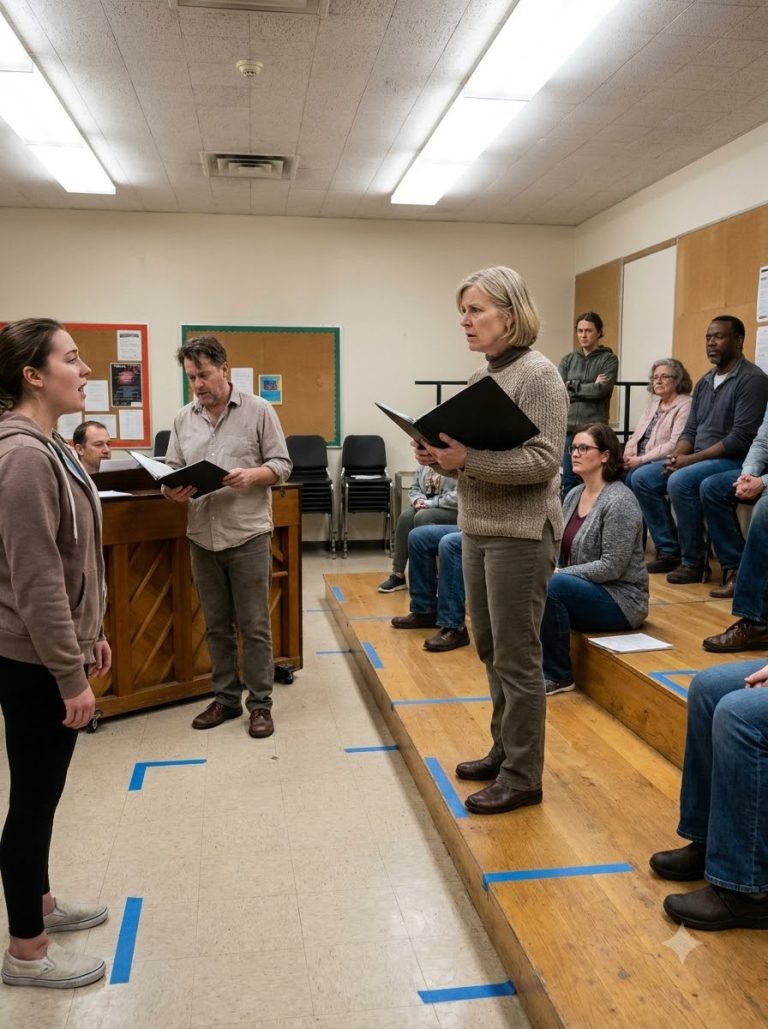
The October concert was held in an old theater downtown with narrow seats and bathrooms located according to a philosophy no modern architect could defend.
I arrived alone.
Renee was already in the lobby. Anita came next. Joyce had brought her sister. Kara walked in five minutes before curtain wearing a red coat.
Lydia did not come.
For one second, I felt the old instinct to ask if anyone knew why.
I did not.
Kara noticed me looking toward the door.
“She texted me that she had plans with her daughter,” she said.
Then she stopped and made a face.
“Sorry. That was information about Lydia.”
I laughed. “I think factual travel updates are allowed.”
“Good. I’d hate to violate the treaty.”
We took our seats.
There was an empty chair between me and Kara because the ticket belonged to Renee’s cousin, who was late.
Halfway through the opening act, the cousin arrived and squeezed into the space, apologizing to everyone. The empty chair disappeared without meaning anything.
I liked that.
Evan’s birthday dinner came two weeks later.
He invited me, Greg, Kara, his girlfriend, and four friends to a noisy Italian restaurant. Greg looked nervous when he saw me and Kara greet each other without visible pain.
At one point he pulled me aside near the restrooms.
“Are we okay?” he asked.
“You and me?”
“Yes.”
“We’ve been okay for years.”
“I mean with Kara being around more.”
I almost told him about Lydia. Then I realized he was asking me directly.
So I answered directly.
“I don’t need you to keep us separate for my sake. I also don’t need us to become one big happy blended family. Ask me about actual plans. I’ll tell you.”
He nodded.
“I can do that.”
“Good.”
We had been divorced too long for reconciliation to be the point. We were simply doing maintenance on a relationship that still mattered because we loved the same son.
Kara and I became something like friendly acquaintances. We had coffee twice in six months, both times because one of us asked the other directly. We discovered we had very little in common beyond Greg, Evan, Anita, and an intolerance for forty-eight-dollar wooden spoons.
I did not need it to become more than that.
Lydia and I did not return to daily calls.
For a while, we met every few weeks for coffee. The first few times were painfully careful. She asked before telling me something another friend had said. I sometimes answered too sharply when she slipped into old habits. She sometimes accused me of treating every ordinary social comment like a boundary test.
Neither of us needed a final ruling on which irritation was more justified.
One afternoon in February, she said, “I miss being your first call.”
I stirred my coffee.
“I miss calling you.”
“Then why don’t you?”
“Because I’m trying to find out which parts of my life I actually want to bring to you, instead of bringing you everything by habit.”
“That hurts.”
“I know.”
She nodded.
Then, instead of explaining what I really meant, she let the sentence stand.
That was the closest thing to progress we had.
In April, Anita invited ten people to a backyard dinner. Her text was simple: Saturday at six. Here is who I invited. Come if you want. No pressure if you don’t.
My first impulse was to call Lydia and ask whether the group felt weird.
I looked at my phone for a long time.
Then I replied to Anita: I’ll be there.
Kara replied yes an hour later.
Lydia replied maybe, then yes the next morning.
At dinner, I arrived carrying a salad and found Lydia setting forks on the patio table.
“Hi,” she said.
“Hi.”
We hugged.
It was warm and a little sad and not a promise.
Kara arrived later with Greg. Joyce brought a pie. Renee was twenty minutes late and blamed traffic. Nobody had arranged the seating.
I ended up across from Lydia.
At one point Anita asked if anyone wanted to go to an outdoor movie the following Friday.
Lydia looked at me automatically.
I saw the question forming on her face: Would that be okay? Who should she include? Was there a configuration that would keep everyone comfortable?
Then she caught herself.
She picked up her water glass.
“I might be in,” she said. “Send me the details.”
Kara said, “Same.”
I said, “I’ll check my schedule.”
The conversation moved on.
No one needed an answer on behalf of anyone else.
Later, while I helped Anita carry dishes inside, she handed me a small brass key.
“You left this on the patio table.”
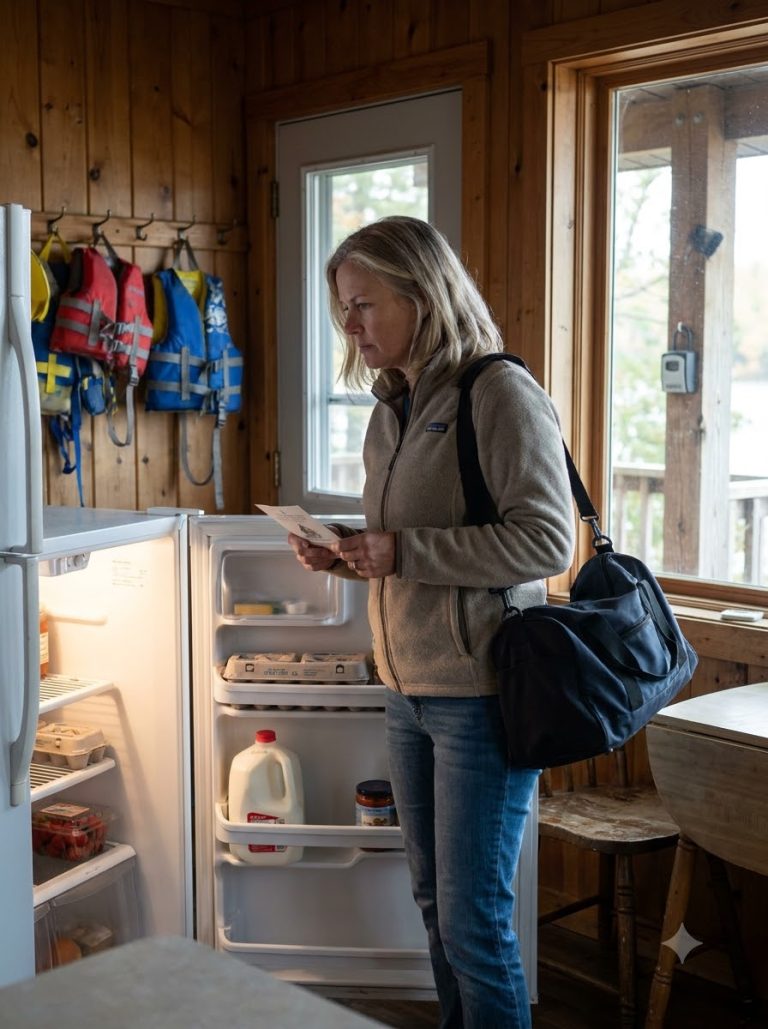
For a second, I thought of the lake house and the tags on those adjoining bedroom doors.
But this key was mine—my house key, detached from my ring when I had opened a bottle with the little metal tool attached to it.
I slipped it into my pocket.
On the drive home, my phone lit up at a red light.
A text from Kara.
There’s an exhibit at the history museum next month Greg would hate. Want to go?
No Lydia in the middle. No question about who else had approved. No hidden social geometry.
I smiled and typed back.
Yes. Send me the date.
Then I put the phone facedown and drove home.