My Best Friend Put My Ex-Husband’s Wife In The Room Next To Mine—Then We Realized We’d Been Told Opposite Stories

PART 9
I had planned to stay until late Sunday afternoon.
At eleven, I changed my mind.
Not because anyone had another confrontation. Because I realized I was waiting to see what the group would do next, and that felt too much like the old arrangement.
I packed my bag.
Lydia found me carrying it downstairs.
“You’re leaving?”
“Yes.”
“I thought you were staying for lunch.”
“I was.”
Her face tightened. “So this is a statement.”
“It’s a drive home.”
“Melanie.”
I set the bag beside the front door.
“I’m tired, Lydia.”
“We’re all tired.”
“I know.”
She crossed her arms.
“Are you punishing me?”
“No.”
“How am I supposed to tell the difference?”
“You could believe me.”
The answer landed between us.
She looked away.
“I don’t know how to fix this if you keep leaving every conversation unfinished.”
“I don’t think it gets fixed this weekend.”
“What does that mean?”
“It means I’m not going to stay until you feel reassured that we’re still best friends in exactly the same way.”
She flinched.
There was no kind version of the truth that did not remain true.
“I need some distance from you,” I said. “Not forever. I don’t know. But direct distance. Mine. Not something Anita tells you I need or Kara interprets for me.”
Her mouth twisted.
“You’re making fun of me.”
“A little. I’m also serious.”
She sat on the bottom stair.
I had seen Lydia cry before. At funerals. During her divorce. Once when her daughter moved to Seattle. She usually cried openly, with the practical acceptance of somebody who knew tears were another body function.
This time she tried to stop.
I sat across from her on a bench by the door.
“I don’t want you to be alone,” I said.
“Then don’t leave.”
The sentence hurt because it was so simple.
“I can care that you’re lonely without making myself responsible for preventing it.”
She looked up sharply.
“That sounds like something a therapist puts on a mug.”
“Probably. I hate mugs with sentences.”
She laughed despite herself, then cried harder.
I did not hug her immediately.
That felt cruel for about three seconds.
Then I understood that the old version of me would have used the hug to close the conversation before either of us could live with its consequences.
When she reached for my hand, I took it.
“I did need you after my divorce,” I said. “You were good to me.”
“So this is my reward?”
“No. Friendship isn’t a pension plan.”
She pulled her hand away.
I let her.
“I’m going home,” I said. “I’ll text when I get there.”
“Why?”
“Because I said I would before we came.”
Her mouth softened into the faintest smile.
As I put my bag in the car, Kara came outside.
“You escaping?”
“Departing with dignity.”
“Very museum of you.”
She held out her phone.
“My number. Directly. If you want it.”
For a second, the gesture felt almost too neat.
Then I took the phone and entered my name.
“No group chat?” I asked.
“God, no.”
I laughed.
We did not hug.
That was also fine.
On the drive home, I passed the farmers market Lydia had planned for us. Cars crowded the gravel lot. For a second I imagined turning in, buying her flowers, and driving back to make the weekend end correctly.
I kept going.
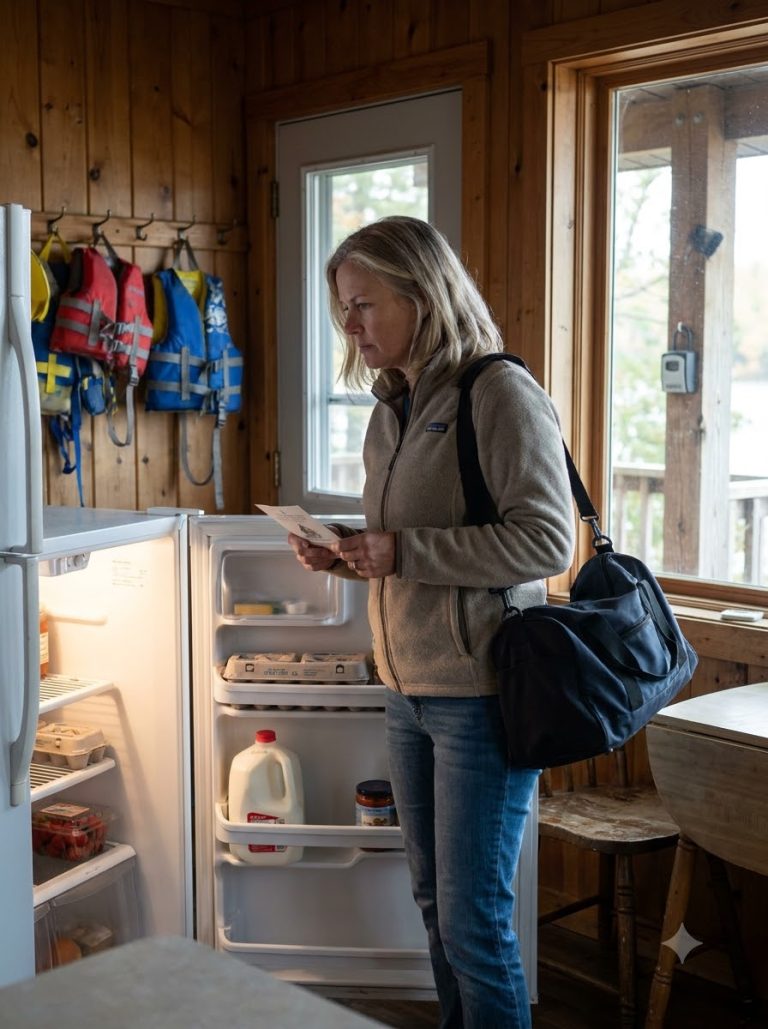
At home, my house smelled stale from being shut for two days. I opened windows, put my bag on the washing machine, and stood in the quiet kitchen.
My phone buzzed.
Anita: You okay?
I typed yes, then deleted it.
I wrote: Tired. Home. Glad I left when I did.
She replied: Good. I’m staying through lunch. Also good.
No report about Lydia.
No request to manage anyone else.
I put the phone down.
For the first time in years, not knowing exactly how everybody felt did not seem like a problem that required a solution.
The next morning at the museum, the problem followed me into a room full of people who had nothing to do with Lydia.
A volunteer named Colleen came to my desk because two docents had argued about switching Sunday shifts. Her first sentence was, “Can you just tell Ruth that Janice didn’t mean it personally?”
My mouth opened with the answer I had given a hundred times: Of course.
Then I stopped.
“Did Janice ask me to tell Ruth that?”
Colleen looked puzzled. “No. I just thought you could smooth it over.”
I almost laughed.
“Apparently I’m taking a short vacation from smoothing.”
Colleen waited.
I said, “If Janice wants Ruth to know what she meant, she should tell her. I can help with the schedule.”
“That’s very unlike you.”
“I’m experimenting.”
She left unconvinced.
Ten minutes later, Ruth came in, asked whether the Sunday switch was possible, and accepted my answer without requiring me to interpret Janice’s feelings. The museum did not collapse. Nobody resigned. There was no dramatic confrontation in the marble lobby.
I sat at my desk staring at the membership renewal report and felt embarrassed by how much relief that gave me.
Lydia had not invented the appeal of intermediaries. I used them at work too, and people used me. We all liked the convenience of a person who could make another person’s reaction predictable before we risked hearing it ourselves.
At lunch, my colleague Teresa asked whether I was coming to the staff picnic with “that friend who always knows everybody.”
“Lydia?”
“Yeah. She’s fun.”
“She is.”
Teresa waited for more, probably because I had brought Lydia to three museum events and usually had a story attached to her name.
I had none I wanted to tell.
That was another unfamiliar discipline: not turning a private rupture into social currency simply because someone had left room for it.
On my drive home, I passed the exit that would have taken me to Lydia’s neighborhood. For years I had taken that exit almost automatically when something interesting or upsetting happened. I imagined her kitchen, her jar of wooden spoons, the stool where I always sat, the way she would have understood the lake weekend before I finished explaining it—because she was usually the person I asked to explain other people.
I kept driving.
Missing her was not evidence that leaving had been wrong.
It was evidence that the friendship had been real enough to leave a hole.