At A Neighborhood Dinner, Beth Learned Her Marriage Had “Separate Fridays”—An Arrangement Her Husband Had Never Mentioned

PART 6
The false peace broke on a Wednesday at the community garden.
Anita was spreading mulch between raised beds when Beth arrived for her volunteer shift.
They had not discussed David since the neighborhood dinner. Beth appreciated that.
Anita had the rare adult skill of knowing when information belonged to someone else.
They worked side by side for half an hour before Anita said, “Mark’s doing a birthday dinner Friday.”
Beth stabbed her shovel into the mulch pile.
“Okay.”
“He invited both of you.”
“Good to know.”
Anita hesitated.
Beth looked at her.
“What?”
“I wasn’t sure whether to say anything because I don’t want to become the person passing messages.”
“Did Mark ask you to invite me?”
“No. The group text went to David. Mark assumed couples would come.”
Beth waited.
Anita rubbed dirt from her glove.
“David told him you two had plans and that he might stop by later alone.”
Beth went very still.
They did not have plans Friday.
David had asked Tuesday whether she wanted to “play it by ear.” Beth had said yes.
“Did he say I couldn’t come?”
“No. He said you probably wanted a quiet night after your garden thing.”
Beth looked around at the rows of kale and late tomatoes.
“My garden thing is Wednesday.”
“I know.”
Beth did not need anything more elaborate than the ordinary fact in front of her: an inclusive invitation had arrived during their supposed reset, and David had already converted Beth into an absence.
“Thank you for telling me,” Beth said.
Anita looked worried. “Are you okay?”
“No. But I will be.”
At home that evening, David was assembling the cedar bench.
He had finished the seat frame and attached one armrest. The other leaned against the garage wall.
Beth stood in the driveway watching him work.
He looked up.
“Hey. This is finally starting to look like furniture.”
“It is.”
He smiled.
She hated that he looked pleased with himself.
“Mark’s birthday dinner is Friday.”
The smile disappeared.
“Anita told you.”
“She told me Mark invited both of us.”
David set down the drill.
“I was going to mention it.”
“When?”
“I don’t know. Tomorrow?”
“You already told Mark I probably wanted a quiet night.”
He stood.
“I said I might go by later. That’s all.”
“Why alone?”
“Beth, we’ve done three Fridays together. I thought it was okay to see my friends.”
“It is okay to see your friends.”
“Then what is this?”
“This is the same thing again. You received an invitation that included me. Instead of asking what I wanted, you told them what I probably wanted and made a version of the plan where you went alone.”
David’s face reddened.
“I don’t want to ask permission every time I leave the house.”
“I have never asked you to.”
“It feels like it.”
“Because I exist in the invitation?”
He turned away.
Beth felt anger surge hot enough to make speech easy.
She could have listed every contradiction. Three date nights. His apology. His claim that the separate-Fridays story had been about schedules. The July patio invitation. The new birthday dinner.
Instead she asked one question.
“Why do you keep choosing the version where I’m not there?”
David stared at the half-built bench.
For a long time he said nothing.
Then: “Because sometimes I want to know what it feels like.”
Beth’s skin went cold despite the warm evening.
“What what feels like?”
He looked at her.
“Having my own life.”
“You already have your own life.”
“I mean a life that isn’t attached to yours.”
The sentence sat between them.
Beth did not move.
David continued too quickly. “Not because I want a divorce. I don’t. I just—after the kids left, I started wondering who I was if I wasn’t needed here.”
“So you practiced being single on Fridays?”
“No.”
“That is what you just described.”
“I described having friends.”
“You described removing me from invitations to see what a life unattached to mine feels like.”
He picked up the drill, then set it down again.
“I knew you’d make it sound terrible.”
Beth almost laughed.
“I didn’t make the sentence.”
He walked into the garage.
Beth stayed beside the unfinished bench.
The recent good Fridays remained real. That was the cruel part. David had wanted those too.
The marriage was not one lie replacing another truth.
It was a man reaching for connection with one hand and testing distance with the other.
Beth did not confront him again that evening.
Instead she watched what happened when she stopped converting his discomfort into household action.
The next morning, David opened the refrigerator and said, “We’re out of milk.”
Beth was reading at the table.
“Sounds serious.”
He looked at her, then laughed reluctantly.
“I can buy milk.”
“I believe in you.”
He did.
That afternoon Claire called both parents on video. David answered from the living room; Beth joined from the patio after finishing a client sketch.
Claire asked whether they had decided who would host Thanksgiving.
David looked automatically toward Beth.
Beth waited.
He caught himself.
“I’d like to have it here,” he said. “Beth?”
“So would I.”
“Okay.”
Claire said, “That was weirdly formal.”
Beth said, “We’re trying a new family product called asking.”
Claire laughed.
After the call, David followed Beth outside.
“You’ve told her something’s wrong.”
“I told her we’re having a hard time.”
His face tightened. “Why?”
“Because she asked.”
“I don’t want the kids worrying.”
“Neither do I. I also don’t want them thinking we can only be safe parents if we hide every difficult thing.”
David sat on the unfinished bench frame.
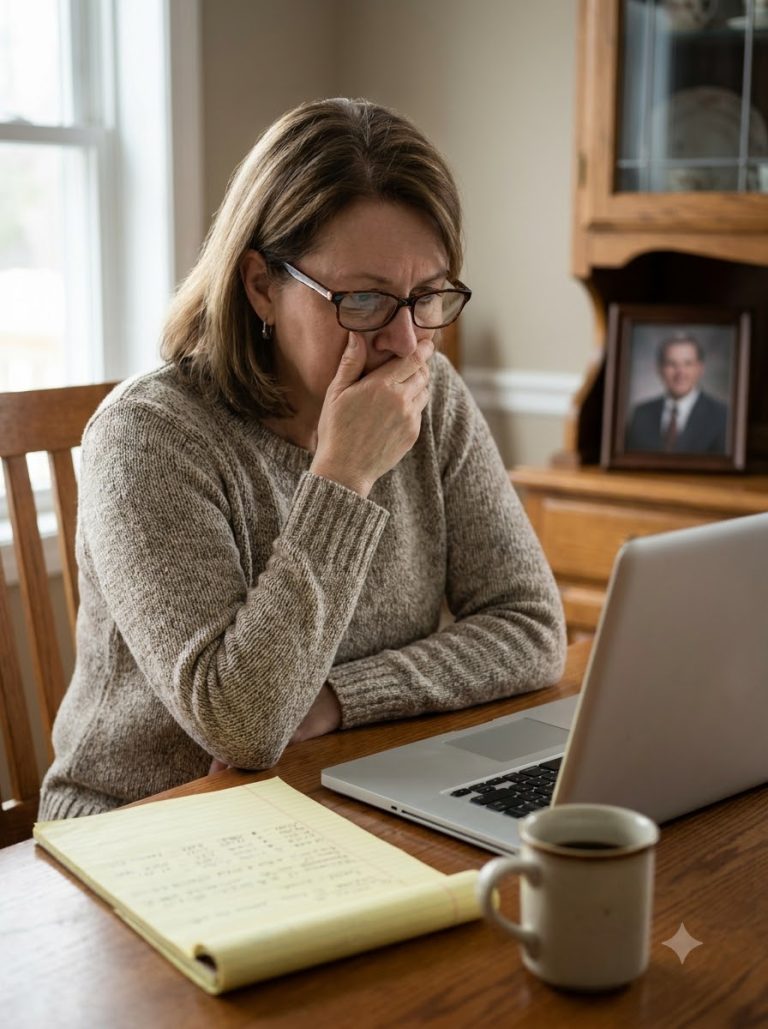
“What if this is just empty-nest panic?”
“Then it’s still ours to deal with.”
“What if I made the Friday thing bigger because I was lonely and stupid?”
“Then you were lonely and made choices that hurt me.”
He nodded.
Beth realized he was finally offering explanations without asking her to turn them into excuses.
That evening he made dinner. He chose groceries, cooked, and cleaned the pan. Beth thanked him. She did not make the gesture symbolic.
On Monday, she came home from a client meeting to find David on the phone with his sister, apologizing for forgetting her birthday.
“No, Beth didn’t forget,” he was saying. “I did. Stop blaming her for my calendar.”
Beth paused in the hallway.
He caught her eye and rolled his.
His sister was apparently giving him a lecture.
When he hung up, Beth said, “You survived.”
“Barely. She says I’m emotionally dependent on competent women.”
“She may be my new favorite Palmer.”
He laughed.
Those ordinary moments complicated Beth’s anger. David was not incapable of change. He was not secretly a different man than the one she had married. He was a familiar man who had let fear become a private test, then built habits around it.
That was harder to dismiss and harder to forgive.
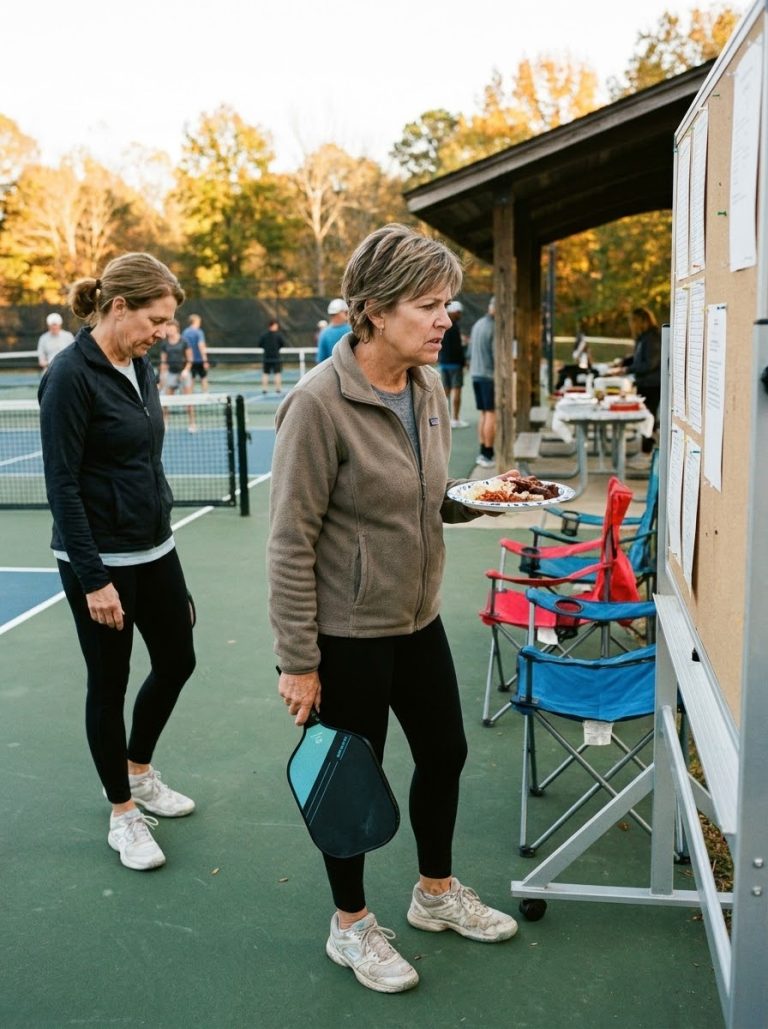
Later that week, Beth went to the walking group’s breakfast. One woman complained that her husband never planned vacations. Another said she would be thrilled if hers stopped planning them.
Beth listened without turning her marriage into a cautionary tale.
When Anita asked quietly, “How are you?” Beth answered, “Still married. Still angry. Some good moments.”
Anita nodded.
No advice.
Beth appreciated that more than she would have six months earlier.
At home, David had left the bench plans on the kitchen counter with a note: I think I can finish Saturday. If you want to work with me, ask. If not, I can handle it.
Beth read the note twice.
Then she wrote underneath: I’ll help move it when it’s done.
It was not romance.
It was the first time in weeks a shared project had a clear owner.