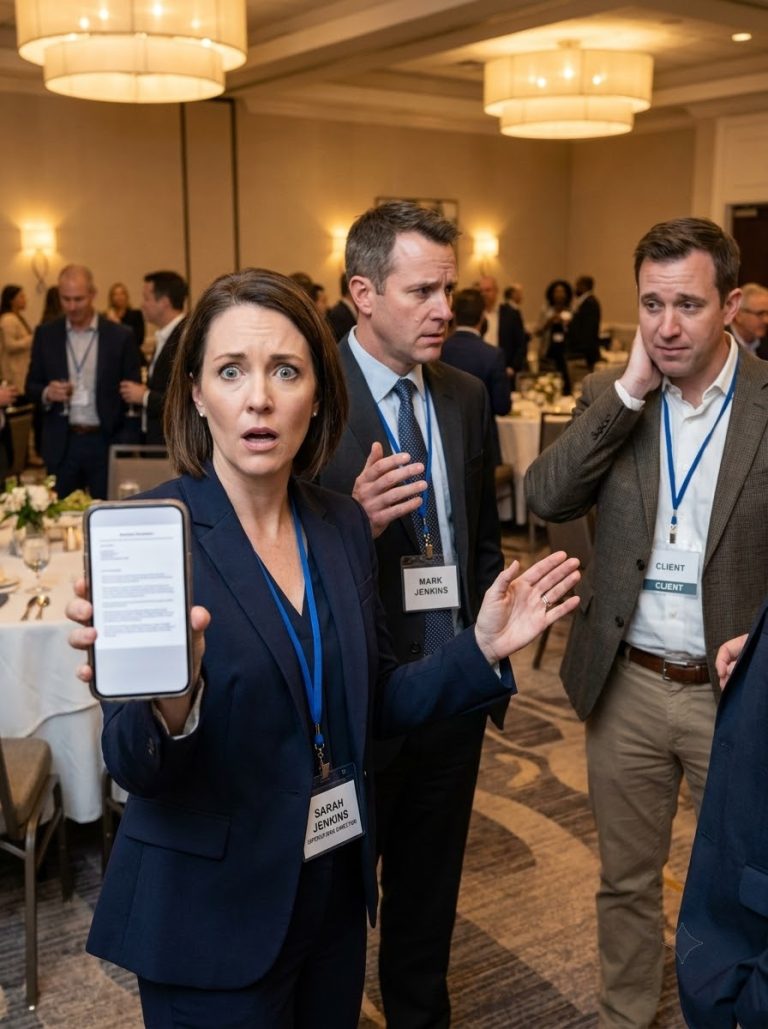
At A Neighborhood Dinner, Beth Learned Her Marriage Had “Separate Fridays”—An Arrangement Her Husband Had Never Mentioned

PART 11
The first week apart was almost offensively normal.
Beth worked. David worked. The maple dropped leaves. A client changed her mind about a patio material after Beth had already priced it. Claire called and complained about a coworker.
On Tuesday, David texted: Made pasta. Forgot how much one person eats. Apparently I now own six servings of sauce.
Beth smiled.
She wrote: Freezer.
He replied: Look at you, rescuing me.
She stared at the message.
Then: Basic food safety exemption.
He sent a laughing emoji.
That small exchange did more for her than a long emotional check-in would have.
They were speaking because one had something to say, not because a schedule required proof they still existed to each other.
On Friday, Beth went to dinner with her walking group.
She did not wonder where David was until almost ten.
When she noticed that, guilt came first.
Then she remembered his old test: if she mattered, she would notice him leaving.
She could not build a healthier marriage by converting absence into another exam.
At counseling the following Monday, Dr. Shaw asked how separation felt.
David said, “Lonelier than the Fridays.”
Beth looked at him.
He continued. “The Friday dinners felt temporary because I knew I was going home. The apartment doesn’t have her in the next room. I wanted to know what separate felt like. I know now.”
“Do you regret leaving?” Dr. Shaw asked.
“Yes. And no.”
Beth appreciated the answer.
David looked at her.
“I needed to feel the difference between having independence and having no shared life around it.”
Beth said, “I needed to feel the difference between missing you and being responsible for you.”
Dr. Shaw asked what she had learned.
Beth thought about Saturday morning.
She had spent three hours in the yard, then showered and driven to a nursery two towns over simply because she wanted to. No one asked when she would return. She enjoyed the freedom.
She also saw a man in the parking lot loading mulch into a sedan badly and immediately imagined David commenting on it.
“I like my own life,” she said. “That was never evidence against the marriage.”
David looked down.
“I know that now.”
The fourth week brought the first real setback.
Claire announced she would be home for Thanksgiving and asked whether David would be back in the house by then.
Beth said, “We don’t know.”
Claire said, “Can’t you decide before I come?”
Beth understood the request. Adult children still wanted their parents to make home feel fixed.
“No,” she said gently. “We won’t use Thanksgiving as a deadline.”
Later, David called.
“Claire called me too.”
“I assumed she would.”
“She wants me home.”
“I know.”
“What do you want?”
The question was simple.
Beth sat on the finished cedar bench, wrapped in a sweater against the November chill.
“I want you here if we’re choosing the marriage. I don’t want you here because our daughter wants one normal holiday.”
“I want to come home.”
“Why?”
“Because I miss you.”
“That’s not enough.”
He was quiet.
A month earlier, he might have heard rejection and started testing.
Now he said, “Okay. What else do you need to know?”
Beth looked at the bare branches overhead.
“I need to know whether you want a life with me that includes us both having parts that are separate. Not a life where your separate part exists to see whether I chase it.”
“I do.”
“How do you know?”
“Because I’ve had four weeks where nobody was stopping me from building a separate life. I went to the supper group twice. I liked it. Then I came back to an apartment and there was no shared joke about the waiter, no one to tell about Mark’s ridiculous argument, no garden lights on when I pulled in. I don’t want you attached to every room I enter. I want a home where I can come back and tell you what happened because I choose to.”
Beth closed her eyes.
That was closer.
Not proof. Not a promise immune to relapse.
Closer.
“Let’s finish the six weeks,” she said.
David exhaled.
“Okay.”
He did not ask whether that meant she loved him.
She loved him more for not asking.
Thanksgiving came during week five.
David arrived at noon carrying sweet potatoes and a pie from a bakery because he had finally accepted that nobody wanted him making crust.
Claire hugged him too long.
Their son joined by video from Denver.
No one pretended the marriage was fully repaired.
David left at nine and returned to his apartment.
Claire cried in the kitchen afterward.
“I hate this,” she said.
“So do I.”
“Then why are you doing it?”
Beth put an arm around her daughter.
“Because hating a consequence doesn’t tell you whether it’s necessary.”
Claire leaned against her.
“Are you getting divorced?”
“I don’t know.”
For once, Beth let her daughter hear an answer that could not be organized into comfort.
After Claire went to bed, Beth washed the serving dishes alone. David had offered to stay and help, but she had told him to go back to the apartment before the roads iced over.
At the sink, she realized this was the first family holiday in decades that had not ended with her automatically assigning leftovers, making travel plans, and checking who needed what the next morning.
The freedom did not feel triumphant. It felt quiet and slightly lonely.
She wrapped David’s share of the pie because she wanted to, not because he had forgotten to take it. She texted him: Pie is here if you want it tomorrow.
He replied: I do. I’ll pick it up after 10 if that works.
Beth wrote: Works.
No hidden question. No demand for reassurance.
The exchange was so ordinary that she almost missed what had changed.
The next morning, David knocked instead of using his key.
Beth opened the door.
“You still live here,” she said.
“I know. It felt better to knock while I’m not living here.”
She handed him the pie.
He smiled.
“Best separation benefit so far.”
“Take the container back eventually.”
“No promises.”
He left after five minutes.
Beth watched him go and understood that temporary distance was teaching them something neither togetherness nor Friday absence had managed: separation could be explicit without being a threat, and contact could be chosen without being a test.