My Best Friend Thanked Me For Forgiving Her $8,000 Loan – But I Had Never Said It Was A Gift

PART 10
In August, Elise turned fifty.
She did not have a dinner at home.
Not because of the previous birthday.
Because she wanted something different.
June reserved a long table at a neighborhood restaurant. Renee came. Three coworkers came. Trina came too.
There was no toast about money.
Trina gave Elise a small framed photograph from a weekend trip they had taken years earlier.
On the back she had written:
No balance due.
Elise stared at it.
Trina’s face fell.
“Too soon?”
Elise laughed.
“Almost.”
“I can take it back.”
“No.”
“You’re sure?”
“Yes.”
She hugged her.
The hug was brief and real.
That month’s payment arrived two days later.
Elise did not connect the gift to the payment.
That was the point.
A few weeks after her birthday, the dental lab restored full hours.
Trina called.
“I can raise the payment to two-fifty.”
Elise paused.
“Do you want to?”
“Yes.”
“Can you?”
“Yes.”
“Then okay.”
“No speech?”
“What speech?”
“You’ve changed.”
“I have not.”
“You absolutely have.”
The balance began dropping faster.
Elise expected that approaching the end would create another emotional crisis.
It mostly created arithmetic.
There were five payments left.
Then four.
Then three.
One afternoon at work, Dennis looked over her shoulder.
“You smiling at a spreadsheet?”
“It is a note.”
“That is worse.”
Elise closed her phone.
At home that night, she thought about what would happen when the loan was fully repaid.
Would they celebrate?
Should they?
Would dinner turn into another symbolic event both women overinterpreted?
She decided to ask.
At coffee the next Saturday, she said, “Three payments left.”
Trina nodded.
“I know.”
“What do you want to do when it’s done?”
“Never borrow money from you again.”
“Excellent.”
“I’m serious.”
“So am I.”
Trina stirred her coffee.
“I don’t want a dinner.”
“Neither do I.”
“No speech.”
“Definitely no speech.”
“Maybe just a text.”
“A boring one.”
“Perfect.”
They agreed.
That was the entire conversation.
In October, Elise had one of the worst workweeks she had experienced in years.
A cold snap arrived early. Furnace calls doubled. One technician quit by email. Dennis came down with the flu and tried to work from home badly.
By Thursday, Elise had eaten crackers for dinner twice.
At six-fifteen, Trina texted.
You sound wrecked. Want dinner dropped off? No visit required.
Elise stared at the message.
The old version of their friendship would have skipped the question.
Trina would have appeared with food.
Elise would have been grateful and maybe secretly tired.
The new version contained a door.
Elise wrote:
Yes. Please. Stay for twenty minutes if you want.
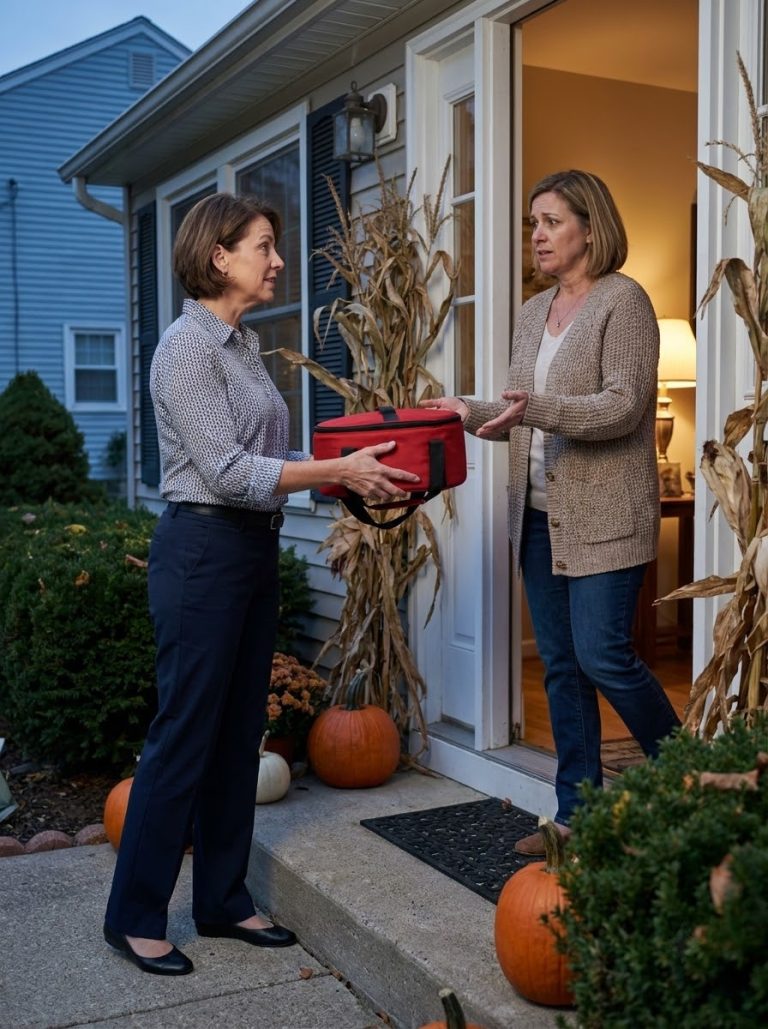
At seven, Trina arrived holding the blue casserole dish.
Elise burst out laughing.
“You used it.”
“It remains structurally sound.”
“What is in it?”
“Chicken and rice.”
Of course.
Trina came inside.
They ate at the kitchen table.
Twenty minutes became thirty-five.
Trina complained about parking. Elise complained about furnace season.
At the door, Trina said, “Do you need anything else?”
Elise thought.
“No.”
“Okay.”
“Thank you for dinner.”
“You’re welcome.”
No joke.
No ledger.
No debt reference.
After Trina left, Elise washed the dish.
She looked at the chipped rim and remembered four years earlier.
Then she remembered the birthday dinner.
Both memories belonged to the same friendship.
Neither canceled the other.
The next month, the second-to-last payment arrived.
Then December brought the last.
Two hundred fifty dollars.
The notification appeared while Elise was at work.
She stared at it for a long moment.
Then typed exactly what they had agreed.
Got it. Balance zero. Thank you.
Trina replied:
Thank you.
Nothing else.
Elise put her phone down.
The office did not change.
No music played.
No moral lesson descended from the ceiling.
Dennis asked whether a technician could squeeze in a thermostat call.
Elise checked the board.
“No.”
“You didn’t even look.”
“I did look.”
He sighed.
“Fine.”
Elise smiled.
The loan was over.
The friendship was not.
That distinction felt almost ordinary now.
The last-payment month also brought an unexpected test.
Trina’s car needed a repair she could not comfortably cover in one paycheck.
She told Elise over coffee and then immediately said, “I am not asking.”
Elise believed her.
That mattered.
A year earlier, Elise might have offered money before Trina finished the sentence, then resented the possibility of becoming a bank again. Trina might have heard the offer as rescue and shame at once.
Instead Elise asked, “What are you going to do?”
“Put half on the card and pay it off next month.”
“Sounds unpleasant.”
“It is.”
“Do you need a ride?”
“Yes.”
That was all.
Elise drove her to work on Monday morning.
At the curb, Trina said, “Thank you.”
“You’re welcome.”
Neither woman tried to make the ride stand for anything larger.
The fact that Elise could help without lending, and Trina could accept without assuming a larger obligation, felt like a quieter kind of repair than any apology they had made.