At My Best Friend’s Cookbook Launch, I Found My Mother’s Recipe Written As Her Family Memory

PART 1
I knew the cinnamon rolls were my mother’s before I finished reading the first paragraph.
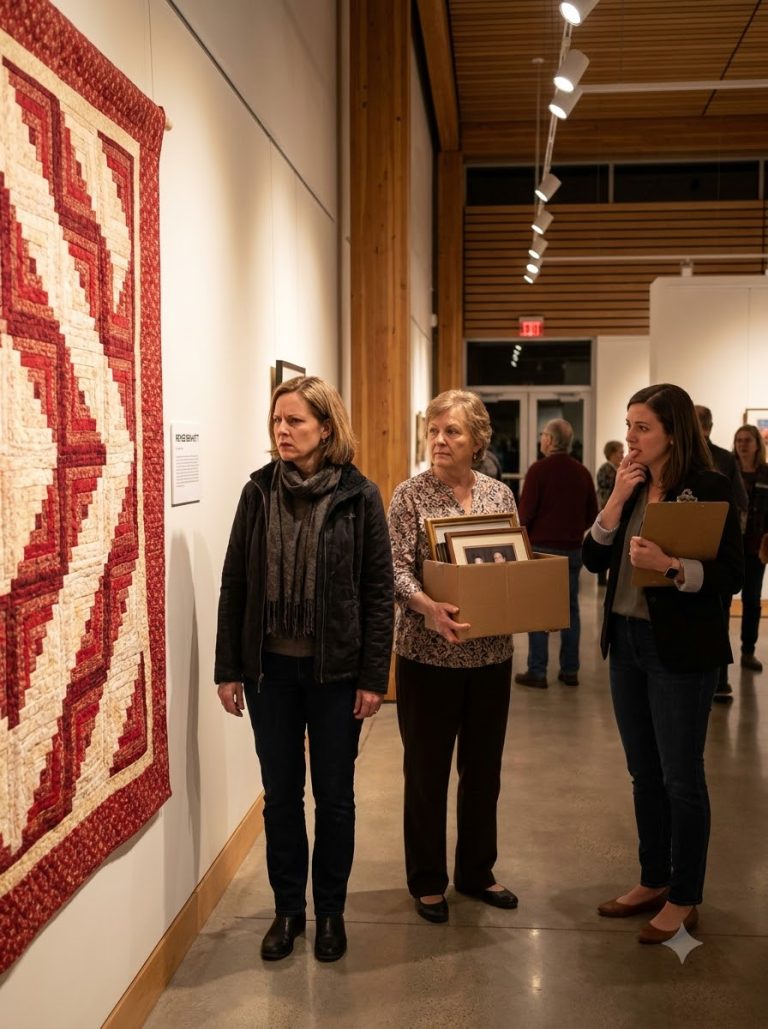
The recipe was on page forty-seven of Ellen Whitaker’s new cookbook, between a photograph of her standing in a flour-dusted kitchen and a short essay called Sunday Mornings at Home. I was sitting in the third row of Bellweather Books with a signed copy open on my lap while Ellen answered a question about how she had “collected a lifetime of kitchen memories” into one book.
There were thirty people in the store, maybe forty if you counted the ones standing near the mystery section. I had helped arrange the launch because I ran adult programs at the Westfield Public Library and because Ellen had been my closest friend for seventeen years.
I had also supplied the recipe she was reading from.
Two years earlier, our library had organized a community supper series called Recipes We Carry. Residents brought a dish, a recipe card, and a short memory about the person or place connected to it. Ellen, who had been teaching cooking classes at a local market, volunteered to help with the food demonstrations. I coordinated the oral-history side: permissions for the library display, scanned copies of cards, contributor labels, and a booklet we printed for participants.
My mother’s cinnamon rolls had been one of my contributions.
They were ordinary except for one thing. She used mashed potato in the dough, a trick she learned from her mother in western Pennsylvania. The card I brought to the library was stained with butter and had a line in my mother’s handwriting that said, Don’t add all the flour just because the dough looks nervous.
That sentence was in Ellen’s book.
Not quoted from my mother.
Not attributed to anyone.
It appeared in Ellen’s first-person story.
My mother always said the dough knew when you were scared of it. If it looked nervous, she’d tell me not to bury it in flour.
I read the paragraph again.
Then I looked at the stage.
Ellen was fifty-five, one year older than me, wearing a dark green blouse I had helped her choose because she said the cream one made her look like “a woman launching yogurt.” Her silver-blond hair was tucked behind one ear. She was smiling at a man in the front row who had asked whether every story in the book came from her family.
“Not every one,” Ellen said. “Some are inspired by the women I’ve cooked with over the years. Food stories travel. That’s part of the point.”
The audience murmured appreciatively.
I stopped breathing for a second.
Not literally. People always write that as if their lungs resign in protest.
I breathed.
I simply forgot what I was supposed to do next.
The book was titled The Table I Came From: Recipes and Stories From a Life of Feeding People.
I had seen the cover.
I had seen the promotional copy.
I had not seen the finished interior because Ellen told me the publisher wanted to keep advance copies limited until launch week. She had shown me photographs and one chapter about her grandmother’s soup. Nothing from the community supper project.
I turned the page.
There was a recipe for skillet cabbage that looked familiar but not identical to one contributed by Ruth Keller, a retired school secretary who had told us about cooking it in an electric skillet during the year her kitchen was remodeled.
I turned another page.
Corn pudding.
A note about Thanksgiving church basements.
Another memory I recognized.
I closed the book.
My daughter, Leah, was sitting beside me. She was twenty-nine and had come because she liked Ellen and because she believed bookstore events should serve wine more often.
She leaned toward me.
“You okay?”
“No.”
Her face changed.
“What happened?”
I opened to page forty-seven and handed her the book.
She read silently.
Leah knew the recipe. She had made those cinnamon rolls badly three Christmases in a row before finally learning that impatient yeast was not a personality trait.
Her eyes lifted to mine.
“Grandma?”
“Yes.”
“Did Ellen ask?”
“For the book?”
“Yes.”
“No.”
Leah looked toward the stage.
“Maybe she credited you somewhere.”
That was possible.
I wanted it to be possible.
I flipped to the acknowledgments.
Two pages.
Her agent. Her editor. Her photographer. The bookstore owner. Several food writers. Her sons. Her sister.
Then one paragraph:
To the many women whose kitchens, recipes, and generous stories have shaped my understanding of food: this table belongs to all of us.
No contributor names.
No library project.
No Westfield Public Library.
No Recipes We Carry.
I felt something hot move up my neck.
The event coordinator signaled that there were five minutes left for questions.
I could have raised my hand.
I could have asked Ellen, in front of everyone, whose mother had written the nervous-dough line.
For one bright, ugly second, I wanted to.
Then I thought of Ruth. Of the other twelve women who had participated in the supper project. Of the permissions folder in my office. Of the fact that I did not yet know what Ellen had told the publisher or what the publisher had changed.
So I stayed seated.
Leah whispered, “You’re not going to say anything?”
“Not until I know what I’m saying.”
That answer disappointed her.
It also saved me from making the first move for the wrong reason.