At My Best Friend’s Cookbook Launch, I Found My Mother’s Recipe Written As Her Family Memory

PART 7
Ellen came to the library on Monday carrying a manila folder.
She had texted first.
Can we talk in your office? I have an idea that may fix most of this.
I disliked the phrase “fix most of this” before she arrived.
Still, I said yes.
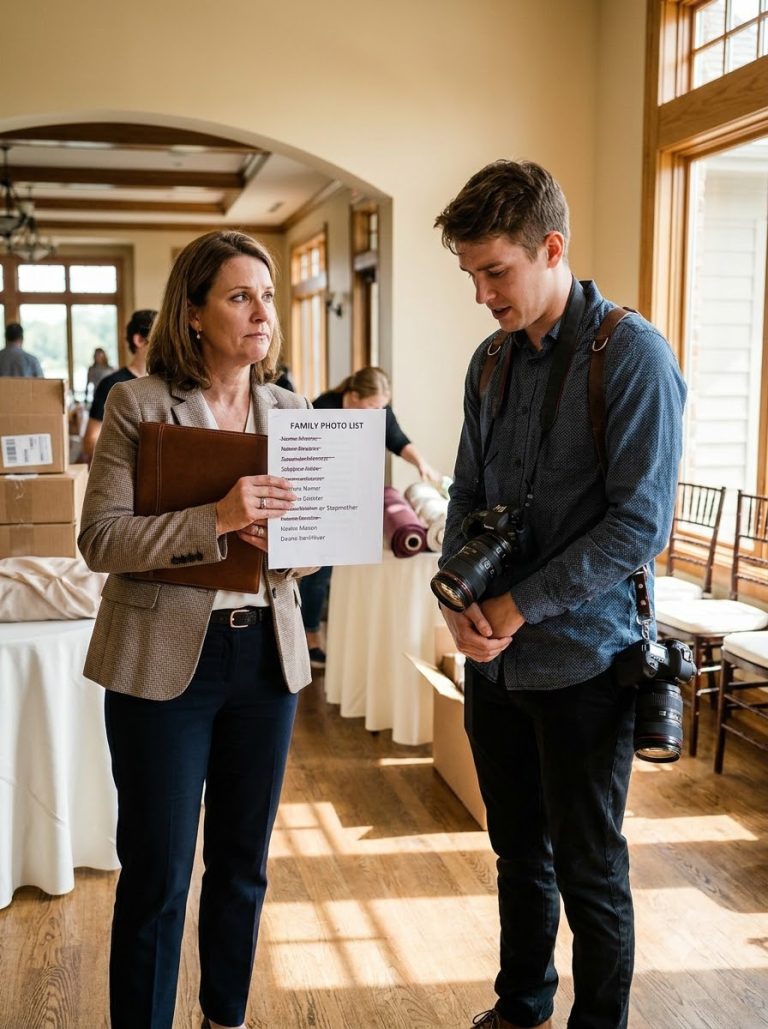
She closed my office door and handed me a mock-up.
Harbor House could add a contributor acknowledgments page to the book’s website immediately. It would list the community supper project, name anyone who wanted to be named, and identify several recipes as adapted from contributor material.
For future publicity, Ellen would mention Recipes We Carry in interviews.
“I can also post something on my own site,” she said. “A full thank-you.”
I read the page.
It named my mother’s cinnamon rolls as “inspired by a recipe shared by Marissa Cole through the Westfield Public Library’s Recipes We Carry project.”
Better.
Not enough.
“What about the sentence?”
Ellen knew which one.
“We cannot change printed copies.”
“I know.”
“The ebook can be updated.”
“And future printing?”
She hesitated.
“We have not discussed a second printing yet.”
“Then discuss it before there is one.”
Her mouth tightened.
“Marissa, Harbor House is a tiny press. They cannot redesign half the book.”
“I did not ask them to.”
“What are you asking?”
“I want my mother’s first-person memory not to be your first-person memory in any future version.”
She sat back.
“So you want the essay rewritten.”
“Yes.”
“That affects pagination.”
“I know how books work.”
“Do you?”
The question was sharp.
So was my answer.
“I know how names work.”
We stared at each other.
Then Ellen looked away.
“I am trying.”
“I see that.”
“Nothing I offer is enough.”
“That is not true.”
“It feels true.”
I took a breath.
“The website acknowledgment is useful. The project credit is useful. The ebook correction would be useful. I am not rejecting them because they do not erase the first printing.”
She looked back at me.
“Then what?”
“I need future use handled with actual contributor choices. Not one blanket solution.”
She frowned.
“That will be chaos.”
“People can survive being asked.”
“You say that because you organize library programs. You have forms for breathing.”
“Only for public breathing.”
She almost smiled.
The almost-smile hurt more than the argument.
For seventeen years, humor had been one of our shortcuts back to each other.
I did not want to use it too early.
Ellen opened the manila folder again.
“Nina suggested a contributor review.”
“What kind?”
“We send each person the passages tied to their material. They say what they are comfortable with for digital and future print.”
“That sounds reasonable.”
“You will do it?”
“I will participate. I will not run it for you.”
She blinked.
“I was not asking you to.”
“You were about to.”
Her mouth opened.
Then closed.
We both knew I was right.
I had spent seventeen years being the person who made Ellen’s generous ideas logistically possible.
Community supper? I built signup forms.
Fundraiser? I made volunteer schedules.
Cooking class? I handled room capacity and insurance paperwork.
She brought energy. I built containers.
I had liked that partnership.
Until the container became invisible enough that she believed it appeared on its own.
“I am sorry,” she said.
“For what?”
“For assuming you would help manage the correction.”
That was specific.
It mattered.
“Thank you.”
She left the mock-up with me.
For two days, things settled.
Harbor House posted the project acknowledgment online.
Ellen mentioned the library project in a radio interview.
Nina sent contributors individual emails explaining that the press was reviewing source attribution for digital and future print versions.
Ruth called me and said, “This is not perfect, but I can live with movement.”
I felt the same.
On Wednesday night, Ellen and I exchanged three normal text messages about Leah’s new apartment.
For a few hours, I believed we had reached the painful, limited version of repair available to adults who had known each other too long to become strangers over one mistake.
Then Jo forwarded me an email.
It was from Ellen, eight months before publication.
Jo — Harbor House needs the narrative to stay in my voice, and Marissa has already signed off on treating the supper stories as shared source material rather than individual memoir pieces. If you are okay with me adapting the recipe, we are all set.
I had never signed off on anything.
The temporary calm ended in one sentence.