A Matchmaker Sent My Profile to a Man I Never Approved—Then I Learned My Dinner Ticket Had Made Me “Available”

PART 8
Grace Phelps did not try to persuade Rachel to do anything.
They met by video on Wednesday morning before Rachel went to work.
Grace was in her sixties, with silver hair cut close to her jaw and a background that looked like an actual office rather than a carefully staged video-call wall.
“I want to understand the path,” she said. “Not whether you liked North Star.”
Rachel appreciated the sentence.
She walked Grace through the supper, confirmation email, questionnaire, profile, Daniel’s message, and correction.
Grace asked where the profile’s narrative paragraph came from.
“Some of it was written on the questionnaire,” Rachel said. “At least two lines came from table conversation.”
“Were you told conversation might be recorded or summarized for later matching?”
“No.”
“Do you know whether audio was recorded?”
“I have no reason to think so. There were staff with tablets taking notes.”
“Good distinction.”
Rachel liked her more.
Grace asked whether the event page had changed.
“Yes.”
“Before or after your complaint?”
“After.”
“Do you have the older version?”
Rachel did. Beth had taken a screenshot when she bought the tickets because she was sending Rachel the menu.
Rachel forwarded it.
Grace leaned toward her screen.
“This is useful.”
“Useful is not the same as proof of intent.”
Grace smiled slightly.
“You really do manage conferences.”
“I have been accused.”
They talked for forty minutes.
At the end, Grace said, “I cannot promise what Sophie will change. I can tell you the current system uses several candidate categories that grew over time, and the distinctions between how people entered those categories are not as clean as they need to be.”
Rachel heard the careful phrasing.
“Did event attendees become useful because active members wanted more options?”
Grace paused.
“That is part of what I am reviewing.”
“Is it the whole reason?”
“I do not know yet.”
A week passed.
Rachel almost enjoyed not hearing from North Star.
Then Grace asked for a second call.
This time Nina joined.
Grace shared a diagram.
It showed four routes into North Star’s candidate network.
Paid membership.
Former membership.
Direct referral.
Event participant.
Each route could lead to Active, Alumni, Referral, or Passive status.
The problem was obvious even before Grace spoke.
The status described how North Star wanted to use the person.
It did not reliably describe what the person had agreed to.
“When was Passive created?” Rachel asked.
“About four years ago.”
“Why?”
Grace looked at her notes.
“North Star shifted from mostly reciprocal membership—where both people were members—to a model where a paying client could be introduced to people outside the paid pool.”
“That is in Daniel’s welcome packet,” Rachel said.
“Yes.”
“Did the business need a larger pool?”
Grace did not soften it.
“Yes.”
Nina said, “There it is.”
Grace continued.
“Initially Passive was mostly former members and direct referrals who had said they were open to occasional introductions. Later, some event participants were added after matchmaker review.”
“Without separate opt-in,” Rachel said.
“In some cases, yes.”
“How many?”
“I am not going to give you a number today.”
Rachel nodded.
She did not need the number to understand the mechanism.
Sophie had not created Rachel’s profile because she personally believed Rachel was lonely.
That belief had helped.
Sophie had not shared Rachel because Daniel was uniquely perfect.
That may also have been sincere.
The deeper reason was structural.
North Star sold active clients the benefit of a large, selective network.
Event attendees expanded that network.
Women who did not want formal membership were especially valuable because they made the service look more private and exclusive.
Their reluctance was not an obstacle.
It was part of the product.
Rachel felt the story change shape.
All week she had been arguing against the idea that reluctance could be interpreted as consent.
Now she saw something more complicated.
The business had learned how to market reluctance itself.
Private candidate.
Selective.
Not on apps.
Not actively searching.
Hard to meet.
Those descriptions made women like Rachel sound desirable.
Scarcity had commercial value.
Sophie’s language about reading hidden openness had not merely justified a matchmaking philosophy.
It supported the inventory model.
Rachel thought back to the supper.
The detailed questionnaire.
The staff notes.
The sentence about “no pressure.”
The optional membership consultation.
All of it could be true.
The dinner could genuinely be fun.
The compatibility work could be genuine.
The matches could be thoughtful.
And the event could still be functioning as candidate acquisition for a service the women had not joined.
Nina asked Grace, “Did Sophie know that was happening?”
Grace looked uncomfortable.
“Sophie designed the categories.”
The room went quiet.
Rachel did not feel triumphant.
She felt disappointed.
There had been a version of the story in which an enthusiastic matchmaker failed to separate intuition from permission.
That version left room for a mistake born from personality.
This version required a different question.
Not did Sophie misunderstand Rachel?
What did Sophie need Rachel to be?
Grace said, “Sophie has agreed to suspend all event-origin passive profiles until the review is complete.”
“Good,” Rachel said.
“She is also revising the event registration.”
“Good.”
Nina asked, “And prior clients?”
“We are working through notification language.”
Rachel closed her notebook.
“What happens to the old profiles?”
“People will be asked to opt in. No response will mean removal from ongoing matching.”
That was the first time Rachel had heard the default stated correctly.
No response meant no.
The sentence should not have felt radical.
It felt almost peaceful.
Grace ended the call by asking whether Rachel would review the revised event language.
Rachel said yes.
Not because she wanted to become North Star’s unpaid compliance department.
Because she wanted to see whether the new words returned choice to the right person.
Afterward, Rachel sat at her kitchen table.
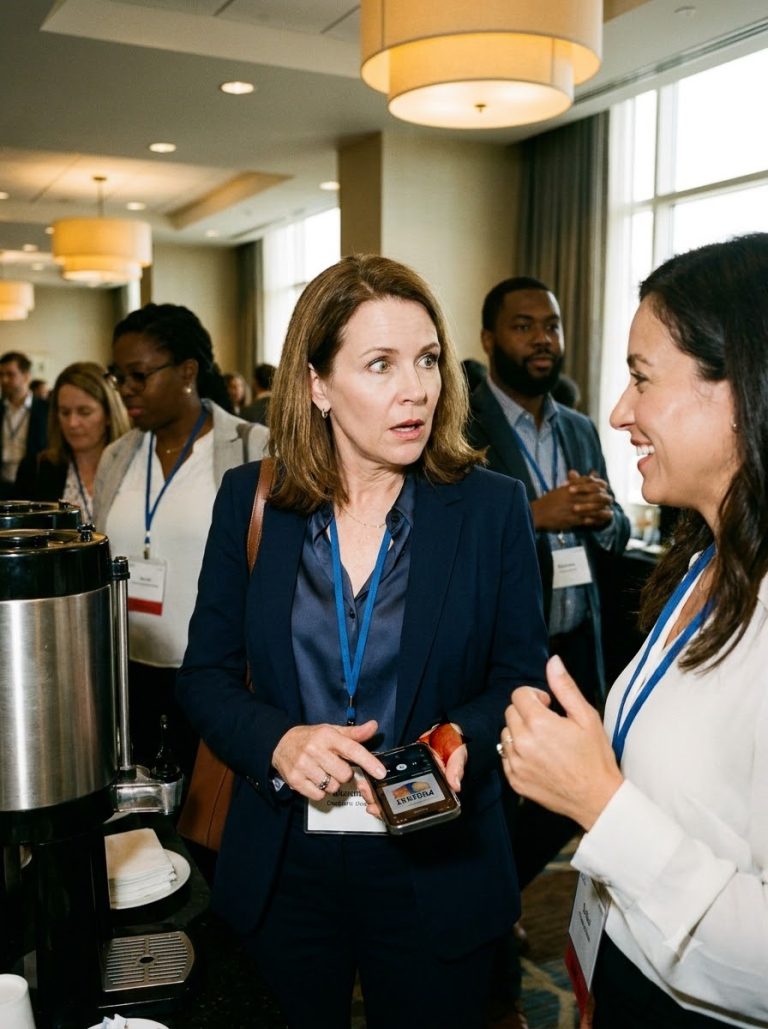
The old name badge from the supper was still in the pocket of the jacket she had worn that night.
RACHEL.
Beneath her name, in smaller type:
Table 4.
Nothing on the badge said available.
Nothing said passive.
Nothing said private candidate.
She put it on the table.
For the first time, the object looked exactly as limited as it should have been.