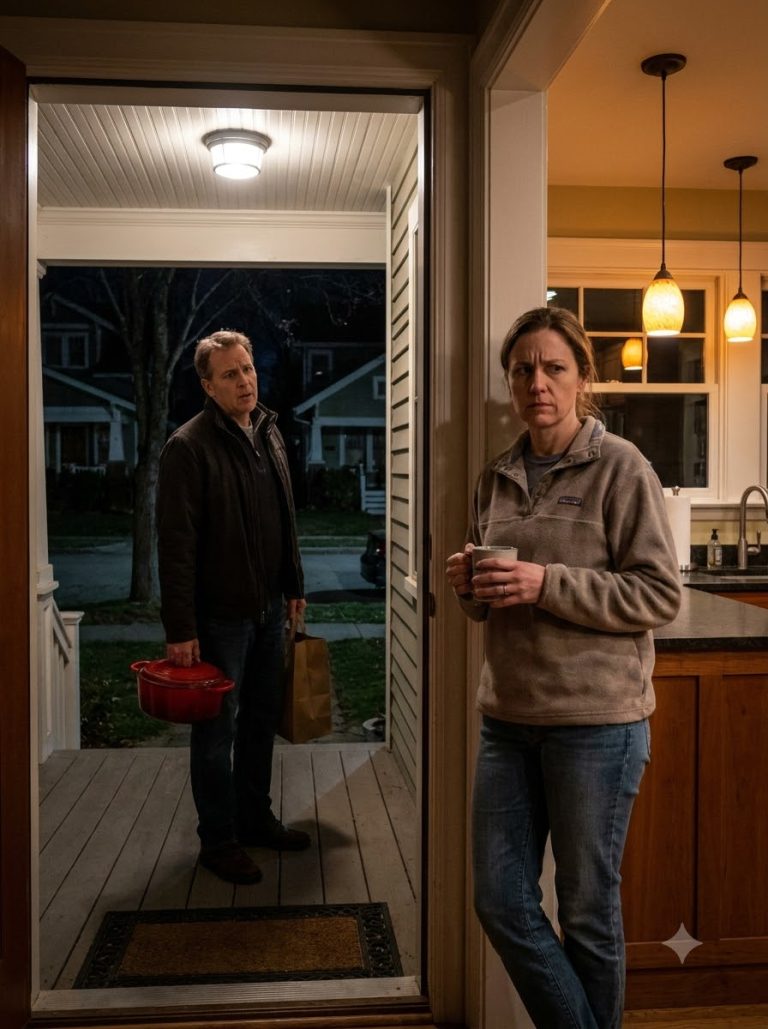
My Mother Sent My Groceries Home And Canceled Our Tuesday Routine—Then She Told Me The Help I Gave Wasn’t What She Wanted

PART 3
By Tuesday evening I had decided I was not going to my mother’s condo.
This decision should not have required discipline. I was fifty-one years old. I had a job managing three dental practices’ front-office staffing and a townhouse with a faucet that had been dripping for six months because apparently I saved my preventive maintenance for other people. I was not a teenager being told I could not attend a party.
At five thirty I caught myself checking the weather where Mom lived, twelve minutes away.
At five forty I remembered her trash pickup was Wednesday morning.
At five fifty-two I wondered whether she had replaced the porch bulb.
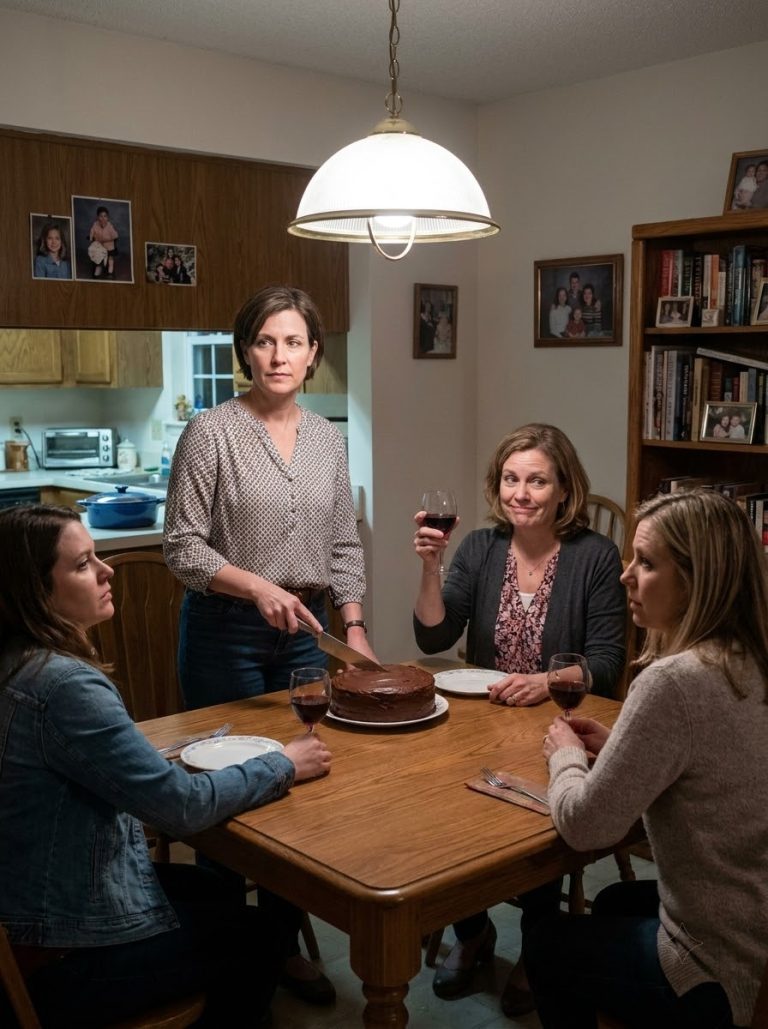
At six, Paula texted a photograph of Mom at a crowded little Mexican restaurant holding a margarita and sitting between two women from her book club.
No caption.
I called her immediately.
“You don’t get to send surveillance photographs after telling me I’m too involved.”
Paula laughed. “It’s not surveillance. Mom asked me to send it because she said you’d be wondering if she was eating.”
“That is not funny.”
“It’s a little funny.”
I hated that she was right.
I could hear restaurant noise behind her. “Are you there?”
“No. Cheryl sent it to me. I’m at home in sweatpants watching a documentary about shipwrecks.”
“So Mom went out with book club.”
“She does that sometimes.”
“I know she does.”
“Then why do you sound surprised?”
Because Tuesdays had belonged to me. I did not say it.
Paula’s voice softened. “Leah, she isn’t replacing you with me.”
“I didn’t say she was.”
“You asked if I took her grocery shopping before you asked whether she enjoyed going.”
I sat on the edge of my sofa.
“That’s unfair.”
“It’s accurate.”
“Those can be the same thing.”
She exhaled. “I know.”
Paula and I had never been close in the effortless sister way movies liked to sell. She was the one who could leave a problem overnight. I was the one who would fix the loose cabinet hinge while people were still discussing whether it bothered them. When Dad got sick—not terminally, just the slow accumulation of heart and mobility problems that filled the last two years of his life with appointments and adjustments—I became the logistics person because I was good at it. Paula came every Sunday and made him laugh. I came on Wednesdays and knew which refill was due.
After he died, nobody told me to stop.
“Did you want me to back off too?” I asked.
There was a pause.
“Sometimes.”
I stood up and paced to the kitchen. “From Mom?”
“From all of us.”
“What does that mean?”
“It means if I say I’m taking Mom to lunch, you ask where, whether there are steps, whether I checked the parking, and what time we’ll be back.”
“She hates walking more than a block.”
“She owns legs, Leah.”
“That’s cheap.”
“I know. I’m sorry.”
I waited.
Paula said, “You make care look like a job you can get an A in. The rest of us start feeling like we’re doing it wrong.”
I sat down again.
That sentence hurt because it contained a version of me I recognized.
When my marriage ended seven years earlier, my ex-husband said I made every disagreement into a workflow. I had dismissed it because he also thought paying a credit card late was a personality trait. But after the divorce I had built a life around competence so thoroughly that even my loneliness came with tasks. Repaint guest room. Join gym. Replace emergency contact. Update insurance. Help Mom.
“Did Mom say that?” I asked.
“Not those words.”
“What words?”
Paula hesitated. “She said sometimes when you come over, she feels like a house being inspected.”
I closed my eyes.
There it was.
Not ungrateful. Not confused. Not manipulated by my sister.
Inspected.
The next morning I stopped at the hardware store on my way to work to buy a washer for my own dripping faucet. I stood in plumbing for ten minutes before I realized I had no idea which size I needed.
Normally, I would have guessed, bought three, and made the problem disappear before dinner.
Instead I went home without one.
That evening I called Mom.
“Do you want company Thursday?” I asked.
“Company?”
“Yes.”
“Are you bringing tools?”
“No.”
“Groceries?”
“No.”
“Forms?”
“No forms.”
She was quiet long enough that I could hear the television in the background.
Then she said, “Come at six. I’ll feed you.”
I almost told her she did not have to cook.
The sentence rose all the way to my teeth.
I swallowed it.
“Okay,” I said. “Six.”
Thursday, I arrived empty-handed.
It felt unnatural. Like visiting a hospital without flowers or boarding a plane without luggage.
Mom opened the door, looked at my hands, and smiled.
“You really did it.”
“Don’t make a thing out of it.”
“I won’t.”
She had made grilled cheese and tomato soup. The bread was seeded rye.
I stared at it.
She said, “I bought my own loaf.”
“I see that.”
“And I froze half.”
“I assumed you would.”
She pointed at me with the spatula. “Careful.”
I laughed before I could stop myself.
We ate at the small round table by her window. For the first twenty minutes, I waited for a problem to appear. A letter she needed explained. A drawer that stuck. A neighbor who had annoyed her. Nothing came.
Then Mom asked about my work.
Not the schedule. Not whether I was busy. She asked whether I still liked it.
I had no prepared answer.
“I like being good at it,” I said.
“That wasn’t the question.”
I looked down at my soup.
“No,” I said. “I don’t know if I still like it.”
She nodded as if that were ordinary information.
For the first time in months, I talked to my mother about myself without turning the conversation toward something she needed.
When I left, the porch bulb was still burned out.
I saw it.
I left it burned out.