At My Family Company’s Anniversary, I Found My Own Work Rewritten As My Brother’s Legacy

PART 4
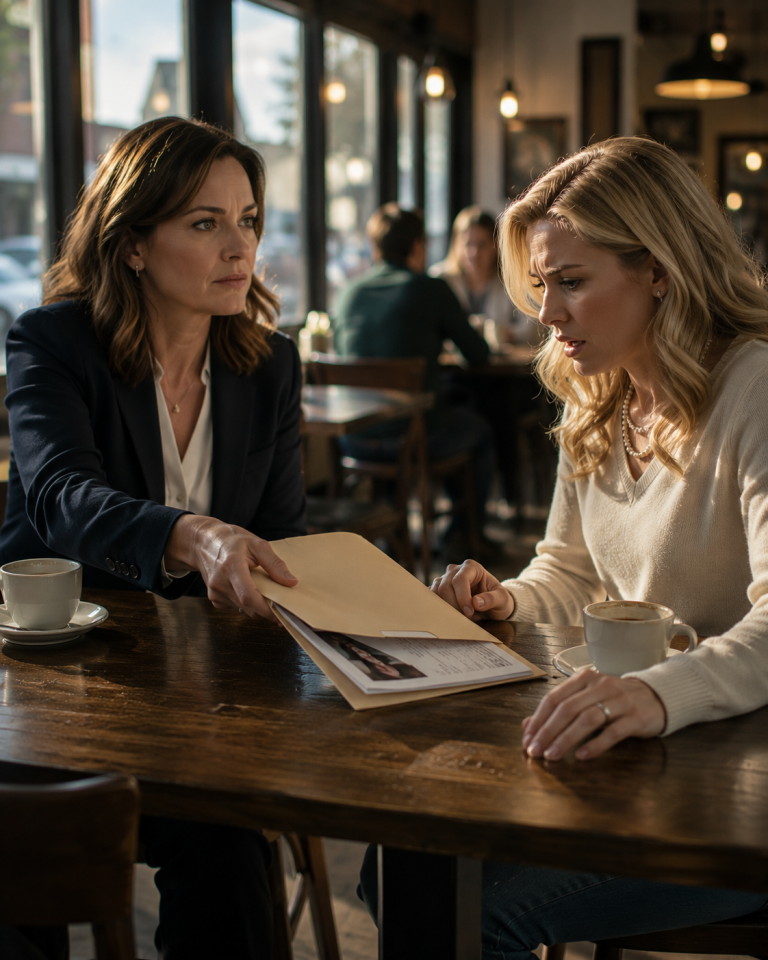
Ava stayed for almost three hours.
At first we talked about documents because documents were easier than family.
She placed the exhibit packet on one side of the table. I placed originals from my bin on the other. We did not need forensic science. We needed eyes.
Original memo: my name in the header.
Exhibit copy: header cropped.
Original receiving checklist: initials and revision date.
Exhibit copy: footer cropped.
Original supplier consolidation letter: signed by me.
Exhibit summary: “Daniel Mercer negotiated new consolidated vendor schedules.”
I made a list.
Ava watched me write.
“You do this exactly like Dad says.”
I looked up.
“What does he say?”
She immediately regretted the sentence.
“That you turn everything into an audit.”
I put down my pen.
There are phrases families use long enough that they stop sounding like opinions.
Daniel was spontaneous.
Caroline was rigid.
Daniel saw the big picture.
Caroline needed details.
Daniel took risks.
Caroline worried.
Those roles had existed before the warehouse.
They had made the warehouse decision easier to explain.
Daniel was the natural leader.
Caroline was the operational one who would find another job.
“What else does he say?” I asked.
“Aunt Caroline.”
“I’m not asking you to pick a side.”
“It feels like a side.”
“That is fair.”
She rubbed one thumb along the edge of the folder.
“I grew up thinking you left because you didn’t want the business life.”
I did not move.
“What business life?”
“The hours. Grandpa. The fighting. All of it.”
“Who told you that?”
“No one in one speech.”
That answer sounded painfully familiar.
Ava looked down.
“Dad would say things like, ‘Your aunt chose balance.’ Grandma used to say you were smart to get out before the company ate your whole life. When I started working summers, people said, ‘You’re more like your dad than your aunt.’”
I smiled without humor.
“What did that mean?”
“That I stayed.”
The word hurt.
Not because Ava meant it badly.
Because she was thirty-two years old, about to become general manager, and she had been using my life as a cautionary tale without knowing the actual plot.
She continued.
“When I had my first baby, Dad told me not to make a decision from guilt because he had seen what happened when women thought they had to choose.”
I stared at her.
“What did he think happened to me?”
“He said you were happy after you left.”
“I was.”
She looked confused.
I almost laughed.
“That’s the problem with family stories,” I said. “They make you choose one truth and throw away the rest.”
I had been happier at my new job.
I had also been furious about how I left.
I had loved the freedom of not working for Dad.
I had also missed the company for years.
I had built a career I was proud of.
That did not mean the first career disappeared.
Ava looked at the papers.
“So what actually happened?”
I told her.
Not every old grievance.
I did not need to explain which Saturday Daniel accused me of killing sales with cautious reorder limits or how Dad could end an argument by removing his glasses and saying he did not have the energy for “children fighting in my office.”
I told her the structural truth.
The warehouse expansion tightened cash.
Dad wanted one management salary.
Daniel argued he should stay because he handled sales and lender relationships.
I argued that the operational transition was equally critical.
Dad chose Daniel.
I agreed to leave under an unwritten understanding that we would revisit.
I trained the team before I left.
I accepted another job.
Years later, when they finally offered me a path back, it was not the role I had left.
“So you chose not to come back,” Ava said.
“Yes.”
“But you didn’t choose to leave in the first place.”
“Correct.”
She leaned back.
That distinction seemed to rearrange something for her.
“Did Dad lie?”
I thought about it.
“He simplified until the simplification benefited him.”
“That sounds like a yes with extra steps.”
“You are definitely a Mercer.”
She smiled despite herself.
Then the smile disappeared.
“My promotion is part of the anniversary story.”
“I know.”
“They’ve been pitching it as three generations.”
“I know.”
“Grandpa. Dad. Me.”
“Yes.”
She looked at the source packet.
“And you make that line messy.”
There it was.
Not accusation.
Recognition.
I nodded.
Ava pressed both palms against the table.
“I don’t want the job if the story around it has to erase you.”
“That would be dramatic and useless.”
She blinked.
“I’m serious.”
“So am I. You earned your promotion. My history is not a weapon you need to use against yourself.”
“But Dad—”
“Your father’s problem is with me.”
She shook her head.
“No. If he built the succession story for me, then it’s also about me.”
That was true.
I disliked it.
Truth is irritating that way.
Ava asked if she could copy the originals.
I said yes, but I made her wait while I scanned them myself.
“Trust issues?” she asked.
“Document-control issues.”
“That sounds healthier.”
“It is not.”
When she left, she took copies, not originals.
I kept Daniel’s exhibit packet.
At six that evening, he called.
“Ava was at your house.”
“Yes.”
“She took internal anniversary materials.”
“She showed me copies of documents I wrote.”
“Caroline, this is getting ridiculous.”
I looked at the cropped version of my memo.
“Did you crop my name off the exhibit copies?”
Silence.
That was new.
“Daniel?”
“The designer standardized the documents.”
“That was not my question.”
“The point of the exhibit was to show company processes, not authorship.”
“Then why is your name under them?”
He exhaled hard.
“I said Monday.”
“It is Sunday.”
“Exactly.”
“You can answer one question.”
He did not.
Then he said, “I was trying to keep the story clear.”
I closed my eyes.
“What story?”
“The company story.”
“Whose company story?”
Another silence.
This one mattered more.
“I’ll see you tomorrow,” he said.
He hung up.
I looked at the original memo.
For twenty years, I had thought my brother remembered our history differently.
Now I had proof that he was editing it deliberately.
The question was no longer what Daniel remembered.
It was what he needed everyone else to remember.