My Friends Voted Me Out as Treasurer Over Missing Trip Money—Then I Found a Transfer to the Woman Who Led the Vote

Linda slid a folded sheet of paper across the table before I had taken off my coat.
At first I thought it was the room bill. The six of us had been meeting in the back room at Bellwether Grill every January for long enough that the manager no longer asked whose name to put on the reservation. Mine went on the contract because mine always had. I booked the room, collected the deposits, printed the menus, remembered who hated cilantro, and brought the blue travel binder that had grown from a half-inch school folder into something with reinforced rings and labeled pockets.
That night, the binder was still under my arm when I opened the paper.

REMOVAL OF TREASURER — 4 IN FAVOR, 1 OPPOSED, 1 ABSTAINED.
I read it twice.
Then I looked around the table.
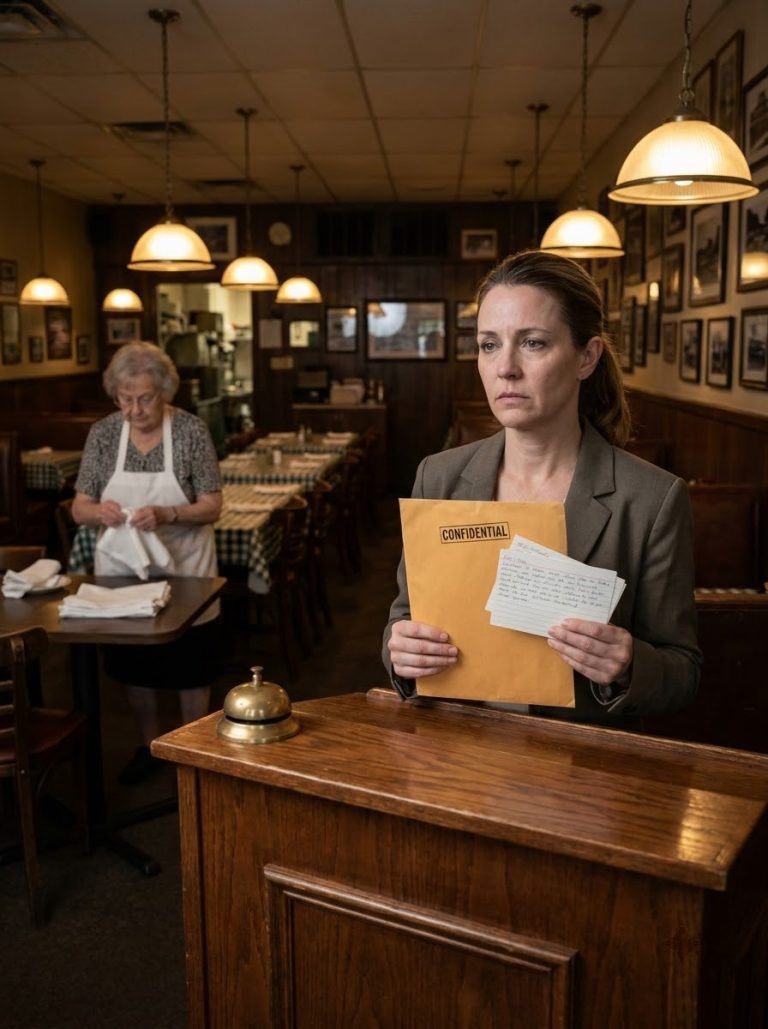
Linda Morrow, my closest friend for twenty-three years, sat directly across from me with both hands wrapped around a glass of iced tea. Celia Brooks was studying her napkin. Monique Harris had not touched the bread basket. Becky Rhodes looked furious, which I would later learn was because she had been the single vote against. Tara Nguyen had the carefully neutral face of someone who had rehearsed neutrality in the car.
“What is this?” I asked.
Linda took a breath. “We wanted to handle it before we got into Santa Fe.”
“We are in Columbus.”
“You know what I mean.”
“No, I don’t.”
I set the paper on top of my binder.
The top page inside the binder was the Santa Fe hotel confirmation, highlighted in yellow where the first group deposit was due on February 1. We were three weeks early. I had brought updated airfare estimates, a list of museums, two restaurant options, and a cheaper backup hotel because Monique had told me privately that the original package was getting high.
I had not brought a defense against being fired from a friendship.
Linda glanced at the paper. “There’s a shortfall in the account.”
“How much?”
Celia looked up. “Janine.”
“How much?”
Linda answered. “Twenty-eight hundred.”
The number was so specific that my mind went immediately to arithmetic.
Six women. Monthly transfers. November restaurant deposit. Refunded theater tickets from the canceled Cincinnati weekend. Santa Fe hotel hold not yet charged. I could see the columns as clearly as if the spreadsheet were floating over Linda’s shoulder.
“That’s not possible.”
Tara shifted in her chair. “That’s what you said last week.”
“I didn’t know there was a shortfall last week.”
Linda closed her eyes briefly.
Something cold and clean moved through me then. Not panic. Not yet. It was the feeling I got at work when a conference venue insisted they had never received a rooming list I knew I had sent. I spent nineteen years coordinating events for the Ohio Association of Community Health Plans. Venues could lose emails. Speakers could miss flights. Caterers could deliver sixty vegetarian lunches to a room full of people who had ordered turkey. Problems were survivable if you stopped arguing about memory and found the paper trail.
I opened the binder.
“Show me the account statement.”
“Can we not do this like an audit?” Linda asked.
“We are discussing twenty-eight hundred dollars you say I lost track of.”
“No one said you stole it.”
“I didn’t say anyone did.”
Becky made a small sound that might have been a laugh if the room had belonged to different people.
Linda’s mouth tightened. “This is exactly what I was worried about.”
“What?”
“The way you make everything procedural.”
I stared at her.
Behind us, a server pushed through the swinging door carrying a tray of water glasses. She slowed when she felt the temperature in the room, set the glasses down one by one, and disappeared without asking whether we were ready to order.
Monique finally spoke. “We just need to know what happened.”
“Yes,” I said. “I agree.”
I reached for my phone.
Linda said, “Janine, please don’t log into the account here.”
“Why?”
“It feels hostile.”
“That is an interesting word.”
“See?”
“Linda.”
Becky leaned forward. “Let her look.”
“I’m not stopping her.”
“You just asked her not to.”
Tara rubbed the side of her thumb against her water glass. “The balance is three thousand ninety-four.”
I knew the expected balance.
Five thousand nine hundred and six.
I also knew I had checked it on December 29.
I unlocked my phone, opened the credit union app, and signed into the trip account. It was a plain shared checking account we had used for eight years, with Linda and me as authorized signers because nobody wanted six people calling the bank whenever a debit card expired. Every member had online view access. At least that had been the arrangement when we opened it.
The balance was $3,094.17.
I scrolled.
Restaurant deposit. Normal.
Monthly deposits. Five visible.
Airline refund. Normal.
Then I saw a transfer dated January 4.
$2,400.00.
Memo: GROUP EXPENSE REIMBURSEMENT.
Recipient: L. MORROW.
I looked up.
“Linda.”
Her face changed.
Not guilt exactly. Recognition.
“What was this?”
Celia whispered, “Oh, God.”
Linda looked at Celia, then back at me. “It’s not what you think.”
“I currently think there is a twenty-four-hundred-dollar transfer from the group account to your personal account six days ago. So tell me what I should think.”
“I was covering things.”
“What things?”
“People.”
Nobody moved.
I felt my pulse in my fingertips.
“Whose money did you take out of the account?”
“I didn’t take money for myself.”
“The transfer went to you.”
“Because I had paid in.”
“For what?”
She shook her head. “I’m not doing this with everybody’s finances on the table.”
“You brought a vote to remove me as treasurer to everybody’s table.”
Celia’s chair scraped against the floor.
“Stop,” she said.
Her face was red from her collarbone to her hairline.
“It was me.”
The room went quiet in a different way.
Celia folded her hands so tightly I could see the pale half-moons around her knuckles.
“My furnace went out in November,” she said. “The whole system. I had to replace it. I was going to drop Santa Fe, and Linda said not to decide right then.”
I looked at Linda.
Celia kept going. “She covered December and January for me.”
“With her own money?”
“At first.”
Linda said, “I transferred what I’d fronted once the Cincinnati refund came back.”
I looked at the account again.
“That refund belonged to the group.”
“I know.”
“No, you know now that I’m looking at it. Did you ask anyone before reimbursing yourself?”
“I told Tara.”
Tara’s head came up. “You told me you were balancing advances.”
“That is not the same thing.”
Linda’s cheeks darkened.
Celia said, “I paid her back twelve hundred last week.”
“Where is it?”
Linda looked at me. “In my checking.”
I closed my eyes.
When I opened them, Becky was staring at Linda with an expression I had seen only once before, when a contractor tried to charge her mother for replacing cabinets he had damaged himself.
“Put it back,” Becky said.
“I was going to.”
“When?”
“Tomorrow.”
“After you voted Janine out?”
Linda looked at me instead of answering.
The first version of the problem was ugly but simple.
Linda had moved group money to herself without telling me, had fronted money for Celia, and had not returned Celia’s repayment. That was bad enough. It was also fixable. Put the money back. Reconcile the account. Decide whether Celia could still afford the trip. Put proper rules around advances.
What did not fit was the paper in front of me.
I picked it up again.
“Why am I being removed?”
Linda’s face went still.
Monique stared at her water.
Tara said, “Because the hotel nearly canceled us.”
I looked at her. “The deposit is not due until February first.”
“No,” she said. “The first hold expired Monday.”
“What first hold?”
Linda exhaled.
I opened the binder and pulled out the hotel packet.
There was one booking: six rooms at a mid-range hotel near the plaza, flexible cancellation until March. I had booked it in December after sending the options to the group.
Tara looked confused.
“That’s not La Cumbre.”
“What is La Cumbre?”
Nobody answered.
Becky swore under her breath.
I turned to her.
She said, “They changed hotels.”
“Who changed hotels?”
Linda finally said, “We discussed an upgrade.”
“With whom?”
“We all talked about it.”
“I was in every group thread.”
“Not every conversation happens in a spreadsheet, Janine.”
“I didn’t ask about a spreadsheet.”
Tara leaned forward. “La Cumbre is a resort outside town. Linda found a package.”
“How much?”
No one answered fast enough.
“How much?”
“About eleven hundred more per person,” Monique said.
I laughed.
I did not mean to. It simply came out.
Celia looked miserable.
I turned to Linda. “You know Monique told me the original Santa Fe trip was getting too high.”
Monique’s eyes widened. “You told her?”
“She asked me privately to look for a cheaper backup.”
“I didn’t want everybody to know.”
“I didn’t tell anybody.”
Linda gave me a look so sharp it felt physical. “And that is the point.”
“What point?”
“That people don’t feel like they can talk in front of you anymore.”
I sat back.
For twenty-five years, we had traveled together in some form.
The first trip was not even a trip. It was a Saturday in Louisville in 2001 because none of us could afford a hotel. We were all in our thirties, except Becky, who had just turned forty and acted as if she had crossed into elder status. We packed sandwiches in Linda’s minivan, split gas six ways, bought discount tickets to a matinee, and laughed so hard on the drive home that Celia had to pull over near Florence because she was crying.
Over the years, Saturday became weekends. Weekends became flights. We went to Savannah for our forties, Santa Barbara after Linda sold her first house, Boston when Monique finished grad school at fifty, Door County the year I got divorced because I could not stand the idea of being home on my twenty-ninth wedding anniversary.
I planned most of it because I was good at planning and because, if I was honest, being useful had always been the easiest way for me to enter a room.
Linda was the other half of our machine.
She made everything feel like a celebration. She remembered birthdays, sent flowers, persuaded quiet people to dance, talked waiters into bringing six forks with one dessert, and could make a rental condo with beige carpet feel like we had somehow been invited somewhere special.
I handled the numbers.
She handled the feeling.
At least that was the story I had believed.
Now she was telling me the numbers were the reason nobody could speak.
I folded the removal vote and put it in the front pocket of my binder.
“Who booked La Cumbre?”
Linda said, “I put down a temporary hold.”
“With what card?”
“Mine.”
“How much?”
“Five hundred.”
“And the group agreed?”
“We discussed it.”
“That is not an answer.”
Tara looked at me. “Four of us said yes.”
“Who didn’t?”
Becky raised one hand.
Celia looked at the table.
Monique said softly, “I said I needed to see the total first.”
“So two yeses?”
“Four eventually,” Linda said.
“Eventually where?”
She did not answer.
The server came back and asked whether we needed another minute.
I almost admired her optimism.
“We’re going to need several,” Becky said.
When the door swung shut again, I closed my binder.
“I am not discussing the trip tonight.”
Linda blinked. “What?”
“You already voted me out. Fine.”
“Janine.”
“No. If I am no longer treasurer, I am not going to sit here and solve the account for you while you explain why asking what something costs makes people uncomfortable.”
“That’s not fair.”
“Neither is giving me a termination notice before I take off my coat.”
“You are being dramatic.”
That one hurt because Linda knew exactly where to put it.
My ex-husband used to call me dramatic whenever I asked a question he did not want to answer. Then, when I stopped asking, he called me distant. After the divorce, I promised myself I would stop treating other people’s discomfort as evidence that I had asked the wrong thing.
Still, old reflexes do not disappear because you make a promise in a therapist’s office.
For one second, I wondered whether Linda was right.
Maybe I had turned every trip into a project. Maybe I had become impossible about deposits, dinner reservations, room assignments, and everybody sending their share by the date they had agreed to send it.
Then I looked at the paper she had handed me.
Four in favor.
One opposed.
One abstained.
They had held a vote without me.
Whatever flaws I had, that was a choice they had made.
I stood.
Becky stood too.
“Sit down,” I told her.
“I’m leaving with you.”
“No. Stay.”
“Why?”
“Because I want at least one person in this room to hear what they say after I’m gone.”
Linda’s face went pale.
I picked up my coat.
“Tomorrow morning,” I said, “I will email everyone the account statements, the original Santa Fe budget, and every payment schedule I have. I will also remove myself as an authorized signer after the account is reconciled. Until then, Linda, please do not move another dollar.”
Her chin came up. “You don’t get to order me.”
“No. The group gets to decide what happens with group money. That was supposed to be the idea.”
Celia started crying.
Not loudly. That would have been easier.
She just covered her mouth with one hand and looked at me like I had caught her stealing groceries.
I softened despite myself.
“Celia, I am not angry that your furnace broke.”
She nodded without looking at me.
“I am angry that everybody decided the solution was for me not to know.”
Then I left.
In the parking lot, the cold hit hard enough to make my eyes water.
I sat in my car with the travel binder on the passenger seat and did not start the engine.
My phone buzzed before I had even buckled my seat belt.
A text from Becky.
DO NOT GO HOME AND BLAME YOURSELF.
Then another.
Linda told them you were the one who insisted on La Cumbre.
I stared at the message.
Three dots appeared.
She said you refused to downgrade because you wanted the “milestone year” to be special.
I opened the binder again.
Inside the front pocket, behind the removal vote, was a printed email I had brought for a completely different reason.
Sent December 18.
From me to all six women.
Subject: SANTA FE OPTIONS — PLEASE READ BEFORE WE COMMIT.
The last paragraph said:
Given current airfare, I recommend we keep lodging under $325 per room per night or consider St. Louis by train instead. I want this to be fun, not something anyone has to recover from financially.
I read it once.
Then I forwarded a photo to Becky.
She responded almost immediately.
That is not what Linda told us.
The cold in my car no longer felt like weather.
It felt like the first edge of a larger shape.
The missing money was a problem.
But it was not the reason I had been voted out.
I did not sleep much.
At 5:42 the next morning, I made coffee, opened my laptop at the kitchen table, and built the kind of document I usually built for people who paid me.
Not an accusation.
A reconciliation.
Opening balance. Monthly contributions. Refunds. Known expenses. The $2,400 transfer to Linda. The $1,200 Celia said she had repaid to Linda. The La Cumbre hold Linda had put on her own card. The original hotel reservation I had made. Every item had a date and a source.
I deliberately did not include Becky’s text about what Linda had told the others.
Numbers first. Stories later.
By seven, I had the account balanced to the penny.
Nothing had vanished.
That was almost worse.
The problem was not a mysterious loss. It was a chain of choices people had made around me and then labeled as my mistake.
Linda had moved $2,400 out of the trip account as reimbursement for money she said she had personally advanced. Celia had repaid half of it, but that money was still in Linda’s checking. The group account was also short another $400 because Monique’s January transfer had not come through.
I stared at that line.
Monique had never missed a contribution.
I checked the account again.
No transfer.
I opened our shared trip spreadsheet.
Her row showed PAID.
That made me angry enough to stop being careful.
I called her.
She answered on the third ring in a whisper.
“Janine?”
“Did you pay January?”
Silence.
“Monique.”
“No.”
I closed my eyes.
“Did Linda mark you paid?”
“She said she would handle it.”
“What does that mean?”
“I don’t know.”
“You do know.”
Another silence.
Then she said, “I got laid off in October.”
I sat back.
“What?”
“Not laid off exactly. My position was eliminated and they offered me a lower role. I took it. It’s twenty percent less.”
“Why didn’t you tell us?”
She laughed once, without humor.
“Because Tara’s husband just made partner, Linda bought that lake condo, Becky’s talking about Greece, and every time we get together somebody says, ‘We worked hard, we deserve this.’”
My anger shifted shape.
“You told me the original Santa Fe trip was getting high.”
“I was trying to tell you.”
“You could have said, ‘I cannot afford this.’”
“I know.”
“Why didn’t you?”
“Because you would have changed the trip.”
“Yes.”
“I know.”
I stared at my coffee.
Monique said, “That’s not an insult.”
“It sounded like one.”
“No. Janine, if I had told you, you would have found a place half the price, moved the dates, cut two dinners, and made it work.”
“That seems helpful.”
“It is helpful.”
“Then why are we having this conversation?”
“Because sometimes being the reason everyone changes something feels worse than quietly figuring it out.”
I rubbed my forehead.
That sentence sat somewhere I did not want it to sit.
“Linda offered to cover you?”
“She said she’d float January and February until my tax refund. I told her no. Then she said she had already built cushion into the account.”
“She did not.”
“I know that now.”
“Did you vote to remove me?”
A pause.
“Yes.”
The answer hurt more because Monique did not defend it.
“Why?”
“She said you had been moving deadlines and pushing us toward the expensive option, then acting like everyone else was irresponsible when the account didn’t work.”
“She said that?”
“She said you were overwhelmed.”
“With what?”
“She mentioned your mother’s move.”
My mother had moved from a three-bedroom house to a condo in October. It had been a lot of work. I had taken two Fridays off to help her sort forty years of Christmas decorations and a garage full of gardening tools.
“I was not overwhelmed.”
“I know.”
“Did you know last night?”
“I knew the story didn’t sound like you. I also knew I was behind, and Linda made it sound like the account problem was partly because you had stopped paying attention.”
“And that was convenient.”
Monique inhaled sharply.
“I’m sorry.”
I looked at the ceiling.
There are apologies that ask something from you immediately. Reassure me. Tell me we are okay. Make my guilt stop.
Monique’s did not.
That helped.
“Send your January contribution when you can,” I said.
“I can do half on Friday.”
“Do not send anything until the group agrees on what trip it is actually taking.”
She was quiet.
“Okay.”
“And Monique?”
“Yeah?”
“I would rather change a trip than have you spend six months paying off three days of friendship.”
Her breath caught.
“I know,” she said again.
After we hung up, I added a note to the reconciliation.
MONIQUE JANUARY — NOT PAID. SPREADSHEET STATUS INACCURATE.
I did not write why.
At eight-thirteen, Linda texted me.
Can we talk before you send anything?
I waited ten minutes before answering.
Yes. Coffee shop on Henderson at 9:30.
She arrived at 9:22 wearing the camel coat I had helped her choose before her niece’s wedding and carrying no purse, which meant she had come prepared to be earnest.
I hated that I noticed things like that.
She sat across from me and said, “I put the twelve hundred back.”
I nodded.
“I also put the other twelve back.”
“So you’re no longer reimbursing yourself for Celia.”
“I’ll deal with Celia privately.”
“That’s between you and Celia.”
Her mouth tightened. “You could say thank you.”
“For returning group money?”
“For fixing it.”
I looked at her.
She looked away first.
The coffee shop was crowded with people working on laptops. Behind Linda, a man in a knit cap was having a video meeting about quarterly targets. It was almost comforting that somewhere in the room, a problem could be ordinary.
I took out the folded removal vote.
“Why did you tell them I insisted on La Cumbre?”
“I didn’t say insisted.”
“Becky says you did.”
“Becky hears everything like a deposition.”
“That is not an answer.”
Linda stirred her coffee even though she had not added anything to it.
“You dismissed it immediately.”
“I had never heard of it.”
“Before that. When I sent the resort link in December.”
“You sent twelve links in December.”
“I said it would be perfect for twenty-five years.”
“I said it was too expensive.”
“Exactly.”
“Linda, that is called a budget.”
Her spoon hit the side of the cup.
“There. That.”
“What?”
“That tone.”
I sat back.
She lowered her voice. “You make it sound like everyone who wants something nicer is irresponsible.”
“I sent an email recommending a cheaper hotel or St. Louis because two people had already hinted the total was high.”
“Who?”
“I am not telling you.”
“Of course not.”
I laughed softly.
“You removed me because I won’t disclose private conversations, and your complaint is that I control too much?”
She looked tired suddenly.
Not guilty. Tired.
“Do you know what it is like to spend twenty-five years trying to make sure everybody still wants to come?”
The question surprised me.
“I thought that was what we were both doing.”
“No. You make sure the trip works.”
“And you make sure people want it.”
“Yes.”
She said it with enough force that I stopped.
Linda looked down at her hands.
“After Boston, Tara told me she was done with cheap weekends,” she said. “Celia said she didn’t want another rental house where we were stripping beds at seven in the morning. Becky wants Europe. Monique says yes to everything and then panics about cost. You send three options and everybody tells you ‘whatever you think,’ then calls me separately.”
“What do they call you about?”
“What they actually want.”
The answer landed hard.
“Why?”
“Because you turn wants into numbers.”
“Wants cost numbers.”
“I know.”
“Do you?”
Her head came up.
I should have stopped. I did not.
“You reimbursed yourself with group money. You marked Monique paid when she wasn’t. You put money on a resort nobody agreed to. Then you told them I caused the shortfall.”
“I did not tell them you caused all of it.”
“Just enough of it.”
She stared at me.
Then she said, “You always have to be the reasonable one.”
I felt the old sting of being put in a role I had not chosen.
“I am reasonable when people are spending shared money.”
“And I am what? The irresponsible one?”
“I did not say that.”
“You don’t have to.”
There it was.
Not the account.
Not Santa Fe.
Us.
For years, people had thanked Linda for making the trips fun and thanked me for making them possible. Somewhere along the way, she had started hearing those as two different kinds of value.
I softened, but only a little.
“Why didn’t you tell me that?”
She laughed bitterly. “Because you would have made a list.”
“That is unfair.”
“Is it?”
“Yes.”
She looked out the window.
A city bus pulled up, let three people off, and moved on.
I said, “I would have listened.”
“Eventually.”
I almost argued.
Then I thought about how many times I had answered emotion with logistics because logistics were fixable.
My divorce had taught me that questions mattered. It had not taught me that every question had to become a plan.
“I might have tried to fix it too fast,” I said.
Linda looked back at me.
“That does not make what you did okay.”
Her face closed again.
“I know.”
“Do you?”
“Yes.”
“Then tell me why you held the vote.”
She leaned back.
“Because the account problem was becoming a crisis.”
“Because of choices you made.”
“Not just me.”
“No. But you were the other signer.”
“I was trying to keep Celia in. I was trying to keep Monique in. I was trying to give Tara the kind of trip she wanted. I was trying to keep Becky from turning the whole thing into a lecture about retirement planning.”
“Becky is a school counselor.”
“She has the soul of a pension seminar.”
Despite everything, I laughed.
Linda laughed too.
For three seconds, we were ourselves.
Then she looked at me and said, “I thought if you stepped back, people would stop feeling managed.”
“By me.”
“Yes.”
“And then what?”
“We’d reset.”
“With you in charge?”
“I didn’t say that.”
“You did not have to.”
She flinched.
I understood then that she had not thought that far.
That did not make it harmless. It made it more human and, in some ways, more painful.
Linda had wanted relief from being the person caught between everyone’s private wants and my public numbers. She had decided I was the removable part.
I took the reconciliation from my bag.
“I am emailing this to everyone at noon.”
She looked at the first page.
“Monique told you.”
“I am not including the reason she is behind.”
“Celia?”
“Same.”
Linda looked surprised.
“I am not interested in humiliating people.”
“I never said you were.”
“You made me the reason people were ashamed to talk about money.”
“I said people feel judged.”
“Do you?”
She opened her mouth, then closed it.
“Yes,” she said.
That answer hurt.
I nodded.
“Okay.”
She looked alarmed. “Okay?”
“Yes. I need to know that.”
“Janine, I don’t mean—”
“I know what you mean. And you need to know something too.”
I pointed to the paper.
“Feeling judged is not permission to falsify what the group can afford.”
Her eyes filled, but she did not cry.
“I know.”
I packed my papers.
“Do you?”
She looked at me for a long moment.
Then she said, “I’m not sure I did until last night.”
At noon, I sent the reconciliation to all five women.
I attached the original Santa Fe budget, the cheaper backup, the bank activity, the hotel due dates, and a short note.
No blame language.
No explanation of Celia’s furnace or Monique’s job.
Just facts.
The group account currently holds enough to maintain the original reservation if all members confirm participation at the original budget. La Cumbre is not currently a group commitment. I am requesting that Linda and I both refrain from new transfers until the group decides next steps. I will remain a signer only long enough to reconcile existing commitments, then I will step down as treasurer as requested.
The responses came in unevenly.
Becky: Thank you. I want a full meeting.
Tara: I did not understand the account status. I’m sorry.
Celia: Can we please not do this by email.
Monique: Agree with Celia.
Linda did not reply.
At 2:17, Tara called.
“I owe you an apology.”
“You said that in the email.”
“No. I owe you the full version.”
I walked into an empty conference room at work and closed the door.
“Okay.”
She exhaled.
“Linda showed us a budget in December.”
“What budget?”
“La Cumbre. She said you had built it.”
I gripped the phone.
“I had never seen La Cumbre until last night.”
“I know that now.”
“What did the budget look like?”
“Like your sheets. Categories, dates, totals.”
I felt something inside me go quiet.
“Did it have my name on it?”
“No. It had the group name.”
“What made you think I built it?”
“Linda said you were trying to make twenty-five special.”
I sat down.
Tara kept talking.
“She also said the higher monthly contribution starting in November came from you.”
“What higher contribution?”
Silence.
“Tara.”
“An extra seventy-five a month.”
I opened the account activity on my laptop.
Five deposits in November. Five in December.
Some were higher than usual.
I had assumed they were catch-up amounts from the Cincinnati refund schedule.
I looked at my own automatic transfer.
One hundred fifty.
Same as always.
“No one told me.”
“I thought you exempted yourself because you had covered the planning deposit.”
I almost laughed again, but there was nothing funny left.
“Who told you that?”
“You know who.”
I did.
After we hung up, I sat alone in the conference room looking at the spreadsheet.
The question had changed.
It was no longer: Why did Linda move money?
It was: How many different versions of this trip existed?
And underneath that was the question I did not want to ask.
How many different versions of me had Linda been managing too?
By Friday, I had six versions of the budget.
Not six revisions.
Six versions.
Mine had the original hotel, one nice dinner, two optional museum afternoons, and a total that still made me wince.
Linda’s had La Cumbre, a spa credit, private airport transportation, and a line called CELEBRATION DINNER that cost more than my first car payment.
Tara had a version with the higher monthly contribution.
Celia had one with a note that said “Linda covering through February.”
Monique had a screenshot of a text from Linda saying, Don’t worry about Janine’s number. I’ll make the math work.
Becky had nothing because Becky had refused to open any attachment with the word “luxury” in the filename.
I printed them all.
Then I did something I had not done in twenty-five years.
I stopped planning the trip.
I did not look at flights. I did not check hotel inventory. I did not answer the group thread when Tara asked whether we should hold the original rooms. I did not call the restaurant to preserve the private room for our next meeting.
At work, I coordinated a two-day legislative conference for three hundred people and felt calmer than I did when my phone lit up with five women I loved.
My boss, Nia, found me in the supply room counting name-badge lanyards.
“You have counted that box three times,” she said.
“I like certainty.”
“You like avoidance.”
I looked at her.
She raised both hands. “I’m not your therapist. I just need the lanyards by Tuesday.”
“I am having a friend problem.”
“That explains why you’re inventorying plastic clips like they personally disappointed you.”
I laughed.
Nia leaned against the doorframe.
“What kind of friend problem?”
“The kind where everyone has been telling slightly different versions of the same truth.”
“That is most friend problems.”
“Money is involved.”
“That is most expensive friend problems.”
I put the box down.
“I think they resent me.”
“Do you resent them?”
The question annoyed me.
“Some of them.”
“For what?”
“For making me responsible for the part nobody wants to look at.”
Nia nodded.
“That sounds exhausting.”
“It is.”
“Then maybe stop.”
I stared at her.
She shrugged. “I said I’m not your therapist.”
That night, Becky came over with takeout.
She had known me the longest after Linda. We met when our sons played T-ball, back when both boys believed every baseball field had snacks after the third inning.
Becky put cartons of Thai food on my kitchen island and said, “I am going to tell you something you will not enjoy.”
“Why does everyone keep prefacing information that way?”
“Because you have a face.”
“I have one face.”
“You have several. The one you have now is the face you used when the Door County rental charged us for a broken blender.”
“We did not break the blender.”
“I know. That is why I remember the face.”
She handed me noodles.
I waited.
Becky said, “I voted no because Linda’s story sounded wrong. But I understood why people were upset with you.”
I put down my fork.
“Go on.”
“You decide things.”
“I ask for votes.”
“You ask for votes after you narrow everything to the choices that make sense.”
“That is called planning.”
“I know.”
“Apparently that is now a character defect.”
“No. But sometimes the thing that makes no financial sense is still the thing somebody wants to talk about.”
“La Cumbre was eleven hundred dollars more per person.”
“I know. I voted against it.”
“Then what are we talking about?”
Becky sighed.
“Remember Santa Barbara?”
I did.
Our fortieth birthdays, a rented house with lemon trees, six women on a deck with cheap sparkling wine.
“You wanted the house fifteen minutes inland because it was four hundred dollars less,” Becky said.
“It was a nice house.”
“It was. Linda wanted the one by the beach.”
“That one had one bathroom for six women.”
“Yes. A war crime. Not the point.”
“What is the point?”
“Linda told me later she felt like you made her feel foolish for wanting the view.”
I stared at Becky.
“I never said she was foolish.”
“I know.”
“Did she?”
“No.”
“Then how exactly am I supposed to defend myself against a feeling I was never told about sixteen years ago?”
“You’re not.”
That stopped me.
Becky twirled noodles around her fork.
“You don’t have to prove you never made anyone feel judged. You probably did. So did I. So did Linda. We have been annoying each other since flip phones.”
I smiled despite myself.
She continued.
“What you do get to decide is whether that explains what happened now.”
“It does not.”
“No.”
“And Linda did more than hurt my feelings.”
“Yes.”
“Then why are you telling me this?”
“Because I know you. If we have a meeting and Linda admits she lied about the budgets, you will be tempted to make the whole story about that because it is provable.”
I did not answer.
“And if you do,” Becky said, “you might miss the part where four women voted you out.”
I looked at her.
She held my gaze.
“That part matters too.”
It did.
I hated that it did.
The group meeting happened Sunday afternoon at Celia’s house because Bellwether suddenly felt contaminated.
Celia had a new furnace and an old dining table scarred by twenty years of family meals. The room was less formal than the restaurant, which made the conversation harder, not easier.
I set the six budgets in the middle.
Linda arrived last.
No one sat beside her at first.
I almost did out of habit.
Then Tara moved her purse and made room.
Linda noticed.
She sat down.
I opened with the account.
The $2,400 had been restored. Celia had arranged to repay Linda privately over four months. Monique was current through December and not January. The La Cumbre hold was on Linda’s card and not a group obligation. The original hotel remained available for another ten days.
Nobody interrupted.
Then I laid out the budgets.
“These are not revisions of one plan,” I said. “They are different commitments.”
Linda looked at the papers.
Tara said, “I should have asked why Janine wasn’t on the message thread.”
“Yes,” I said.
She nodded.
Monique looked at Linda. “Why did you tell us Janine wanted the resort?”
Linda did not answer immediately.
“Because she wanted the trip to be good.”
“That is not what she asked,” Becky said.
Linda’s jaw tightened.
“I wanted us to consider it.”
“Then why not say you wanted it?” I asked.
She looked at me.
“Because if I said I wanted it and somebody said no, then it was me asking.”
I let that settle.
Celia whispered, “What does that mean?”
Linda turned toward her.
“It means I was tired of being the one who asked for more.”
No one spoke.
Linda looked around the table.
“Tara wants nicer hotels. Becky wants everything practical. Janine wants everything affordable. Monique says she doesn’t care and then worries. Celia never wants anyone to spend because of her. I am the person everybody calls after the group call. I hear what people really want, and then I try to make it work.”
“You tried to make it work with money that was not yours,” I said.
“Yes.”
The room changed.
It was the first time she had said it plainly.
No explanation attached.
No “but.”
Just yes.
Celia started to cry again.
Linda reached for her, then stopped herself.
“I’m sorry,” she said.
Celia nodded.
Monique looked down at her hands.
Then Tara surprised me.
“I can afford La Cumbre,” she said.
Everyone looked at her.
She continued. “But I should not have assumed that meant it was a normal ask. I liked the idea. I liked feeling like we had graduated to that kind of trip.”
Becky snorted. “Graduated from what?”
“From motel ice machines.”
“We survived them.”
“I know.”
Tara smiled faintly.
Monique said, “I cannot afford La Cumbre.”
Celia said, “Neither can I.”
Becky said, “I can. I don’t want to.”
For the first time in days, I almost laughed.
Then all eyes came to me.
I looked at the original budget.
“I can afford the original trip,” I said. “I do not want to spend La Cumbre money either.”
Linda’s face flickered.
“What?” I asked.
“Nothing.”
“No. We are done with nothing.”
She looked at me.
“I thought you could not afford it.”
I stared.
“Why?”
She hesitated.
“Because after the divorce, you started being so careful.”
The words embarrassed me more than they should have.
Not because I could not afford things. Sometimes I could not.
Because she had turned my caution into a private story.
“My divorce cost me money,” I said. “It also made me stop spending money just to avoid disappointing people.”
Linda nodded slowly.
“I took that as fear.”
“It was partly fear.”
I had never said that aloud to the group.
The room stayed quiet.
“I was scared,” I said. “I had been married twenty-nine years. I had a house payment on one income for the first time since I was twenty-seven. I had legal bills. I had to learn what my life cost without somebody else’s paycheck in it.”
Linda’s eyes filled.
“But,” I continued, “some of the carefulness stayed because I like it. I like knowing I can say yes when I mean yes. I like not opening a credit card bill and wondering which version of myself spent it.”
Nobody laughed.
I did not need them to.
Celia wiped her cheek.
“I wish I had said something about the furnace,” she said.
“I wish you had too.”
“I thought you’d tell me to skip the trip.”
“I might have.”
She flinched.
I held up a hand.
“Not because you are poor. Not because you failed. Because a trip is optional and heat is not.”
Her face crumpled, and this time I got up and hugged her.
That was the first real movement in the room.
Afterward, the conversation became less elegant and more honest.
Monique admitted the salary cut.
Tara admitted she had been frustrated for years that we treated price as the first filter instead of deciding what experience we wanted.
Becky admitted she liked being able to criticize everyone’s spending while never volunteering to plan anything.
“I am a parasite with strong opinions,” she said.
Even Linda laughed.
By the end of three hours, the immediate problem looked manageable.
We canceled La Cumbre.
We kept the original hotel for the moment.
Celia and Monique would decide by Wednesday whether Santa Fe fit their actual budgets.
The group account would no longer be used for personal advances.
Every member would confirm her own contribution status before any reservation.
And I would step down as treasurer after the current account was closed out.
That should have been the resolution.
It almost was.
Linda stayed after the others left.
Celia went upstairs to call her sister. Becky took Tara and Monique out for coffee because nobody had eaten enough lunch.
I was stacking the six budgets when Linda said, “I never meant to make you look incompetent.”
I did not look up.
“What did you mean to make me look like?”
She was quiet.
I slid the papers into the binder.
“Rigid?”
“Yes.”
“Controlling?”
“Sometimes.”
“Difficult?”
She looked pained.
“Janine.”
“Those are easier words than dishonest.”
“I was dishonest.”
The fact that she said it without fighting made my anger loosen a little.
She stood on the other side of Celia’s table.
“I was angry at you.”
“For what?”
“For always being the person who gets to say what reality is.”
I frowned.
“That sounds dramatic even for me.”
She gave a watery laugh.
“I know.”
I waited.
She said, “When Celia called me about the furnace, she was crying. She said she was going to drop out. I told her no, because we had been talking about twenty-five years for months. I said I would cover her.”
“That was your choice.”
“I know.”
“Then Monique told me about work.”
“She told you before me?”
Linda nodded.
“Why?”
“Because she knew I would not immediately redesign the trip.”
The old sting returned.
Linda held up a hand.
“Listen. She did not say that because you are bad. She said it because you would solve the problem before she was ready to admit it existed.”
I thought about my call with Monique.
That was close to what she had said.
Linda continued.
“I started covering things. Small things. A contribution here. A dinner deposit there. I thought I could keep everybody in until they caught up.”
“And you could not.”
“No.”
“So you raised contributions for the people you thought could pay more.”
She looked down.
“Yes.”
“Without asking them.”
“Yes.”
“And told them I set the amount.”
“Yes.”
There it was.
A complete sentence.
An ugly one.
I sat down.
Linda sat across from me.
“Why?” I asked.
She rubbed both hands over her face.
“Because if I said I was changing it, they would ask why.”
“And if you said I was changing it?”
“They would complain about you.”
I stared at her.
She looked sick.
“You knew that.”
“Yes.”
The word was barely audible.
Something inside me settled.
Not healed.
Settled.
The first time she had made me the villain might have been improvisation.
The second was a tactic.
I thought about the vote.
“Whose idea was it to remove me?”
Linda looked at the table.
“Mine.”
I already knew.
Hearing it still hurt.
“Why not ask me to change how we planned?”
“Because I did not think you would.”
“You did not give me the chance.”
“No.”
“And removing me solved what?”
She looked toward the kitchen doorway.
“It made the account problem yours.”
I went still.
Linda swallowed.
“If you were the one who had mismanaged the deadlines and made everyone feel pressured, then people would be angry at you instead of asking why the numbers had stopped making sense.”
There it was.
Not theft.
Not a resort.
Not even a trip.
A transfer of shame.
Linda had been carrying secrets she volunteered to carry. She had made promises with money that was partly hers and partly not. She had tried to preserve a version of our friendship in which nobody had to say, I cannot afford this anymore.
When the math failed, she needed the failure to belong to someone.
I was perfect.
I had the binder.
I sent the deadlines.
I was already the one people called rigid.
Three earlier details changed at once.
The removal vote before I entered the room had not been about protecting the account. It had been about establishing a story before I could show the numbers.
The claim that I had insisted on La Cumbre had not been a misunderstanding. It gave the shortfall a visible cause.
And the higher contributions attributed to me had not been a sloppy communication error. They made me look exactly like the person Linda needed the others to resent.
I looked at my oldest friend.
“Did you think I would never figure that out?”
She shook her head.
“No.”
“Then what did you think would happen?”
“I thought you would be so hurt you would quit.”
That was the worst thing she said.
Because it was true enough to have worked.
I closed the binder.
“Okay.”
Linda’s face broke.
“Janine—”
“No. I need you to leave.”
“Please.”
“Linda.”
She stood.
For a moment I thought she was going to hug me.
She did not.
That was one mercy she still understood how to give.
At the door, she said, “I am sorry.”
I nodded.
“I believe you.”
She looked hopeful.
I added, “That is not the same as being ready to forgive you.”
The hope left.
But she nodded too.
Then she went home.
For three days, nobody in the group texted anything that was not necessary.
That had never happened.
We had survived divorces, layoffs, surgeries, children moving home, parents moving out, one disastrous Airbnb with a raccoon in the attic, and a twenty-four-hour argument about whether matching T-shirts were charming or humiliating.
Silence was new.
On Wednesday morning, Celia called me before work.
“I’m dropping Santa Fe,” she said.
“Okay.”
“I can probably make it work by May.”
“That is not the same as wanting to.”
“No.”
I waited.
She said, “I also need to tell you something about the vote.”
My stomach tightened.
“You don’t have to if you’re doing it because Linda told you to.”
“She didn’t.”
“Okay.”
Celia took a breath.
“I voted yes.”
“I know.”
“I want you to know why.”
I leaned against the kitchen counter.
“Tell me.”
“She told me you had said the group could not keep making exceptions for people who did not plan well.”
My mouth went dry.
“I never said that.”
“I know now.”
“Celia, I would not say that.”
“I know.”
“No, I need you to hear me. I would not call your furnace a planning failure.”
“I know.”
Her voice broke.
I closed my eyes.
“I was embarrassed,” she said. “And angry. Not just at you. At everything. I had finally paid off one credit card. Then the furnace went. My oldest daughter is getting married next year and I’m already hearing about dresses and showers and travel, and I just kept thinking, I am fifty-five years old. Why does money still get to make me feel twelve?”
“That is not a question with a good answer.”
“No.”
We were quiet.
Then she said, “Linda knew exactly what I was ashamed of.”
I knew what she meant.
The betrayal was not only that Linda lied.
It was that she used accurate private information to build the lie.
“I’m sorry,” I said.
“Why are you apologizing?”
“Because I did make cost the first question a lot.”
“That is not the same thing.”
“No.”
“I should have asked you.”
“Yes.”
She let out a breath that sounded almost like relief.
“Are we okay?”
I thought about it.
“I love you,” I said. “I am not okay.”
She was quiet.
“Fair.”
It was the most adult answer anyone had given me all week.
By Thursday, Monique dropped Santa Fe too.
Tara still wanted to go.
Becky said she would go anywhere with a decent mattress and no “spiritual itinerary.”
I did not know what Linda wanted because Linda did not contact me.
The original hotel would let us reduce the room block without penalty.
I made the adjustment because I had already committed to close out existing reservations.
Then I sent one final email.
The current Santa Fe trip can proceed for anyone who still wants it. I am not going. I will complete the existing administrative handoff and then step away from planning and treasury responsibilities.
Becky called within thirty seconds.
“You’re not going?”
“No.”
“You love Santa Fe.”
“I have never been.”
“You have spent four months sending us photos of adobe walls.”
“I can like walls from Ohio.”
“Janine.”
“I don’t want my twenty-fifth anniversary of this friendship to be a trip where I spend the whole time wondering what everyone says when I leave the room.”
Becky did not argue.
That helped.
On Friday night, I took the travel binder from the kitchen table and put it in the hall closet.
Then I took it back out.
I was not ready to turn it into a symbol.
Sometimes a binder was just a binder, and sometimes putting it away too dramatically was another way of making yourself the center of the story.
I left it on the table.
Saturday afternoon, Tara came over.
She brought a bakery box and no agenda, which I distrusted immediately.
“What is that?”
“Lemon cake.”
“Why?”
“Because apologies are worse without carbohydrates.”
I let her in.
We sat in the living room.
Tara had always been the most polished of us. She ran a dental supply company with her husband, wore white pants without fear, and once carried an iron in her suitcase to Nashville.
She looked less polished that day.
“I voted yes,” she said.
“I know.”
“I was mad at you before Linda said anything.”
“Why?”
“Because of the Louisville idea.”
I frowned.
“What Louisville idea?”
“Last fall, when you said maybe for twenty-five years we should recreate our first cheap day trip.”
“I was joking.”
“I know that now.”
I stared at her.
“She told you I was serious?”
“She said you wanted us to go back to basics because people were spending beyond their means.”
I actually stood up.
“Tara.”
“I know.”
“No. I sent Linda a text after dinner one night. I said, ‘At this rate we should pack sandwiches and go back to Louisville.’ It was sarcasm.”
Tara winced.
“She showed us the first half.”
My anger returned with such force that I had to walk to the window.
One private message.
One cropped sentence.
One old memory turned into evidence.
Behind me, Tara said, “I’m sorry.”
I turned around.
“Why didn’t you ask me?”
“Because it fit.”
That answer mattered.
I sat back down.
“What fit?”
“The version of you I already had in my head.”
There it was again.
Not Linda alone.
Linda had used material the group was willing to believe.
Tara picked at the edge of the bakery box.
“You have always been the one who says what we can afford. When my business started doing better, I think I wanted the group to change with me. I wanted nicer places. I wanted to stop pretending all budgets were the same.”
“They are not.”
“I know. But instead of saying, ‘I want this and I am willing to pay more for my own room,’ I let Linda turn it into you holding us back.”
I looked at her.
“That would have been a very different conversation.”
“Yes.”
“You know I would not have cared if you chose a more expensive room.”
“I know that now.”
I almost corrected her.
Then I realized I did not want “I know that now” to become our new version of “whatever you think.”
So I asked, “What do you want now?”
Tara considered.
“I want to stop having group money.”
That surprised me.
“Really?”
“Yes. I think it makes us act like one household, and we are not.”
I thought about it.
The trip account had started when we were booking rental houses and needed one person to send deposits. Over time it had become something else. A symbol of unity. A way to avoid saying who paid more, who paid late, who needed help, who could afford an upgrade.
Maybe the account had been useful past the point when the meaning attached to it became dangerous.
“I agree,” I said.
Tara blinked.
“You do?”
“Yes.”
“You’re not going to make a transition checklist?”
“I am thinking about it.”
She laughed.
So did I.
That was the first time laughter felt like relief instead of nostalgia.
On Sunday, Becky proposed one final meeting.
I did not want one.
Then Monique called and said, “If we do not sit in the same room again, this is going to become six separate stories forever.”
She was right.
I hated how many people were right that week.
We booked Bellwether again for the following Thursday.
This time, I did not make the reservation.
Becky did.
She got the time wrong and booked six-thirty instead of six.
No one died.
When I arrived, the table was empty except for water glasses and a small cardboard box.
No binder.
No printed agenda.
I sat in the same chair as before.
Linda came in second.
We looked at each other.
“Hi,” she said.
“Hi.”
She sat across from me again.
The others arrived in pairs.
Becky had asked each person to bring one thing: a number.
Not income.
Not savings.
Not debt.
Just the maximum amount she was genuinely comfortable spending on a shared three-night trip during the next year.
We wrote the numbers on index cards and folded them.
Becky collected them, which was amusing because Becky had spent twenty-five years refusing administrative labor.
She opened the cards.
The lowest number was $650.
The highest was $2,000.
The difference was not a moral problem.
It was simply a difference.
“That,” Becky said, “appears to be the whole damn plot.”
Nobody laughed immediately.
Then Monique did.
Celia joined.
Even I laughed.
Linda smiled but looked at me before she let herself.
We spent the next hour talking about what the group could actually be.
No shared account.
No expectation that everyone attended every trip.
No private subsidy disguised as group money.
If someone wanted a more expensive room, flight, dinner, or excursion, she could pay her own difference without turning it into the group standard.
If someone needed to skip a year, she skipped.
If someone wanted help, she had to be the one to ask for it.
Not Linda.
Not me.
Herself.
Then came the harder part.
The vote.
Becky put the folded removal sheet on the table.
“I think this needs to be addressed directly,” she said.
Linda nodded.
“I agree.”
She looked at me.
I wanted her apology.
I did not want her apology.
Both were true.
Linda said, “I proposed the vote because I knew the account problem was going to become visible. I told different people things about Janine that made her look controlling and financially judgmental. Some of those things were distortions. Some were flatly untrue.”
No one moved.
She continued.
“I used things people had told me privately. I did it because I wanted to protect the group and because I wanted to protect myself.”
Celia’s mouth tightened.
Linda looked at her.
“That was wrong.”
Then at Monique.
“Also wrong.”
Then Tara.
“And I let you think Janine authored things I wrote.”
Tara nodded.
Linda looked back at me.
“I thought if everyone believed you had created the problem, then replacing you would feel like solving it.”
The sentence was ugly.
It was also complete.
I had waited all week for that.
Not a confession that made me victorious.
A sentence with a subject.
Linda had done it.
The group had believed it.
I had contributed to a culture where money became easier to process than to talk about.
All three could be true without canceling one another.
I opened my bag and took out the final account reconciliation.
There were copies for everyone.
Linda gave a sad little smile.
“Of course there are.”
“Last set.”
I handed them around.
The account was fully restored.
Celia’s private repayment to Linda was separate and not shown.
Monique owed the group nothing.
The La Cumbre hold was Linda’s responsibility.
The Santa Fe hotel had been reduced to three rooms for Tara, Becky, and whoever else chose to go.
The remaining shared balance consisted of refundable contributions.
“I recommend we close the account,” I said. “Everyone gets back her proportional balance after outstanding group charges clear.”
No one objected.
Linda said, “I’ll sign whatever the credit union needs.”
“Thank you.”
Then I closed the folder.
Becky looked disappointed.
“That’s it?”
“For the account.”
“What about us?”
Five women looked at me.
For once, nobody asked me because I had the plan.
They asked because the answer belonged partly to me.
I took my time.
“I don’t know.”
Linda’s face fell.
I kept going.
“I know I do not want to go back to the version where Linda handles everybody’s feelings and I handle everybody’s logistics and we all call that friendship.”
No one argued.
“I know I am not treasurer anymore.”
Becky said, “Voluntarily.”
“Yes.”
“I would like the minutes to reflect that.”
“We do not have minutes.”
“We should.”
“No.”
That got a small laugh.
I looked at Linda.
“I believe you are sorry.”
“I am.”
“I believe you were trying to keep people together.”
She nodded, tears in her eyes.
“I also believe you decided I was expendable when keeping everyone together got hard.”
She looked down.
“That is the part I do not know how to forgive yet.”
“I understand.”
“No,” I said gently. “You accept it. Understanding will take longer.”
She nodded again.
Celia reached across the table and took my hand.
I let her.
Tara said, “Can the group survive if you and Linda are not okay?”
I thought about that.
“Maybe the group is not one thing.”
We had spent years treating six as sacred.
Six rooms.
Six tickets.
Six votes.
Six birthdays.
Six matching coffee mugs that Becky claimed to hate and still used.
But friendship is not a timeshare. You do not preserve it by maintaining occupancy.
“Maybe some of us travel together,” I said. “Maybe some of us have dinner. Maybe some friendships change more than others.”
Monique nodded slowly.
“That sounds sad.”
“It is.”
“And okay?”
“I think so.”
Linda wiped her cheek.
“I don’t want to lose you.”
I looked at her.
That was the hardest moment because I did not want to lose her either.
Love does not make every decision easy.
Sometimes it is the reason a boundary hurts.
“I don’t want to make a promise because you are crying,” I said.
She laughed once through the tears.
“Very on brand.”
“Yes.”
I smiled.
“Ask me for coffee in a month.”
Her expression changed.
Not relief exactly.
Possibility.
“I can do that.”
“Do not make a reservation.”
She laughed.
This time I did too.
* * *
The Santa Fe trip happened in May.
I did not go.
Tara, Becky, and Monique went. Celia decided to visit her daughter instead. Linda did not go either.
I saw the photos online: blue sky, adobe walls, margaritas, three women standing in front of a museum I had once put on an itinerary.
I felt jealous.
Then relieved.
Then jealous again.
That seemed healthy enough.
The group account closed in March.
Everyone received her remaining balance.
No lawyer.
No dramatic public exposure.
No one lost a house or a marriage or a job.
The consequence was smaller and more difficult to photograph.
We stopped pretending.
Celia told us when money was tight.
Monique accepted a new position in June and sent a message that said, I can afford a weekend in October. I cannot afford Greece. Please tattoo this on Becky.
Tara started booking her own upgraded rooms when she wanted them.
Becky, against all expectations, planned a two-night trip to Indianapolis and forgot to reserve parking.
We survived.
Linda waited five weeks before asking me to coffee.
I said yes.
We met at a place with no private room and no reservation.
She did not bring flowers.
I appreciated that.
We talked for an hour about ordinary things before either of us mentioned the group.
Her niece was pregnant. My mother hated her condo association’s new landscaping. Linda’s lake place needed a roof. My son had bought a grill large enough to concern me.
Finally Linda said, “I miss you.”
“I miss you too.”
She looked down.
“Is that good?”
“It is true.”
We did not solve anything that day.
That was probably why it helped.
Over the next months, we had coffee three more times.
She did not ask me to absolve her.
I did not quiz her for proof of change.
Trust returned in small, inconvenient pieces.
Once, she told Tara no when Tara tried to get her to negotiate a restaurant bill for the group.
Once, I listened to Linda complain about her sister for fifteen minutes without offering a three-step plan.
We both noticed.
Neither of us announced it.
In August, I took a trip by myself.
Not because I had discovered some glamorous new independent life.
I went to Chicago for three nights because there was an architecture boat tour I had wanted to take for years and because I found a hotel rate I liked.
I booked one room.
One train ticket.
One seat on the boat.
The night before I left, the blue travel binder was still on the shelf in my hallway.
I had finally moved it there without ceremony.
Inside were twenty-five years of confirmation numbers, restaurant menus, boarding passes, handwritten notes, and the faded map from that first day trip to Louisville.
For a long time, I had thought the binder proved something.
That I was needed.
That I belonged.
That if I kept every detail straight, nobody could leave me outside the room where decisions were being made.
I understood it differently now.
The binder proved I had done a lot of work.
Some of it was loving.
Some of it was controlling.
Some of it was simply what I was good at.
None of it purchased permanent membership in anyone’s life.
Before I left for the station, Linda texted.
Have fun. Do not send us an itinerary.
I smiled.
Then I put my phone in my bag.
The binder stayed on the shelf.
For once, I traveled without carrying the proof that I had earned the trip.