My Husband Kept Scheduling Over My Night Classes—Then I Learned Why My Degree Made Him So Uncomfortable

PART 4
The first real fight about school happened over a Saturday that had nothing to do with school.
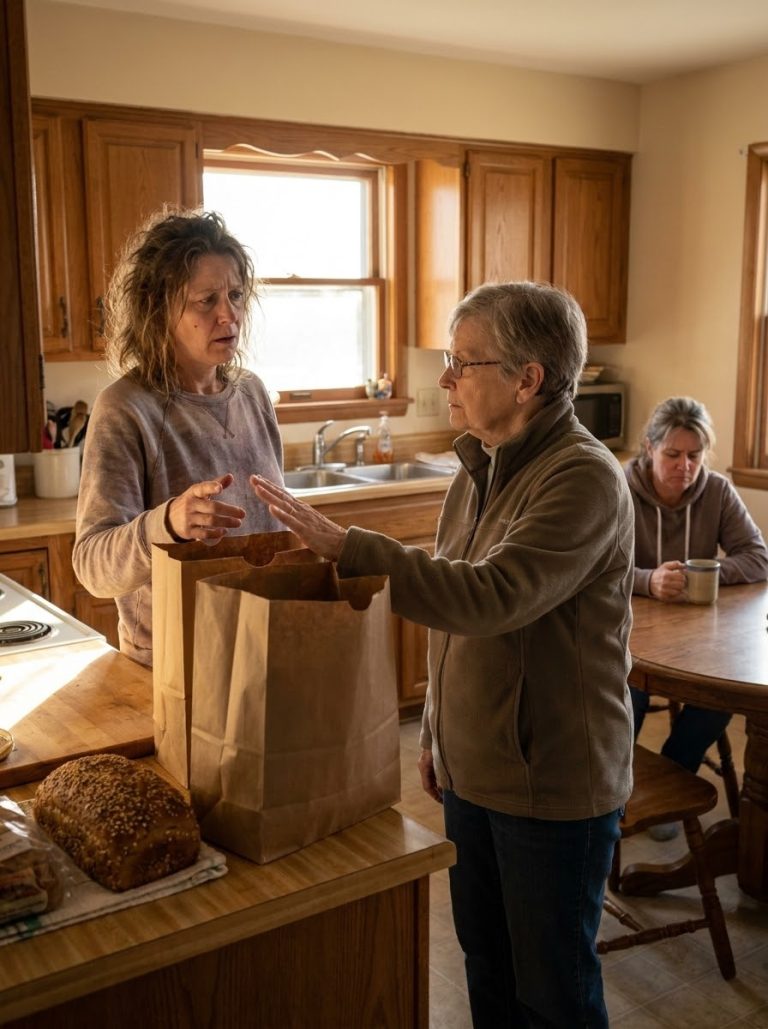
Mark was in the garage replacing the weather seal under the side door when I came out with a basket of towels.
“Hannah wants us to help her move the bookcase next weekend,” he said.
“What time?”
“Saturday morning.”
“I can do after eleven.”
He looked up from the strip of rubber in his hand. “Why after eleven?”
“I’m meeting my project group at nine.”
“On Saturday too?”
There was nothing cruel in the question. That was part of the problem. He sounded genuinely surprised that a course might spread beyond the hours printed on the calendar.
“We have a presentation Monday.”
“I thought it was night school.”
“It is. Assignments have escaped containment.”
He smiled despite himself. “Can’t your group do Zoom?”
“We tried. One person’s toddler climbed into the laundry basket. Nina’s dog ate a sticky note. We’re meeting at the library.”
“Hannah only has the rental truck until noon.”
“Then you can help her at nine, and I’ll come at eleven.”
Mark went back to the weather seal.
“I thought we were doing it together.”
“We are. At different times.”
He sighed.
I put the laundry basket down.
“What?”
“Nothing.”
“That is your least convincing word.”
He sat back on his heels. “I’m adjusting.”
“So am I.”
“I know.”
“No, I mean I am. I’m not asking you to do all the adjusting.”
He looked at the towels, then at me. “You did three loads this morning.”
“That is not a moral achievement.”
“I didn’t say it was.”
“But you noticed because I have started doing laundry before class work so nobody can say school is making the house fall apart.”
Mark set the weather strip down.
“I have never said the house is falling apart.”
“You asked me Monday whether we had anything for dinner while standing twelve feet from the refrigerator.”
“I was asking a question.”
“And I answered it.”
He smiled a little. “Eventually.”
I did too, which annoyed me because I wanted the argument clean.
Marriage rarely cooperated with clean arguments.
On Saturday I met Nina and two other students at the public library. Our presentation was about how a city agency communicated a major route change to bus riders. I had volunteered to open because I was good at making rooms pay attention. I had spent years telling crews at Greenstone why a timesheet rule mattered without making grown men believe I had personally invented time.
What surprised me was how much I enjoyed the research underneath the talking.
Not the citation formatting. Citation formatting was designed by people who wanted revenge on punctuation.
I liked the questions.
Who got told first? Who was expected to adapt? What counted as notice? What happened when an organization believed posting information was the same as communicating it?
Nina watched me erase half our opening slide.
“You hate bullet points,” she said.
“I hate bad bullet points.”
“You work in an office.”
“I contain multitudes.”
At eleven I drove to Hannah’s apartment and found Mark and Hannah wrestling the bookcase through the front door.
“You made it,” Hannah said.
“Against all odds.”
Mark gave me a look over the top shelf.
We got the bookcase inside, ate pizza on the floor, and spent the afternoon arranging a living room that Hannah would rearrange the moment we left.
At one point she held up an old framed graduation photo of Mark and me. He was twenty-six in the picture, thin as a coat hanger in his engineering gown. I was beside him in a blue dress with Hannah, then two, on my hip.
“You look twelve,” Hannah said.
“I felt eighty.”
Mark smiled. “You worked more hours than I did that year.”
“Somebody had to keep us in generic macaroni.”
He said it warmly.
I felt a small pull anyway.
Hannah looked at me. “Were you already done with school then?”
I opened my mouth.
Mark said, “Your mom had decided work suited her better.”
There it was again.
Not a lie exactly.
By then I was working full time. I was good at it. I had stopped talking about semesters because talk without money had become irritating.
But decided was a very polished word for what had happened.
I looked at the photograph in Hannah’s hands.
“I had stopped going,” I said.
“That’s different?” she asked.
“Yes.”
Mark shifted beside me.
Hannah, sensing a current she did not want to swim in, set the frame on a shelf.
That night in the car, Mark said, “Did you have to correct me in front of her?”
“I corrected a sentence.”
“You know what I mean.”
“I do. I’m starting to dislike how often you ask me to know what you mean instead of listening to what you said.”
He drove another block.
“I remember you being relieved to stop.”
“I was relieved to stop trying to do everything at once.”
“That’s not how you talked about it.”
“How did I talk about it?”
“You said your office job was better for you. You said you hated sitting in lectures. You said we couldn’t keep pretending money would appear.”
“All true.”
“Then why are you acting like I invented a history?”
“I’m not.”
I looked out at the strip malls sliding past the passenger window.
“I think maybe we made one decision and then told the story of it for so long that the story got simpler than the decision.”
Mark’s hands tightened on the steering wheel.
“I don’t know what you want me to say to that.”
“I don’t either.”
For once, I let that be the end of the conversation.
Monday night our group presented.
I was nervous in a way I had forgotten how to be—dry mouth, hot ears, a sudden conviction that every sentence I had written belonged to a smarter woman who would arrive any minute to claim it.
Then Professor Kent nodded at me.
I stood.
And something familiar came back.
Not school exactly.
Me.
I liked holding an idea in my head and handing it to a room in a shape other people could use.
I liked answering questions I had not rehearsed.
I liked getting one answer wrong, thinking for three seconds, and trying again.
When we finished, Nina squeezed my shoulder.
“You looked happy up there,” she said.
I was.
The recognition frightened me more than the presentation had.