My Theater Program Announced My Retirement Before Anyone Asked Me—Then I Learned My Replacement Had Been Planned for Months

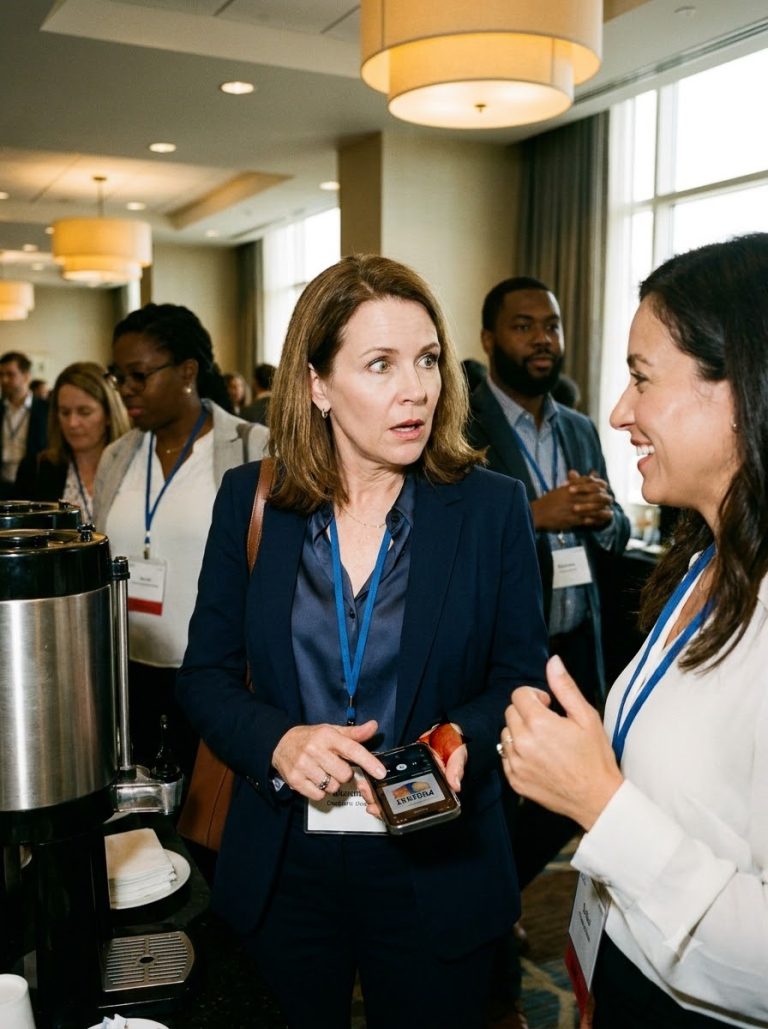
The first time I learned I was retiring, I was standing beneath a paper moon while three hundred people drank grocery-store wine.
The moon belonged to our set for The Winter Orchard, a community-theater drama that opened in eight days. It hung above the stage at the Branton Civic Playhouse, painted pearl-gray and mounted on a cable that had already jammed twice during tech. I had spent most of that afternoon in the costume room fixing a coat that was supposed to look inherited rather than purchased last Tuesday.
At six-thirty, I came upstairs for the season-opening reception because our artistic director, Graham Wells, had texted me three times that I needed to make an appearance.
You built this place too, Linda. Come let people thank you.
I should have been suspicious of the word thank.
Instead, I washed chalk and thread dust off my hands, changed into a black blouse in the staff restroom, and carried a glass of chardonnay around the lobby while patrons asked whether the orchard costumes were “period accurate,” a question that always sounded more exact than it was.
Then a longtime subscriber named Marjorie Bell hugged me and said, “I’m going to miss you terribly.”
I laughed.
“I’m not going anywhere.”
Her face changed.
Not dramatically. Marjorie was seventy-two and had spent forty years teaching third grade. She had the controlled expression of a woman who had broken up fights involving scissors.
“Oh,” she said.
“What?”
She looked toward the stack of glossy season programs on the registration table.
I followed her eyes.
The cover showed photographs from our upcoming productions. Inside, between the donor list and a profile of the new youth program, was a full-page article titled A NEW CHAPTER IN COSTUMES.
I saw my own face before I read the words.
The photograph was five years old. I was standing beside a rack of 1940s dresses, laughing at something outside the frame.
The article began:
After twenty-seven seasons of extraordinary service, beloved costume lead Linda Mercer will step back following The Winter Orchard, mentoring rising designer Chloe Park as she assumes leadership of Branton Civic Playhouse’s costume department.
I read it twice.
The room did not go silent. That would have been easier. The room kept being a fundraiser. Someone laughed near the bar. A volunteer dropped cocktail napkins. The pianist in the corner moved from Cole Porter into something by Gershwin.
Marjorie touched my elbow.
“Linda?”
“I did not approve this.”
Her hand fell away.
I read the paragraph again, slower.
It said I was “ready to enjoy a more flexible season of life.”
It said Chloe represented “the next generation of sustainable costume practice.”
It said I would remain “a treasured advisor.”
I was fifty-six years old.
I worked thirty-two hours a week as office manager for a commercial landscaping company. I had reduced from forty because the owner’s daughter had taken over payroll, not because I was waiting for the first available rocking chair.
And at Branton, I had not retired from anything.
“Who wrote this?” I asked.
Marjorie shook her head. “I assumed you had.”
Across the lobby, Chloe was speaking with two board members beside a display board covered in fabric swatches.
She was thirty-one, sharp, talented, and faster than I was with digital pattern software. I had recruited her three years earlier after seeing her costumes for a tiny production at the college. We had argued about plenty of things—storage, rentals, whether actors should ever be trusted to hang their own clothes—but until that moment I had never believed we were arguing over my chair.
I walked toward her.
Chloe saw the program in my hand and stopped mid-sentence.
That told me she knew about it.
“Linda,” she said.
“Am I retiring?”
The two board members looked at each other.
Chloe’s mouth opened, then closed.
“I thought Graham talked to you.”
“He did not.”
One of the board members, Peter Shaw, cleared his throat. “Maybe this isn’t the best place—”
“It is the place where three hundred people were just told I’m retiring.”
He looked down.
Chloe took a breath. “I was told you wanted to step back after Orchard.”
“By whom?”
“Graham.”
“When?”
“June.”
It was September.
I folded the program once, carefully, along the spine.
“What exactly did he tell you?”
“That you were tired. That you wanted fewer nights. That you’d stay through opening and then I’d lead the winter show with you available if I got stuck.”
I stared at her.
“Did I ever tell you that?”
“No.”
“Did you ever ask me?”
Her cheeks colored.
“No.”
That answer hurt, but it was useful.
Before I could say more, Graham appeared beside us carrying the expression he used when an actor had missed a cue and he intended to call it an artistic choice.
“There you are,” he said. “I’ve been looking for you.”
I held up the program.
“Apparently you found me months ago.”
His smile vanished.
“Linda, let’s go downstairs.”
“No. Tell me one thing first. Did you authorize this?”
He glanced at Chloe.
“Yes.”
“Did I agree to retire?”
He lowered his voice. “We have talked for two years about sustainability.”
“That is not an answer.”
His jaw tightened.
“No,” he said. “You did not use the word retire.”
The first useful decision I made that evening was not to argue about my future in front of donors.
The second was not to let Graham call the article a misunderstanding.
I handed the program back to him.
“Do not distribute another copy until we talk,” I said.
Then I went downstairs to the costume room and locked the door behind me.
The costume room had always been the only place in the theater where chaos had to answer to labels.
Four rolling racks held the principal costumes for The Winter Orchard. Shoes were stacked in clear bins by actor. A long table near the sewing machines was covered in repair notes, fitting schedules, and two sleeves I had removed from a wool dress because the actress could not raise her arms without lifting the whole bodice.
I stood in the middle of it and tried to separate anger from fact.
Fact one: the program said I was retiring.
Fact two: Graham had approved it.
Fact three: Chloe had been told months earlier that she was taking over.
Fact four was waiting on my desk.
My clipboard held the production access sheet I had printed that morning. I looked at the vendor section.
My name was missing from one account.
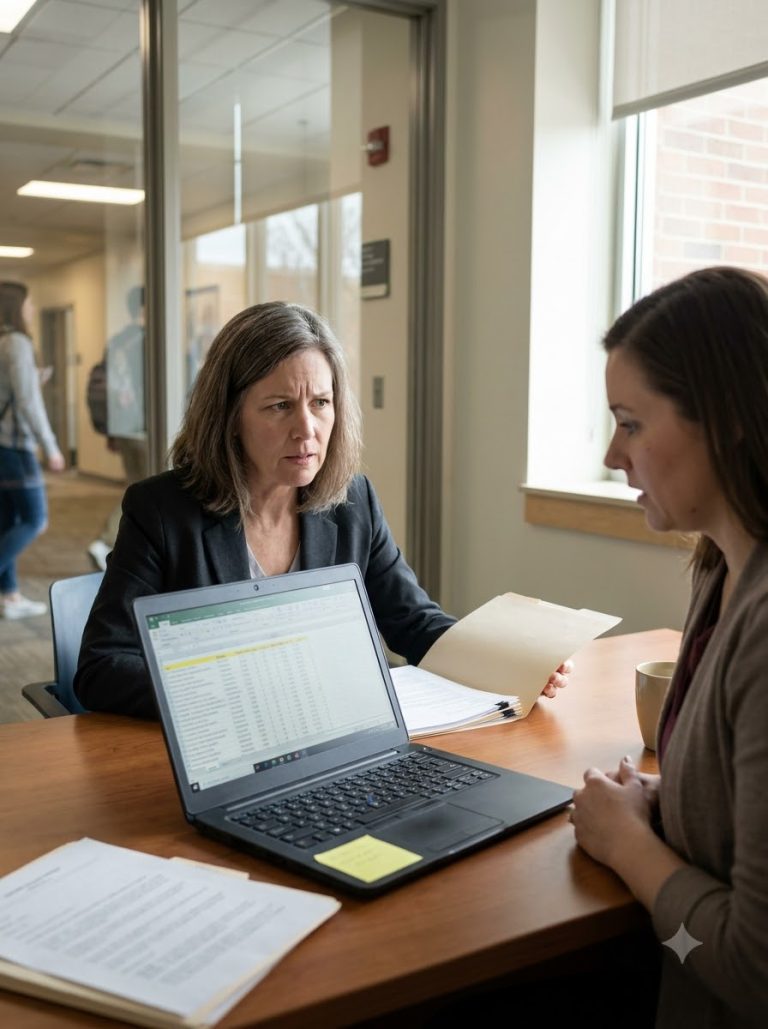
Branton had used Ellery Costume Rentals for years. I had an individual login because I handled measurements, pull lists, return dates, and damage notes. The sheet now listed Chloe Park as primary contact.
I opened my laptop and tried to sign in.
Access denied.
I tried again.
Same result.
That was when the retirement announcement stopped being a bad article.
Someone had already begun moving the work.
I did not call Graham that night.
I went home, reheated soup, and ignored three messages from him until I could answer without using language that would make the real problem easier to dismiss.
My husband, Tom, had died six years earlier of a sudden heart rhythm problem. I mention that because after he died, people became very interested in telling me what I needed less of.
Less obligation. Less work. Less clutter. Less driving after dark. Less theater.
Most of them meant well.
Tom had been the person who understood that Branton was not where I went because I had no life. It was part of the life I had built. He used to bring dinner to tech rehearsals and sit in the back row reading while we tried to make twelve actors look like they belonged in the same decade.
After he died, the theater gave me somewhere to be that did not require grief to be the most interesting thing about me.
I did not owe Branton forever because of that.
But gratitude was not consent to disappear.
At seven the next morning, I opened every message Graham had sent me since May.
He had talked about sustainability. He had talked about reducing pressure on volunteers. He had said the board wanted “succession depth” in every production department.
I had agreed.
I had even told him in July that Chloe should lead one of the smaller spring productions while I served as backup.
That sentence looked dangerous now.
Chloe should lead one.
Not Chloe should lead mine.
At eight-thirteen, Graham texted again.
Can we meet at 10? I’m sorry the wording landed badly.
I wrote back.
Yes. Please bring the board-approved role plan, any communication describing my retirement or step-back, and the current costume budget/access list.
Three dots appeared. Disappeared. Appeared again.
You’re making this more formal than it needs to be.
I stared at the message.
Then I wrote:
You published my retirement and changed my access. It is already formal.
At ten, Graham was waiting in the rehearsal room with coffee for both of us.
I did not touch mine.
He was sixty-two, broad-shouldered, silver-haired, and very good at making people feel that theater existed one inch from disaster unless they trusted him. Most of the time, that urgency helped. It got sets painted and rights paid and actors back from vacation before first dress.
Sometimes urgency was only a way to keep people from asking who had decided what.
He spread three pages on the table.
“First, I’m sorry,” he said. “The article got ahead of the conversation.”
“The article did not write itself.”
“No.”
“Who gave the writer the retirement language?”
“I did.”
“Why?”
“Because I believed we were aligned.”
“We were aligned that Chloe needed leadership experience.”
“Yes.”
“That is not the same as my leaving.”
He rubbed his forehead. “Linda, you have said repeatedly that you’re tired.”
“I have also said repeatedly that the basement floods. I have not resigned from the basement.”
He almost smiled.
I did not.
He slid one page toward me. It was a new costume department structure.
Lead Costume Designer: Chloe Park.
Senior Costume Advisor: Linda Mercer.
Volunteer Stitch Team: six names.
Rental and Inventory Coordinator: Chloe Park.
The document was dated August 12.
“Who approved this?” I asked.
“The production committee.”
“Was I at that meeting?”
“No.”
“Was I invited?”
He hesitated.
“It was a budget meeting.”
“I have attended costume budget meetings for twenty-seven seasons.”
“We were discussing a broader modernization plan.”
“And my job was modernized while I was not in the room.”
“You don’t have a job here, Linda. You’re a volunteer.”
The sentence came out faster than he intended.
We both heard it.
I sat back.
“You’re right,” I said. “Which means I can stop volunteering at any time.”
His face tightened.
“That’s not what I meant.”
“It is exactly what you meant. You meant I don’t have an employment claim. I’m not making one. I’m asking who decided what work I would do and what title I would have.”
He leaned forward.
“We are trying to build a system that doesn’t depend on one person knowing where every zipper is.”
“I support that.”
“Do you?”
“Yes. I do not support pretending I retired so you can get there.”
He looked genuinely frustrated.
“Then what do you want?”
It was a fair question.
I did not know yet.
“I want the public statement corrected,” I said. “I want my access restored through opening night because I am responsible for this production. I want to know what Chloe was promised. And I want the original discussion that produced this structure.”
Graham’s expression changed at the last sentence.
Not much.
Enough.
“There isn’t an original discussion,” he said.
“There is always an original discussion.”
He pushed his coffee away.
“I can restore your rental login today.”
“That is not what I asked.”
“No. It is what I can solve today.”
That was the first sign that the access problem was not the problem he feared most.
Chloe came to the costume room at noon carrying a bag of sandwiches and an apology she had clearly rehearsed.
“I should have asked you,” she said.
“Yes.”
“I thought if I asked, it would sound like I was challenging you.”
“You were being told you were replacing me. Asking would have been appropriate.”
She set the sandwiches down.
“I know.”
I looked at her for a long moment.
Then I pointed to the fitting rack.
“Daniel’s coat still pulls at the left shoulder. Can you fix that before four?”
She blinked.
“Yes.”
“Good. We open in eight days. Whatever else is happening, the coat remains ugly.”
That broke something in the room. Not the conflict. The idea that we had to become enemies before we could talk.
Chloe took off her cardigan and hung it on the back of a chair.
While she opened the coat seam, she told me what she had been told.
In June, Graham asked whether she would be interested in “building the next version” of costumes at Branton. He said I wanted to reduce my role after The Winter Orchard and had specifically mentioned mentoring her.
That part was true enough to be convincing.
Then, in July, he asked her to price subscription access to a regional costume-rental platform. The platform would let Branton rent full period packages instead of building so much in-house. Chloe liked the idea for large chorus shows.
So did I, in principle.
What I did not like was what came next.
“Graham said the donor committee was excited about it,” she told me. “They liked the sustainability angle. Reuse. Less storage. Less volunteer burnout.”
“Which donor committee?”
“The Haviland grant people.”
I stopped sorting buttons.
The Haviland Foundation had funded our youth wing two years earlier. They were considering a new three-year arts-access grant.
“How much?”
“I don’t know.”
“Did they meet with you?”
“Once. Video call.”
“Was I invited?”
“No.”
“What did Graham say about me?”
Chloe looked down at the coat.
“That you were ready to hand off the department after the fall show but wanted the systems stable first.”
I sat very still.
“Those were his words?”
“Pretty much.”
“Did he say I had approved the rental model?”
“He said you were old-school about some things but that you understood why it had to change.”
That sounded like Graham.
It also sounded like a story designed to make disagreement look nostalgic before I had disagreed.
Chloe put down the seam ripper.
“I’m not trying to take this from you.”
“I know that now.”
Her eyes lifted.
“Now?”
“Last night I wasn’t sure.”
“That’s fair.”
“No. It’s human. Fair would have been asking you before deciding what you meant.”
She gave a small smile.
I thought about the program article. Mentor. Rising designer. Flexible season of life.
It had given each of us a flattering part.
Mine just happened to end with me leaving the room.
“Do you want the lead role?” I asked.
“Yes,” she said immediately.
The honesty helped.
“Do you want it because you think I’m done?”
“No.”
“Do you want it if I’m not?”
She took longer.
“Yes. Eventually. Maybe now. I don’t know. I want to make decisions, not just execute yours.”
There it was.
A real conflict.
Not a conspiracy. Not a villain. Not even a misunderstanding.
A younger woman wanted room.
An older woman had not agreed to disappear to make it.
Both could be true.
I pulled a stool toward me.
“Then let’s talk about the winter show like adults. Separate from whether I’m supposedly retired.”
We spent forty minutes listing actual responsibilities.
Design concept.
Budget.
Measurements.
Build versus rental decisions.
Volunteer scheduling.
Repairs.
Laundry.
Returns.
Storage.
The glamorous word designer covered about twenty percent of the work.
By the time we finished, Chloe was staring at the list.
“I didn’t know you did all the return reconciliation.”
“I know.”
“Why?”
“Because twelve years ago someone lost three military jackets and I developed a personality disorder.”
She laughed.
Then she said, “Graham told the board the rental platform would cut costume volunteer hours by forty percent.”
I stopped smiling.
“Based on what?”
“I assumed you gave him numbers.”
“I did not.”
That afternoon, Chloe forwarded me the slide deck she had seen during the Haviland call.
On slide nine, under ORGANIZATIONAL SUSTAINABILITY, was a timeline.
Fall: Linda Mercer completes final lead production.
Winter: Chloe Park assumes department leadership.
Spring: Full rental-platform integration.
The file had been created in May.
A month before Graham told Chloe I wanted to step back.
Three months before the production committee supposedly approved the change.
For the first time, I knew what question to ask next.
Not when had they decided I was retiring.
Why did the modernization plan need me to be retiring before anyone asked me?
The next three days belonged to the play.
That was not avoidance. Opening nights do not care whether your identity crisis is finished.
An actor lost seven pounds between the first fitting and tech, which meant his trousers no longer respected gravity. One of the rented hats arrived crushed. The washing machine in the basement stopped mid-cycle with six cream blouses inside it.
I fixed what had to be fixed and refused to fix what did not belong to me.
That distinction became harder than I expected.
For years, if a problem appeared near costumes, I absorbed it. I knew who had a steamer at home. I knew which dry cleaner would take theater velvet without acting insulted. I knew that Marjorie Bell’s daughter owned a van and that if you asked Marjorie directly, she would volunteer the van, her daughter, and possibly a casserole.
Competence accumulates pathways.
People begin to experience your solutions as infrastructure.
On Thursday, Graham restored my Ellery login.
He also sent a proposed correction for the digital program.
Linda Mercer will continue supporting Branton Civic Playhouse while transitioning into a flexible advisory role over the coming season.
I called him.
“That is not a correction.”
“It removes retirement.”
“It replaces a false statement with another statement I did not approve.”
“What wording do you want?”
“Linda Mercer remains costume lead for The Winter Orchard. Future department roles are under discussion.”
He sighed.
“That sounds unstable.”
“It is accurate.”
“We’re in the middle of a grant review.”
There it was.
I let the silence hold.
Graham said, “That wasn’t meant to be a secret.”
“I knew about the grant. I did not know my retirement was one of the deliverables.”
“That’s unfair.”
“Then explain it fairly.”
He asked me to meet after rehearsal.
At nine-forty that night, we sat in the darkened auditorium with work lights onstage. Chloe was upstairs checking returns. The rest of the cast had gone home.
Graham looked exhausted.
“So,” he said, “here is the version you are going to hate.”
“I appreciate the warning.”
“The Haviland people asked what we were doing about key-person dependency. Costumes came up.”
“Because I know too much.”
“Because too much runs through you.”
“That is true.”
“They liked Chloe. They liked the rental concept. They liked the idea of reducing inventory costs and volunteer hours.”
“So far I hate nothing.”
He looked at me.
“They did not want to fund a modernization plan that depended on the person it was supposed to replace.”
I felt something cold move through me.
“Replace.”
“Change.”
“You said replace.”
He rubbed both hands over his face.
“Linda, you have been asking for help for years.”
“Yes.”
“This was help.”
“No. Help is adding people to work. This is announcing that one person is leaving.”
“You said you wanted fewer hours.”
“I wanted fewer hours doing laundry at midnight. I did not say I wanted no authority over a department I built.”
He leaned back.
“Do you hear yourself?”
“What am I supposed to hear?”
“That you’re equating leadership with ownership.”
The sentence landed because there was truth inside it.
I had built systems there. I had not built the theater alone. Chloe deserved leadership. Other volunteers deserved access to information I kept in my head because it was faster than writing it down.
My anger did not make me automatically right about everything.
But Graham’s point did not answer the problem either.
“I do not own costumes,” I said. “Which is why you could have asked me to change roles. You didn’t. You wrote my exit into a grant story and then worked backward.”
He looked toward the stage.
“The grant is two hundred and forty thousand dollars over three years.”
That was enough money to change the theater.
Youth scholarships. Accessibility upgrades. Part-time technical support. Marketing. Production costs.
I understood why the board wanted it.
I understood why Graham wanted a clean story.
I understood, suddenly, why my messy answer had been inconvenient.
He said quietly, “If we tell them the leadership transition is uncertain, it could raise questions.”
“Then answer the questions.”
“That’s easy for you to say.”
“No. It isn’t. I care about the grant too.”
“Then help me stabilize this.”
I almost laughed.
There it was again.
My job was to make the story he had already told become true enough that nobody had to admit he told it first.
“What does stabilize mean?” I asked.
“Stay through Orchard. Let Chloe lead winter. Take the advisor title for the year. We evaluate after spring.”
“And the public correction?”
“We say you are transitioning, not retiring.”
“Still without me deciding to transition.”
He closed his eyes.
“Linda, what outcome are you looking for?”
I thought about it.
“I want to choose before I am described.”
He looked at me as if that were less practical than a budget.
Maybe it was.
That did not make it optional.
On Friday morning, I asked the board secretary, Naomi Ellis, for the minutes from the May and August production meetings.
Naomi called me instead.
“Are you asking as costume lead or as Linda?” she said.
“What answer gets me the minutes?”
“That is why I like you.”
Naomi had been a corporate attorney before retirement, but at Branton she mostly enforced the revolutionary idea that somebody should write down decisions after making them.
She sent the minutes ten minutes later.
May 19: Haviland sustainability framework presented. Costume transition identified as a key continuity opportunity. Proposed succession: Park lead / Mercer advisor following fall production. Graham to confirm volunteer alignment before external presentation.
That sentence was enough to make me sit down.
Graham to confirm volunteer alignment.
He had not.
The June minutes said: Director reports succession conversations progressing positively.
The July grant deck said: Leadership transition confirmed.
By August, the production structure simply listed Chloe as lead.
I called Naomi back.
“What did Graham tell the board in June?”
“That you were open to stepping back.”
“Open is not confirmed.”
“I know.”
“Did anyone ask whether I had agreed?”
There was a pause.
“I did.”
“What was the answer?”
“He said you were sensitive about the word retirement but that the substance was settled.”
I laughed once.
“Apparently I am also sensitive about the substance.”
Naomi did not laugh.
“Linda, I need to say something that may annoy you.”
“Everybody is very worried about annoying me this week.”
“You have made yourself difficult to replace.”
“That is not new information.”
“I do not mean because you hoard things. I mean because when the organization fails to build support around you, you solve the failure yourself. Every time.”
I looked at the open costume spreadsheet on my computer.
She continued.
“Three years ago the board cut the wardrobe-assistant stipend. You absorbed the hours. Last year the storage volunteer quit. You reorganized storage. In February Graham told us costume labor was sustainable because productions had not been delayed.”
I knew where she was going.
“We were not sustainable,” I said.
“No. You were compensating.”
“That is not permission to announce my retirement.”
“Absolutely not.”
“But it helped create the argument.”
“Yes.”
I sat with that.
There is a particular humiliation in discovering that your competence has concealed the evidence you needed.
If I had let one hem go unfinished, one return deadline be missed, one fitting schedule collapse, perhaps somebody would have funded help years earlier.
Instead, I made the system look functional.
Then the solution to dependency became removing the person who had hidden the dependency.
“Can I have the board packet?” I asked.
“Which packet?”
“The one that says why Haviland likes the transition.”
Naomi was silent long enough that I heard paper move on her end.
“I can send you the internal summary. The foundation proposal itself is board material, but you should see anything that represents your consent.”
“That is exactly what I need.”
The internal summary arrived after lunch.
Most of it was boring in the reassuring way grant material often is. Goals. Measures. Attendance. Youth participation. Storage costs. Volunteer retention.
Then I reached a paragraph titled Leadership Renewal.
Branton Civic Playhouse will transition its costume function from a personality-dependent, build-heavy model to a collaborative, rental-supported system under emerging designer Chloe Park, with longtime lead Linda Mercer completing a planned retirement from departmental leadership after the fall production.
Planned retirement.
The phrase had become more official each time it traveled.
At the bottom of the page was a note from Graham dated May 11.
Linda has discussed reducing her theater load for some time. We should frame this as honoring her contribution and creating a graceful transition rather than emphasizing operational deficiencies.
I read the sentence until my anger changed shape.
Operational deficiencies.
That was the part nobody had said to my face.
At four, I found Graham in the scene shop measuring a platform.
“What deficiencies?” I asked.
He looked at the printed page in my hand.
“Naomi sent you that?”
“Yes.”
He put down the tape measure.
“Linda, you know the costume room has problems.”
“Name them.”
“Inventory is inconsistent.”
“Because the database subscription was cut.”
“Exactly. We need a new system.”
“Next.”
“Too much gets built from scratch.”
“Because directors change concepts after rental deadlines.”
“Sometimes.”
“Next.”
“Volunteers say they don’t always know who can approve changes.”
“Because I am usually the only person you give budget authority to.”
He exhaled.
“Do you hear how every problem has an explanation?”
“Yes. Problems often do.”
“No. I mean you always have a reason why the system is the way it is.”
“That is different from saying the system should stay that way.”
He looked tired.
I softened my voice.
“Graham, if you had told me in May that the board thought costume operations depended too much on me, I would have agreed.”
“I know.”
“If you had said you wanted Chloe to lead winter, I probably would have agreed.”
“I know.”
“If you had said the grant required a documented succession plan, I would have helped make one.”
He looked at the floor.
“Then why didn’t you?” I asked.
“Because I did not believe you would let go enough for the plan to look real.”
There it was.
Not confusion.
Not kindness.
A choice.
“You decided my answer before asking me.”
“I decided the theater could not wait for a perfect answer.”
“And then you called the answer mine.”
He did not respond.
I folded the page.
“I will finish The Winter Orchard. I will not sign onto any transition language until the board corrects the record and we discuss the actual work.”
“What does that mean for winter?”
“It means Chloe can lead winter if she wants to. Not because I retired. Because the theater can assign productions differently.”
“And your role?”
“I have not decided.”
His face showed exactly why uncertainty had frightened him.
This time, I let it.
The false peace lasted forty-eight hours.
On Saturday, the digital program was corrected to say only that Chloe would design the winter show. My retirement paragraph disappeared. Graham sent me a one-line email saying the board would review “future role language” after opening.
Tom’s sister, Elaine, came to dress rehearsal and brought me coffee. She read the revised program and said, “So they fixed it?”
“Part of it.”
“What part is left?”
“I’m not sure whether I want the job they tried to take.”
She nodded as if that made perfect sense.
That was why I loved Elaine.
Most people wanted conflict to produce a clear prize. Keep the role. Quit dramatically. Make someone apologize. Win.
Elaine had spent thirty-five years as a public-school librarian. She understood that sometimes the question was whether you still wanted the key after discovering how the door worked.
“You know what Tom would say,” she told me.
“I do.”
“He’d say, ‘Can I build a shelf for this problem?’”
I laughed.
“He would.”
“And then you’d tell him no.”
“Correct.”
Dress rehearsal went badly enough to improve everyone’s perspective.
The moon jammed again. Daniel tore the repaired coat. One actress entered with one glove because the other was in the bathroom under a paper towel after someone spilled foundation on it.
Chloe and I worked beside each other without discussing succession.
At eleven-ten, after the cast left, she handed me a spreadsheet.
“What is this?”
“Winter rental cost comparison.”
I looked at her.
“You don’t have to show me.”
“I know. I want to.”
The winter show was a comedy set in 1926 with a cast of eighteen. Chloe had compared three options: mostly build, mostly rent, hybrid.
The rental-heavy plan was not cheaper.
Not once shipping, alterations, insurance, late fees, and return labor were included.
It did reduce build hours.
But it increased cash expense by almost thirty percent.
“Did Graham see this?” I asked.
“Not this version.”
“What version did he see?”
“The platform estimate without shipping and alteration time.”
“Why?”
“Because that’s what they gave me in June. I started checking actual invoices this week.”
I pulled up a chair.
“You should still rent some of it.”
“I think so too.”
“The tuxedos.”
“Yes.”
“Not the chorus dresses.”
“Why?”
“Because half the chorus will need sleeve changes and the vendor charges per alteration.”
She looked at the spreadsheet, then at me.
“This is what I mean. You know the trap before I see it.”
“You’ll see it next time.”
“That’s not the same.”
“No. It isn’t.”
She sat beside me.
“I’m scared,” she said.
The word surprised me.
“Of the job?”
“Of getting it this way.”
I waited.
She ran one finger along the edge of the spreadsheet.
“If I take over and it works, people will say the new model fixed everything. If it doesn’t, they’ll expect you to fix it. Either way, I don’t know what part is mine.”
That was the first time I understood what Graham’s story had taken from her too.
A legitimate promotion should let a person own both success and failure.
He had given Chloe a role wrapped in my supposed blessing and backed by my invisible safety net.
“You need your own agreement,” I said.
“With the board?”
“With yourself first. What are you actually willing to own?”
She gave me a tired smile.
“That sounds like something you learned this week.”
“It is.”
We spent another hour separating tasks.
Chloe would lead winter design and sourcing.
A volunteer named Rosa would manage fittings.
The theater would pay a part-time inventory assistant for six weeks using production contingency funds.
I would finish Orchard and train Rosa on returns because I had promised her months earlier.
I would not be automatic emergency backup for winter.
Chloe stared at that line.
“Can I call you if I’m genuinely stuck?”
“As a friend?”
“Yes.”
“Of course.”
“As the old lead?”
“No.”
She nodded slowly.
“That is terrifying.”
“For both of us.”
On Monday morning, Graham emailed me a revised role proposal.
Senior Costume Advisor, no required weekly hours, available for consultation, donor events, and major production emergencies.
Honorary title.
Unlimited expectation.
I wrote back one sentence.
No, thank you.
Ten minutes later my phone rang.
“You haven’t even thought about it,” he said.
“I have been thinking about it for a week.”
“This lets you keep status without carrying the department.”
“I do not need status without scope.”
“It’s recognition.”
“Recognition would have been asking me before publishing my retirement.”
He was quiet.
“What are you going to do?”
“I’ll tell you after opening.”
“You can’t keep everybody waiting.”
“Apparently I can. Everybody kept me waiting for my own decision since May.”
I hung up before he could make urgency sound like my responsibility again.
Thursday should have been quieter.
Instead, Peter called me at work at eleven-fifteen.
“Do you have a minute?”
“I have nine, and then I have to explain to a landscape crew why they cannot expense a pressure washer as office supplies.”
“Fair. I found something in the development archive.”
My stomach tightened.
“What?”
“A draft donor brief from April.”
April was before the May board discussion. Before Graham was supposed to confirm my alignment. Before Chloe had been approached.
“What does it say?”
“I think you should read it rather than hear my summary.”
He emailed it.
The document was only two pages. Most of it described the theater’s need for operating support. One paragraph discussed “visible generational renewal” across creative departments.
Then came the line:
Costume modernization will be led by emerging artist Chloe Park following the planned fall retirement of twenty-seven-season volunteer lead Linda Mercer, creating a donor-ready example of sustainable leadership renewal.
Donor-ready example.
I read it three times.
The file metadata showed Graham as author.
Created April 6.
That changed the timeline again.
The retirement story had not developed because Haviland asked for key-person planning in May. Graham had already used my retirement as an example in an internal donor brief before the formal grant framework arrived.
The grant did not create the story.
The story was waiting for a grant to make it useful.
I closed my office door and called Peter.
“Who saw this?”
“Development committee. Maybe four people.”
“Did anyone ask why I was retiring?”
“I was not on that committee then.”
“Who was?”
“Graham, Melissa, two former board members, development chair.”
“Was this sent to Haviland?”
“Not this version. It looks like an internal positioning draft.”
That mattered. I did not want to turn sloppy internal planning into an accusation of donor fraud. The document proved something narrower and more important to me: the order of decisions.
Graham had chosen the narrative before he had even pretended to confirm it.
At lunch, I walked around the landscaping-company parking lot with my phone in my hand.
I could feel my anger trying to simplify everything.
He wanted me gone.
Chloe wanted my role.
The board wanted a younger face.
Those statements were emotionally efficient and factually incomplete.
Graham wanted change. Chloe wanted room. The board wanted funding and reduced dependency. Some of the operational criticism was valid. The dishonesty was not that change had no reason.
The dishonesty was turning a proposed solution into my personal choice so nobody had to own the conflict involved in proposing it.
At two, I texted Graham.
I saw the April donor brief. We need to talk before opening.
He called within a minute.
“Peter sent you that?”
“Yes.”
“That was brainstorming.”
“It describes my planned retirement six weeks before you were supposed to confirm whether I was aligned.”
“I told you, we had been talking about your workload.”
“You had been hearing what you wanted from those conversations.”
He was quiet.
I continued.
“Did you believe in April that I had agreed to retire?”
“No.”
The answer came quickly this time.
“Then why write it?”
“Because I needed an example of how we could show leadership renewal.”
“Why me?”
“Because costumes was the obvious department.”
“That is not what I asked.”
He exhaled.
“Because you have been there forever, Linda. Because you were tired. Because Chloe was ready for more. Because everybody knew the current model could not last. Because I thought if we created the structure, you would eventually see that it made sense.”
There it was in full.
He had not believed I wanted to retire.
He had believed I ought to.
And because the outcome seemed sensible to him, my agreement had become an administrative detail.
“Thank you,” I said.
“For what?”
“For finally saying the part I needed.”
“What part?”
“That you knew I had not agreed.”
He started to speak.
I stopped him.
“I am not asking you to confess to something worse. I am asking you not to improve the sentence now.”
He fell silent.
For several seconds all I heard was the hum of the office air conditioner.
Then he said, “I am sorry.”
“I know.”
“Does this change what you want from the board?”
“It changes what I need from myself.”
He did not understand.
I was not sure I did either until I ended the call.
For days I had been trying to recover the decision that had been taken from me. I had imagined that justice might mean getting my old role back intact, forcing the theater to acknowledge that I was still the lead, perhaps staying long enough that nobody could confuse my eventual departure with Graham’s plan.
But that would still let his timeline control me.
Staying to prove I had not been pushed out was another way of letting the false retirement choose my future.
At five-thirty, I went to Branton and found Chloe pinning trousers in the fitting room.
“I saw an April donor brief,” I told her.
Her face changed.
“What did it say?”
“That you would lead after my planned fall retirement.”
“April?”
“Yes.”
“He did not talk to me until June.”
“I know.”
She sat down.
“So both of us were cast before we knew the show.”
“That is one way to put it.”
She looked at the half-pinned trousers in her lap.
“Are you going to stay?”
“I’m going to finish opening first.”
“That is not an answer.”
I smiled despite myself.
“You’ve been spending too much time with me.”
She did not smile back.
“I need to know whether I’m supposed to plan around you.”
That was fair.
“No,” I said. “Do not plan winter around me. Plan the job as if I am not your safety net. If I choose a future project, it will be a separate agreement.”
Her shoulders dropped slightly, relief mixed with fear.
“Okay.”
“Does that scare you?”
“Yes.”
“Good.”
“Why good?”
“Because now the board can see what support the role actually needs before you pretend you can do it alone.”
She considered that.
Then she handed me the trousers.
“Can you check this hem?”
I looked.
“Half an inch shorter on the right.”
She marked it.
No ceremony.
No transfer of power.
Just one skilled woman asking another skilled woman for an opinion.
For the first time all week, that felt like a future I could live with.
The foundation call forced the board to ask questions the retirement story had helped it avoid.
On Wednesday evening, Naomi convened a costume-operations meeting in the upstairs classroom. Not a succession meeting. Not a tribute. Operations.
There were nine people in the room: me, Chloe, Rosa, Graham, Naomi, Peter, the production manager, our volunteer coordinator, and Martin Hale, the board treasurer. Martin had spent twenty years managing a regional hardware chain, which meant he was the only person at Branton who could hear the word free and immediately ask what it cost.
Naomi wrote four headings on the whiteboard.
WORK.
AUTHORITY.
TIME.
MONEY.
“Everything goes under one of these,” she said. “If it goes under none, it may be theater mythology.”
I liked her more every week.
We started with inventory.
The old story was that I managed it.
The real answer was messier. I entered new purchases when I had time. Rosa updated garment locations after large shows. Chloe had started photographing high-value pieces. Volunteers wrote notes on index cards when they moved items. The spreadsheet contained more than eight thousand entries and at least four spelling variations of eighteenth century.
Martin asked, “How many hours a month?”
Nobody knew.
He looked at me.
“I don’t know either,” I said.
That surprised him.
“I thought you did it.”
“I do enough of it that everyone thinks it is done.”
That became the sentence of the night.
Returns: I did enough that everyone thought returns happened naturally.
Volunteer scheduling: I filled enough gaps that nobody could say how many hours a production actually required.
Alterations: Chloe and I handled enough emergencies that directors did not see the cost of late casting changes.
Purchasing: Graham approved enough invoices by text that no one had a consistent record of who could authorize what amount.
The modernization plan had accurately identified dependency.
It had inaccurately treated dependency as a person instead of a design problem.
After an hour, the whiteboard was covered.
Martin stood and looked at it.
“So if Linda had retired exactly when the original plan said, what would have happened?”
Graham answered, “Chloe would have taken over.”
Martin pointed at the board.
“All of this?”
Chloe said, “Apparently.”
“How many weekly hours were you expecting?”
“Ten to twelve.”
Rosa laughed before she could stop herself.
Chloe looked at her.
“See? This is why I’m scared.”
Rosa covered her mouth. “Sorry.”
“No, don’t be. How many?”
Rosa looked at me.
I said, “During a build-heavy show? Twenty-five. Sometimes thirty. Less between productions.”
Chloe stared at Graham.
“You told me twelve.”
Graham frowned. “That is what Linda reported on the volunteer survey last year.”
I remembered the form.
It had asked for scheduled volunteer hours.
I had put twelve because those were the hours I was physically in the theater on costume work. I had not counted vendor calls from my lunch break, online ordering at home, washing costumes on Sundays, or the hour I spent after every rehearsal updating notes.
“I underreported,” I said.
Martin looked at me. “Why?”
“Because I did not think of the rest as shifts.”
There was no noble answer. No one had forced me to erase those hours. I had helped make them invisible because the labor was broken into pieces small enough to feel personal.
Graham leaned back and looked at the ceiling.
“This is exactly what I was trying to fix.”
“Yes,” I said.
He looked at me.
“I know you hate the way I did it.”
“I hate the way you did it because the way you did it would have handed the same invisible job to Chloe under a newer title.”
Chloe nodded.
That shut down the argument.
We kept going.
By nine o’clock, the board had agreed to fund a temporary inventory assistant for the winter show, create written spending thresholds, and split wardrobe operations from design. None of those decisions required me to stay. None required me to go.
When the meeting ended, Graham remained in his chair.
Everyone else drifted out carrying coffee cups and pages of assignments.
I gathered my notes.
He said, “You know, if you had shown us this workload two years ago—”
I turned.
“If I had shown you, what?”
“We might have structured help sooner.”
The answer irritated me because it was probably true.
“I asked for help.”
“You asked for people. You did not show the board that a thirty-hour volunteer function was hiding inside a twelve-hour report.”
“I did not know that either.”
“I know.”
We sat in the unpleasant territory where blame was not clean.
He had overridden my consent.
I had normalized a system that depended on me.
The board had benefited from both things.
“You know what I wish?” I said.
“What?”
“I wish you had trusted the messy version. You could have told the foundation: our costume operation depends too much on one volunteer, that volunteer wants help, and we are building a transition plan with her rather than for her.”
He rubbed his thumb along the edge of the table.
“That sounds obvious now.”
“Most honest things do after somebody pays for the dishonest version.”
He flinched.
I almost apologized.
That was another habit.
I did not.
Outside, Chloe was waiting under the lobby awning while rain tapped against the glass doors.
“I thought you left,” I said.
“My ride is five minutes away.”
We stood together watching water run down the windows.
She said, “I learned something terrible tonight.”
“What?”
“I do not want your job.”
I laughed.
“I want part of your job,” she corrected. “The part everybody calls the job.”
“Design.”
“Design. Budget choices. Building a team. I do not want to wash fifteen shirts at midnight because somebody forgot to assign laundry.”
“Excellent. You’re already more advanced than I was.”
Her ride pulled up.
Before she left, she said, “If you decide to stay, can we still split it?”
That question mattered more than she knew.
It was the first future anyone had offered me that was not based on my leaving or remaining exactly as I had been.
“Yes,” I said. “If I stay, we can still change it.”
After she left, I stood alone under the awning for another minute.
I realized then that my decision was no longer between surrender and restoration.
The old job had already been exposed as something I did not want back intact.
The next problem arrived from a person I had never met.
Her name was Celeste Ward, and she worked for the Haviland Foundation. She emailed Chloe and copied Graham on Tuesday afternoon asking for a short implementation call before opening night. Chloe forwarded it to me with a note.
I think you should be on this.
I stared at the invitation.
For six months, I had apparently been important enough to be described in grant materials and unnecessary enough to be excluded from the conversations that shaped them. Joining now felt like agreeing to participate in the repair of a story I had not created.
I called Naomi.
“Do I have to do this?”
“No.”
“Should I?”
“That depends on what you want the foundation to know.”
“I want them to know the truth without making them responsible for fixing Branton.”
“Then that is probably what you should say.”
The call was scheduled for four-thirty. Graham joined from his office. Chloe was in the costume room. I sat at my dining table at home with the original season program beside my laptop, not because I planned to wave it at anyone but because I needed to remember what had actually happened when people started using phrases like alignment and transition.
Celeste was younger than I expected, maybe forty, with tortoiseshell glasses and a shelf of binders behind her. She did not look alarmed when Graham introduced me.
“Linda, thank you for joining,” she said. “I understand there has been a clarification regarding the costume leadership plan.”
“That is a polite way to put it.”
Graham shifted in his square on the screen.
Celeste smiled slightly. “I work in philanthropy. Polite ways of putting things are an occupational hazard.”
That helped.
She asked what had changed.
I said, “The organizational plan may still change. What needed correction was the statement that I had already chosen to retire from leadership. I had not.”
Celeste looked at Graham.
“Was the foundation told that Ms. Mercer had confirmed the transition?”
Graham answered before I could.
“Yes. That was my representation, and it was premature.”
It was the cleanest admission he had made so far.
Celeste wrote something down.
“Does the clarification change the proposed operating model?”
Chloe leaned toward her camera.
“It changes how we need to test it,” she said. “The rental model was presented as if it automatically reduces costs and volunteer dependency. It probably reduces some build hours, but it moves labor into ordering, alterations, return tracking, and vendor coordination.”
Celeste nodded. “That is useful.”
Graham said, “We are still committed to modernization.”
I watched him use the word we.
This time, I did not let it pass without definition.
“Branton may be committed to modernization,” I said. “I am committed to finishing the current production and to accurate descriptions of my role. Those are not the same commitment.”
Celeste looked at me, then back at Graham.
“Understood.”
The call continued for twenty minutes. She asked about volunteer training, documentation, inventory, and whether key duties had backup coverage. None of her questions required me to retire. None required Chloe to pretend the new system was already proven. None required Graham to promise a clean generational story.
At the end, Celeste said, “For what it is worth, transitions are not stronger because they sound inevitable. We usually prefer to know where the uncertainty actually is.”
Graham gave a small, pained smile.
“That is worth quite a lot this week.”
After the call ended, Chloe stayed online.
“So the grant was not going to explode if you said no.”
“No.”
“Graham acted like it would.”
“He may have believed that.”
“Do you?”
I thought about how institutions accumulate myths. Somebody predicts what a donor wants. Somebody else turns the prediction into a plan. By the time the donor sees it, everyone inside the organization is protecting a requirement the donor never made.
“I think he wanted certainty,” I said. “The grant gave him a reason to call certainty necessary.”
Chloe leaned back.
“That makes me angrier than if Haviland had demanded it.”
“Me too.”
She glanced toward something off-screen.
“Can I ask you something ugly?”
“Please do. This week has been very educational.”
“If Graham had asked you in May, would you actually have given up the lead role?”
“I don’t know.”
“That is what he was afraid of.”
“Yes.”
“So part of his plan worked because everybody knew you might say no.”
I let that sentence settle.
Consent mattered most when the answer was uncertain. If everyone knew I would say yes, asking would have been a courtesy. Because I might have said no, asking was the whole point.
“Yes,” I said. “That is exactly why he had to ask.”
Chloe nodded.
Then she said, “I want to lead winter. But I do not want you to have to disappear for me to do it.”
“You don’t.”
“How do you know?”
“Because I can decline a permanent role and still design a show. I can stay and not lead. I can leave. You can lead winter whether I like it or not because the theater can assign productions. There are more choices here than the story in that program allowed either of us.”
She smiled, but her eyes were wet.
“Why does that feel harder than just replacing you?”
“Because real choices require more paperwork.”
She laughed.
The next morning, Celeste sent a follow-up note asking Branton to revise the grant implementation table. The foundation wanted actual responsibilities, not succession slogans: who owned inventory, who approved spending, who trained volunteers, what hours were funded, what data would show whether the rental model helped.
I forwarded the note to Naomi with one line.
Apparently nouns again.
She replied:
Revolutionary.Opening night arrived with rain, a full house, and one broken zipper ten minutes before places.
That combination felt familiar enough to be comforting.
I was in the quick-change area pinning a hidden closure into a dress when Graham appeared in the doorway.
“Board wants five minutes after curtain,” he said.
“Tonight?”
“Yes.”
“No.”
He blinked.
“Linda.”
“I have actors in costumes until ten-fifteen. Returns after that. I am not leaving the department on opening night for a board conversation about whether I belong in the department.”
“It’s only five minutes.”
“That is how this started.”
He almost argued.
Then he looked at the actress standing in front of me with one arm lifted and thought better of it.
“Tomorrow morning,” he said.
“Ten.”
The show began.
I stood in the wings for the first scene and watched the stage fill with work nobody in the audience needed to understand.
Costumes should disappear into people. That is part of the job.
If a dress is right, the audience sees the character.
If a coat is right, they see a man who has worn it for fifteen winters.
Invisible work is not lesser work.
But invisibility becomes dangerous when people start believing the work happens naturally.
At intermission, Marjorie found me beside the lobby doors.
“I brought you something,” she said.
She handed me the original printed program.
“I thought you might want one before they all vanish.”
I looked at my retirement article.
“Why would I want this?”
“Because one day you may need proof that you were right to be angry.”
I laughed.
“That is an extremely retired-teacher thing to say.”
“I prefer experienced.”
I put the program in my bag.
After the final curtain, the cast gathered upstairs for champagne. I stayed in the costume room with Chloe and Rosa checking garments back onto racks.
At ten-forty, Chloe held up Daniel’s coat.
“Still ugly?”
“Less ugly.”
“That is basically a Tony Award from you.”
We were laughing when Graham came downstairs.
He stood in the doorway and watched us for a second.
“The board chair wants to speak tomorrow,” he said.
“I know.”
“She’s unhappy.”
“With me?”
“With how this was handled.”
That surprised me.
I had assumed the board would protect the grant story.
Graham looked at the racks.
“Show looked beautiful.”
“Chloe designed the mourning dress,” I said.
He looked at her.
“I know. It was excellent.”
Chloe nodded.
Then Graham said, “I do understand why you’re angry.”
I waited.
“But?”
“No but.”
That was new.
He rubbed the back of his neck.
“I thought if I could get everybody through the change, the process would matter less once the result was good.”
“The process is how you know whose result it is.”
He looked at Chloe.
“I know that now.”
She folded her arms.
“I would have said yes if you had asked me to lead winter.”
“I know.”
“And Linda might have said yes to stepping back.”
“I know.”
“So you created a fight you didn’t need.”
He gave a tired laugh.
“Yes.”
It was not absolution.
It was the first accurate sentence he had offered without being cornered into it.
The next morning, the board meeting happened in the rehearsal room.
Naomi was there. Peter Shaw was there. The board chair, Melissa Grant, joined by video because she was visiting her daughter in Denver. Graham sat at the far end of the table. Chloe came because I asked her to.
Melissa began.
“Linda, I want to apologize for the program statement.”
“Thank you.”
“The board relied on Graham’s representation that the transition had been discussed and substantively agreed.”
Graham did not look away.
Melissa continued.
“That was not an acceptable substitute for confirming with you, particularly because the grant materials described your plans as settled.”
I felt some tight part of my chest release.
Not because an institution had declared me right.
Because the problem had finally been named in ordinary language.
They had described my plans as settled.
They were not.
Melissa asked what I wanted corrected.
I had prepared a page.
First: no statement that I was retiring, transitioning, mentoring a successor, or serving as advisor unless I approved it.
Second: the Haviland file should be amended to state that the leadership model was proposed by Branton, not agreed by me.
Third: winter leadership should be documented as Chloe’s assignment, not the consequence of my supposed retirement.
Fourth: costume operations needed written roles and budget authority so no future lead had to become infrastructure by accident.
Peter read the list.
“This is reasonable.”
Graham looked at me.
“And your position?” he asked.
There was the question I had delayed all week.
I looked at Chloe.
Then at the board.
“I am not returning as department lead after The Winter Orchard.”
Graham’s eyebrows rose.
Chloe went still.
I continued.
“That is my decision today. It is not the decision described in May. It is not evidence that the program article was close enough. I am stepping out of the standing lead role because I do not want to be the person who makes an understaffed system look sustainable anymore.”
Naomi nodded once.
“I will finish returns for this production. I will complete the training I already promised Rosa. After that, I am willing to design one show next season if I like the script and the scope is explicit. I am not an advisor. I am not emergency coverage. I am not the invisible person who makes every transition safe.”
The room was quiet.
Melissa said, “That sounds clear.”
“It took me a week.”
“Still counts.”
Chloe smiled at that.
Graham looked less relieved than I expected.
“Are you sure?” he asked.
“Yes.”
“Because of this?”
“Partly.”
“What’s the other part?”
I thought about Naomi’s words.
You solve the failure yourself.
“The other part is that I have spent years asking for help while continuing to prove we could function without it. I’m done making that argument both ways.”
He nodded slowly.
The board approved the corrections.
The hard part came afterward.
In the first month after I stepped down, Branton discovered exactly how much work a title can hide.
None of it was catastrophic.
That mattered.
Chloe did not fail. The theater did not collapse. The Haviland Foundation did not send a helicopter to retrieve its money.
The winter show simply became honest about labor.
The rental platform saved build time and created return work. The inventory assistant found seventy-three garments listed in our old spreadsheet under categories that made sense only to me. Rosa redesigned fittings so volunteers could sign off on alterations. Chloe created a rule that no director could change a costume concept after the rental deadline without showing where the extra cost would come from.
I was proud of her.
I also did not rescue her.
The distinction was difficult.
Three weeks into winter rehearsals, she called me at home.
“I have a question,” she said.
“As a friend?”
She groaned.
“You’re going to make me say it every time?”
“For a while.”
“As a friend.”
“Okay.”
“The rental company sent the wrong size tails for Charles. I can alter them, but if I do, we can’t return them.”
“What are your options?”
“I knew you were going to do that.”
“What are your options?”
She listed them.
Alter and keep.
Rush a replacement.
Borrow from another theater.
Change the coat style.
“Which one fits your budget and concept?” I asked.
She sighed.
“Borrow. There’s a theater thirty minutes away that has one.”
“Then call them.”
“You knew they had one, didn’t you?”
“Yes.”
“You are deeply annoying.”
“Goodnight, Chloe.”
She called them.
The problem got solved by her network becoming larger, not by mine remaining indispensable.
That felt better than I expected.
The Haviland correction took longer.
Naomi sent me the final amendment before it went out.
Branton Civic Playhouse clarified that the costume leadership transition was an organizational proposal rather than a previously confirmed retirement by longtime volunteer Linda Mercer. Mercer completed The Winter Orchard and subsequently chose to leave the standing department-lead role while remaining available only for individually agreed creative projects.
I read the sentence twice.
It was boring.
Perfectly boring.
No graceful chapter. No treasured advisor. No emerging generation replacing an old one.
Just what happened.
Graham called me after the foundation acknowledged the correction.
“They did not withdraw the grant,” he said.
“Good.”
“They asked for more detail on volunteer governance.”
“Also good.”
“You enjoy this too much.”
“I do not enjoy grant reporting.”
“You enjoy being right.”
“Sometimes.”
He laughed.
Then he said, “I’m sorry, Linda.”
This time there was no explanation attached.
I accepted the apology without converting it into trust.
Those are different transactions.
At Christmas, Branton held a volunteer dinner. I almost skipped it.
Elaine told me that would be giving one uncomfortable room too much power, so I went.
The winter cast had finished its run. Chloe looked exhausted and happy. Rosa had created a color-coded return wall that was better than mine. Graham gave a speech thanking volunteers and, to his credit, did not turn anyone’s future into an announcement.
At my table, Marjorie asked whether I missed being costume lead.
“Parts of it.”
“Which parts?”
“Opening a rack and seeing an entire world waiting.”
“That sounds poetic.”
“Do not tell anyone.”
“What don’t you miss?”
“Being the answer to questions nobody else was allowed to learn.”
She nodded.
On the way out, I stopped at the lobby display.
The theater had posted the spring program.
Under the next production, the costume line read:
Costume Design — Linda Mercer
Inventory Coordinator — Rosa Delgado
Wardrobe Lead — Evan Price
No advisor.
No retirement.
No “beloved longtime volunteer” language.
I had agreed to design the spring show because it was a small cast, the director understood budgets, and I liked the script.
The role fit on one line.
That was enough.
I took a picture of the program and sent it to Chloe.
Look. They learned nouns.
She replied with three laughing emojis and then:
Proud of you.
I stared at the message for a second.
Then I wrote:
Proud of you too.
I meant it.
The hardest part of stepping out of a role is discovering that people can continue without you.
The healthiest part is discovering that this does not erase what you built.
A week later, I cleaned out the last drawer in the costume room that still held my personal supplies. There were chalk wheels, two pairs of shears, a measuring tape Tom had once bought me because I complained every tape in the theater vanished, and the original season program Marjorie had returned to me.
I almost threw the program away.
Instead, I took it home.
Not as proof that Graham was wrong.
Not as proof that I had been pushed out.
As proof of something more complicated.
A future had been written for me before I chose it.
I had objected.
Then, after the noise and the corrections and the hurt, I made a choice that looked superficially similar and meant something entirely different.
That distinction mattered.
At fifty-six, I was not offended by change.
I was offended by being converted into a story where change had already happened and my agreement was just a missing signature.
In January, my landscaping-company boss asked whether I wanted to return to forty hours because another employee had left.
I surprised both of us by saying no.
I liked thirty-two.
I liked having one weekday afternoon when nobody had already assigned me a problem.
Sometimes I went to Branton.
Sometimes I did not.
Sometimes I sat at my kitchen table with coffee and sketched costume ideas for the spring show.
The measuring tape Tom bought me lived in the top drawer beside my pencils.
I did not need a title to know what I knew.
And I no longer needed to be indispensable to prove that the work had mattered.
By March, the spring production was in fittings, and for the first time in years I arrived at Branton with a tote bag instead of a ring of keys.
That small difference made me smile.
I had designed six costumes. I had a signed budget. I had three scheduled fittings. I had no authority over the laundry room, the rental platform, the storage database, or whether someone remembered to buy detergent.
Halfway through the afternoon, an actor came to me holding a ripped shirt.
“Can you fix this?” he asked.
I looked at the tear.
“Yes.”
He held it out.
I pointed down the hall.
“Wardrobe lead is Evan. He can fix it too.”
The actor hesitated.
“You’re right here.”
“I am.”
For twenty-seven seasons, that sentence would have been enough.
I took the shirt anyway.
Then I stopped.
Not because repairing one seam would destroy my boundaries.
Because I wanted to know why I was saying yes.
The answer was habit.
I handed it back.
“Evan’s right there.”
The actor shrugged and went.
Nothing terrible happened.
Five minutes later, I heard the sewing machine start.
I returned to my fitting.
That was the ending I had not known I needed when I first read my retirement in a glossy program.
Not a speech.
Not Graham losing his job. He did not.
Not Chloe failing. She did not.
Not the board begging me to return. They learned to stop building systems around one person and calling that loyalty.
What changed was smaller and more durable.
People asked.
They named roles.
They wrote down authority.
They stopped treating gratitude as ownership.
And I stopped answering every open question just because I knew the answer.
At the spring opening, the program listed my name exactly once.
Costume Design — Linda Mercer.
I stood in the lobby under a different paper moon and read it without needing anything added.
Then I folded the program, put it in my bag, and went inside to watch the show.