My Son Asked Why I Got Home at 1:12 A.M. — Then I Learned My Smart Home Had Been Telling Him for Two Years

PART 9
By spring, the argument had become family folklore.
Not public folklore. Rebecca would have hated that.
Private folklore.
Molly sometimes asked, “Is the house allowed to tell us you’ve entered this conversation?”
Evan would respond, “I have resigned from intelligence services.”
Rebecca threatened to stop feeding both of them.
Humor helped after the boundary no longer needed defending every day.
But boundaries did not become permanent simply because everyone could joke.
In April, Deirdre called Rebecca from North Carolina.
“My mother fell in love with a man who owns three parrots,” she said. “I may never come home.”
Rebecca laughed.
Deirdre had gone for two weeks to help her mother pack for a condo move. That meant Rebecca’s backup-key plan suddenly had no nearby holder.
Without thinking, she called Evan.
“Can you keep a spare key while Deirdre’s away?”
There was a pause.
“Are you sure?”
Rebecca smiled.
“Yes.”
“Metal key?”
“Metal key.”
“No app?”
“No app.”
“Do I need gloves?”
“Do not be dramatic.”
He came by after work.
Rebecca handed him the envelope.
He put it in the inside pocket of his jacket.
“Do you want me to put it in my safe?”
“You have a safe?”
“Small one.”
“Why?”
“Passports. Documents.”
Rebecca stared.
“You are your father’s son in exactly one irritating way.”
“Thank you.”
At the door, he stopped.
“Do you want this back when Deirdre gets home?”
“Yes.”
He nodded.
No offense.
No argument.
Two weeks later he returned it without being asked.
Rebecca placed it in the kitchen drawer until Deirdre came home.
That exchange, more than any apology, convinced her the relationship had changed.
Access could be given.
Access could end.
Neither event needed a crisis.
In May, Marcus invited Rebecca to a weekend music festival two hours away.
“One night,” he said. “Separate rooms if that keeps this from becoming a summit.”
Rebecca laughed.
They had been dating eight months.
She liked him.
She did not know what the relationship would become and had stopped treating uncertainty as evidence of failure.
“I’d like to go.”
She booked her own room.
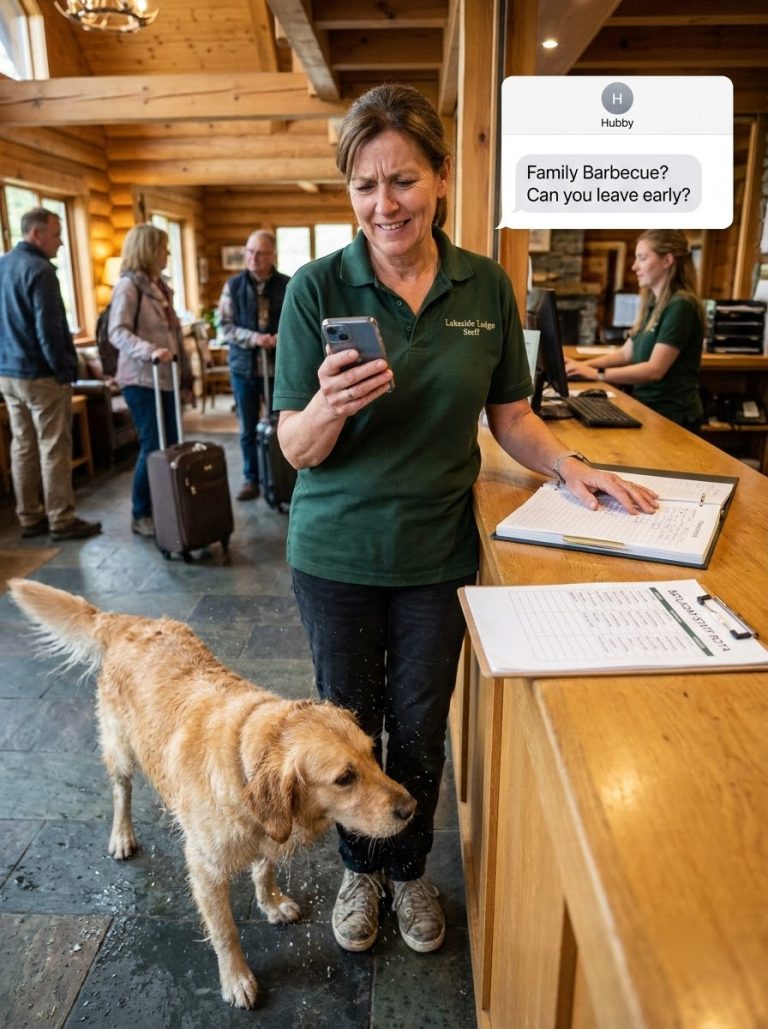
Thursday night, she almost texted the family group with hotel details.
Instead she wrote:
Out of town Saturday night with Marcus. Back Sunday. Don’t burn the house down while I’m gone.
She stared at the message.
Too much? Too little?
Then she realized no one had asked.
She deleted the second sentence and wrote:
Going to the Lakeview music festival Saturday with Marcus. Back Sunday. Evan, yes, he is the same Marcus you met at Easter.
She sent it.
Evan replied:
I behaved very normally at Easter.
Molly:
You asked him what kind of tires he has.
Evan:
Safety conversation.
Rebecca:
I regret telling either of you anything.
She smiled for five minutes.
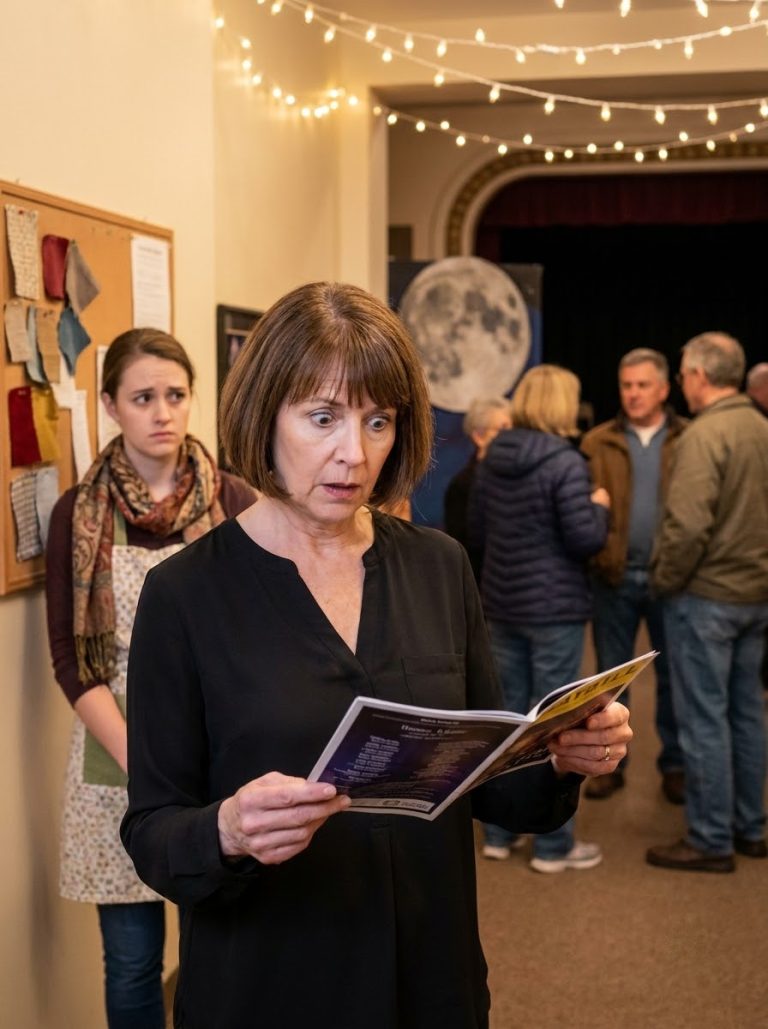
The festival was hot, crowded, and louder than Rebecca had remembered live music being when she was thirty. She and Marcus ate food from trucks, sat on folding chairs, and argued about whether a singer’s encore was self-indulgent.
At midnight they walked back toward the hotel.
Marcus reached for her hand.
Rebecca took it.
Her phone was in her bag.
No one knew exactly where she was.
The thought no longer felt rebellious.
It felt correctly sized.
Sunday afternoon, Rebecca arrived home at 1:12.
Not in the morning.
The coincidence amused her.
She unlocked the door and stood in the entryway.
For two years, that sound had generated information somewhere else.
Now the only phone that buzzed was hers.
Front Door Unlocked.
She looked at the notification.
Then dismissed it.
In the kitchen she unpacked a small paper bag containing a ridiculous festival mug she had bought for Evan.
She set it on the counter.
A minute later she opened the family thread.
Had a good weekend. Bought your brother something ugly.
Molly replied instantly.
Proof or it didn’t happen.
Rebecca took a photograph of the mug.
She did not photograph the hotel.
She did not send a timestamp.
She did not explain when she arrived.
She shared the part she wanted to share.
The rest stayed inside the life that had happened while no one was watching.
On Monday after the festival, Rebecca found the ugly mug still on her counter.
She wrapped it in newspaper and drove to Evan’s apartment after work.
He opened the door wearing socks that did not match.
“Emergency?”
“Gift.”
He unwrapped the mug.
It was orange, enormous, and printed with a badly drawn saxophone.
“This is hideous.”
“I know.”
He put it immediately on the shelf beside his coffee maker.
Rebecca looked around his apartment.
She had a key to this place.
Evan had given it to her when he moved in three years earlier.
She had used it twice: once when he locked himself out, once to water plants during a trip.
Rebecca suddenly wondered whether he knew she had never entered without asking.
“Do you want your key back?” she asked.
Evan frowned.
“What key?”
“To your apartment.”
“No. Why?”
“Because I have access.”
He understood.
“Mom, you don’t use it.”
“Exactly.”
He nodded.
“Keep it.”
Rebecca did.
The conversation lasted less than a minute.
It taught her something the app never had: trust was not the absence of access. It was what a person did after access was given.