I Found “Repayment” Transfers to My Late Husband’s Estranged Sister—Then She Told Me What He Had Never Told Me

PART 5
Emily came for dinner Wednesday and noticed the red binder before Karen decided whether to mention it.
“Wow,” she said, setting her purse on a chair. “The recession scrapbook.”
Karen looked at her.
“You remember this?”
“I remember you carrying it around like a football coach.”
Emily was thirty-five now, a physical therapist with two children and a tendency to make jokes when she sensed emotional weather changing.
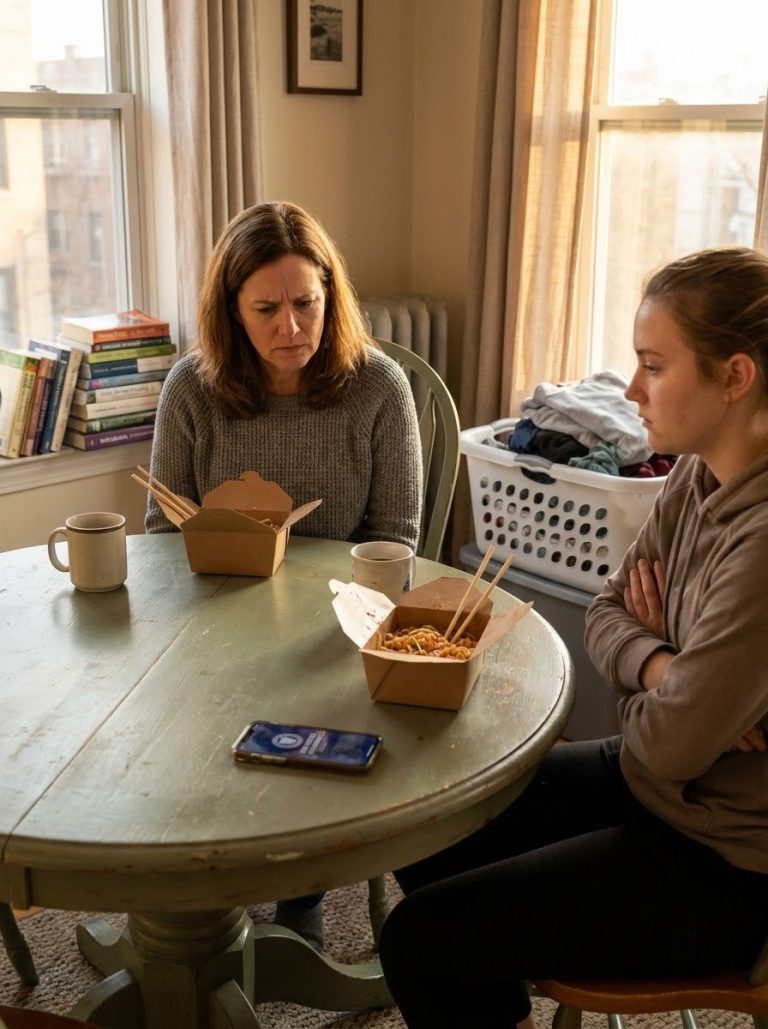
Karen served soup.
They ate for ten minutes before she asked, “What do you remember about Aunt Marlene that year?”
Emily stopped with her spoon halfway to her mouth.
“That is random.”
“Is it?”
“Considering you two have spoken maybe six times since Dad died, yes.”
Karen waited.
Emily set down the spoon.
“I remember Dad being mad at her.”
“Why?”
“Money.”
“What about money?”
“I don’t know. She offered to help. He thought she was holding it over him.”
Karen felt the old story appear perfectly intact in her daughter’s voice.
“Did you hear her say that?”
“No.”
“Did Dad tell you?”
Emily frowned.
“Probably.”
“When?”
“I was twenty-one, Mom.”
“You were home for Easter.”
Emily looked at her more carefully.
“Yes.”
“What do you remember?”
The humor left her face.
“They fought on the porch.”
“What did you hear?”
“Not much.”
“Anything?”
Emily thought.
“Dad said she didn’t get to decide what our family needed just because she had money.”
Karen’s chest tightened.
Same argument. Same frame.
“Anything else?”
Emily looked at the binder.
“Mom, what is this?”
Karen told her about the transfers.
Not the conclusions.
The records.
The label.
The repayment schedule.
The canceled check.
Emily listened without interrupting.
When Karen finished, Emily said, “Aunt Marlene gave Dad eighteen thousand dollars?”
“Yes.”
“During the layoff?”
“Yes.”
“And you did not know?”
“No.”
Emily leaned back.
For several seconds, Karen watched her daughter lose one version of childhood and resist replacing it too quickly.
“Dad always said the severance saved us.”
“I know.”
“He said he stretched it.”
“I know.”
Emily looked angry now.
“At her?” Karen asked.
“I don’t know.”
“That is allowed.”
“Are you angry at him?”
Karen looked at the empty chair that had once been Paul’s default place.
“I don’t know.”
Emily gave a humorless laugh.
“Also allowed?”
“Yes.”
They cleared dishes together.
At the sink, Emily said, “There is something else.”
Karen waited.
“Dad used to tell me Aunt Marlene wanted to control whether I stayed at State or transferred closer to home.”
Karen turned.
“When?”
“That same spring.”
“Marlene never talked to me about your college.”
“She didn’t talk to me either.”
“What exactly did Dad say?”
Emily dried her hands.
“He said she thought if she was going to help financially, I should make cheaper choices.”
Karen stared at her.
“Did he say she had already helped financially?”
“No. He made it sound like she was offering money with conditions.”
There it was.
A detail Karen had forgotten because it had never seemed important.
Paul had not merely told Karen his sister attached strings to money.
He had told Emily too.
And he had done it while Marlene’s money was already in the family account.
Karen sat down again.
Emily said, “Maybe he misunderstood her.”
“Maybe.”
“You do not sound like you believe that.”
“I am trying not to believe ahead of what I know.”
“That sounds like work Mom.”
“It is keeping home Mom out of trouble.”
Emily sat across from her.
“Please don’t make Dad into a fraud.”
The request landed hard.
Karen looked at her daughter.
“I have not.”
“I know. I just—he cannot answer now.”
“No.”
“And Aunt Marlene can.”
“Yes.”
“That feels unfair.”
Karen understood.
Death created an imbalance no living person could correct. Every surviving voice gained power simply because it remained available.
“That is why I am using records,” Karen said. “And why I am not asking you to pick a side.”
Emily nodded, but her eyes filled.
“I liked the story where Dad got us through it.”
Karen swallowed.
“So did I.”
The sentence was the most honest thing either of them had said all night.
Before leaving, Emily touched the binder.
“Do you remember what I said to him when I got my first real job?”
“No.”
“I paid for dinner and told him it was because he had kept me in school when things were bad.”
Karen remembered the dinner now.
Paul had cried.
At the time, the tears had looked like pride.
Karen wondered what else had been inside them.
She hated herself for wondering.
Then she corrected that too.
Wondering was not an accusation.
It was simply the cost of learning the story had more people in it than she knew.