She Earned The Choir Solo—Then Learned They Still Expected Her To Make The Younger Singer Sound Better

PART 1
Claire Bennett noticed her solo had disappeared because Tessa Morgan was standing on Claire’s strip of blue tape.
The choir used painter’s tape on the rehearsal risers because Martin Hale believed adults were easier to organize when the floor told them where to stand. For most of eleven years, Claire had stood on the second riser, two feet left of the piano. Her tape said CLAIRE – A2.
That Tuesday, Tessa’s sneaker covered the C.
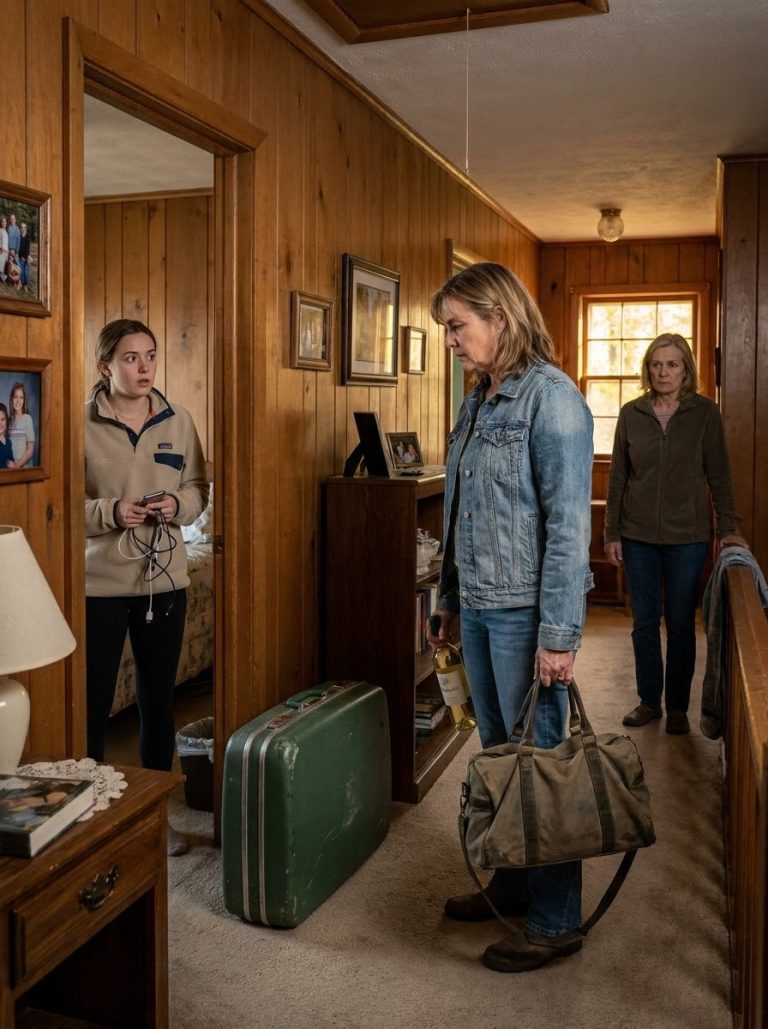
Claire stopped at the bottom of the risers with her black concert folder tucked against her ribs.
“Am I lost?” she asked.
Tessa looked down, then up. “Martin moved me for the feature.”
“The feature.”
“The benefit piece.”
Claire opened her score.
For three weeks, “Harbor Light” had carried a penciled bracket around sixteen measures and CLAIRE SOLO in Martin’s square handwriting. She had auditioned in August. Afterward he had smiled and said, “That’s the sound. Don’t fuss with it.”
Now the bracket was erased badly enough that she could still see the gray pressure marks. TESSA was written above the staff.
Martin came through the side door carrying a paper cup and a coil of extension cord.
“Good, everybody’s here,” he said. “Altos, let’s get settled. Claire, I want you directly behind Tessa tonight.”
Claire held up the score. “Before we get settled.”
He saw the page. His expression changed by less than an inch.
“Right. I meant to catch you.”
“When?”
He lowered the extension cord onto a chair. “Before rehearsal.”
“We are currently inside rehearsal.”
Several people became interested in their water bottles.
Martin had directed Harbor City Community Choir for fourteen years and could silence fifty-four amateur singers by lifting one eyebrow. Claire knew the voice he used when he wanted a private problem to become small in public.
“Let’s take five minutes after warm-ups,” he said.
“No. Tell me now.”
Tessa stepped off the blue tape. “I can move.”
“This isn’t about where you stand,” Claire said.
Martin rubbed the side of his coffee cup. “We made a small adjustment to the benefit program.”
“We?”
“The programming team and I.”
Claire waited.
He sighed. “You said last spring you wanted this year to feel lighter.”
“I said I didn’t want to chair the spring auction again.”
“And after everything with the divorce, I thought—”
“My divorce was two years ago.”
“I know.”
“You thought what?”
He glanced at the choir. “Claire.”
There was the warning in her name. Be reasonable. Be generous. Do not turn a volunteer rehearsal into a scene.
She had built a second life around being exactly those things.
At fifty-two, Claire sold kitchen and bath fixtures four days a week, sang Tuesdays, and spent more evenings alone than she had expected to enjoy. Her marriage had ended without a villain; she and Eric had simply exhausted each other.
After the divorce, choir had been one place Claire did not have to explain herself. She showed up, learned the music, helped the alto beside her find an entrance. Martin trusted her.
Apparently trust had developed management privileges.
“You told people I asked to step back?” Claire said.
Martin’s shoulders dropped. “I said you were happy in the ensemble.”
“Was I in the room when I said that?”
“You’ve always cared more about the group than a line in a program.”
“That is not the same sentence.”
Tessa looked stricken. “Martin told me you offered it.”
Claire turned to her.
“He said you thought the benefit needed a younger sound up front,” Tessa said. “I thought it was your idea.”
Claire laughed once. It came out sharper than she intended.
Martin said, “That is not exactly what I said.”
“Then this should be easy,” Claire replied. “What exactly did you say?”
June, at the piano, lifted her hands off the keys.
Martin looked around the room. “Can we not make Tessa stand here while we litigate wording?”
“I’m not litigating anything. I’m asking why the solo I earned is in someone else’s score.”
He took a breath.
“The benefit committee wants to broaden the audience,” he said. “We are using some newer faces in the promotional material. Tessa photographs well, she has a fresh energy, and the arrangement sits nicely in her range with support.”
“With support from whom?”
Silence.
Martin pointed toward the risers. “Can we sing first and talk after? Claire, I need you behind Tessa on the feature. Your entrance will settle the altos, and you can take the lower harmony under her.”
Claire looked at the gray ghost of her own name on the page.
Then she looked at the strip of blue tape under Tessa’s shoe.
Martin raised both hands to start warm-ups.
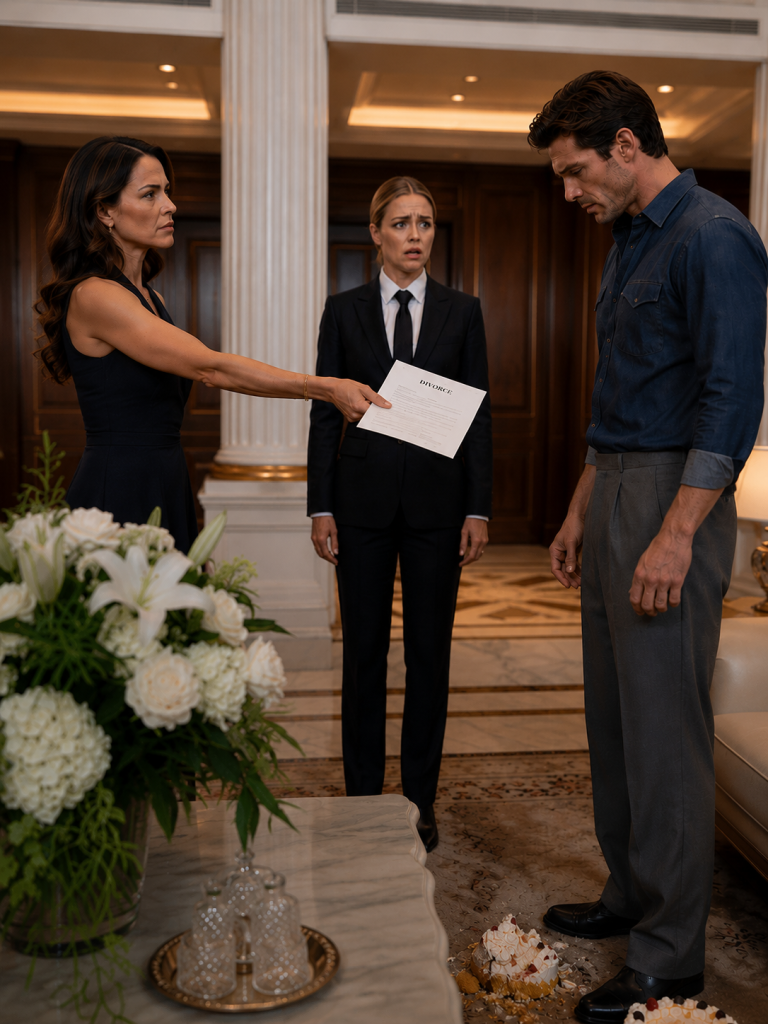
“Just so we’re clear,” Claire said, loud enough for the room, “I did not ask to step back.”
Martin’s hands stayed in the air.
“I did not offer my solo to Tessa. I did not ask anyone to tell the choir I preferred less visibility.”
Tessa moved fully off Claire’s tape.
Martin’s face tightened.
“Claire, I was trying to protect what you said you wanted.”
“No,” she said. “You were trying to make what you wanted sound like something I chose.”
Nobody reached for a water bottle now.
Claire stepped onto the second riser and opened her folder.
“If you want to change the solo, change it. You’re the director. But don’t use my voice to announce a decision I didn’t make.”
Martin lowered his hands.
For the first time in eleven years, Claire watched him search for the right starting note and fail to find it immediately.