My Pickleball Team Said I Chose to Step Back—Then I Found My Winning Match Had Quietly Disappeared

PART 1
I found out I had retired from competitive pickleball while holding a paddle in one hand and a paper plate of barbecue in the other.
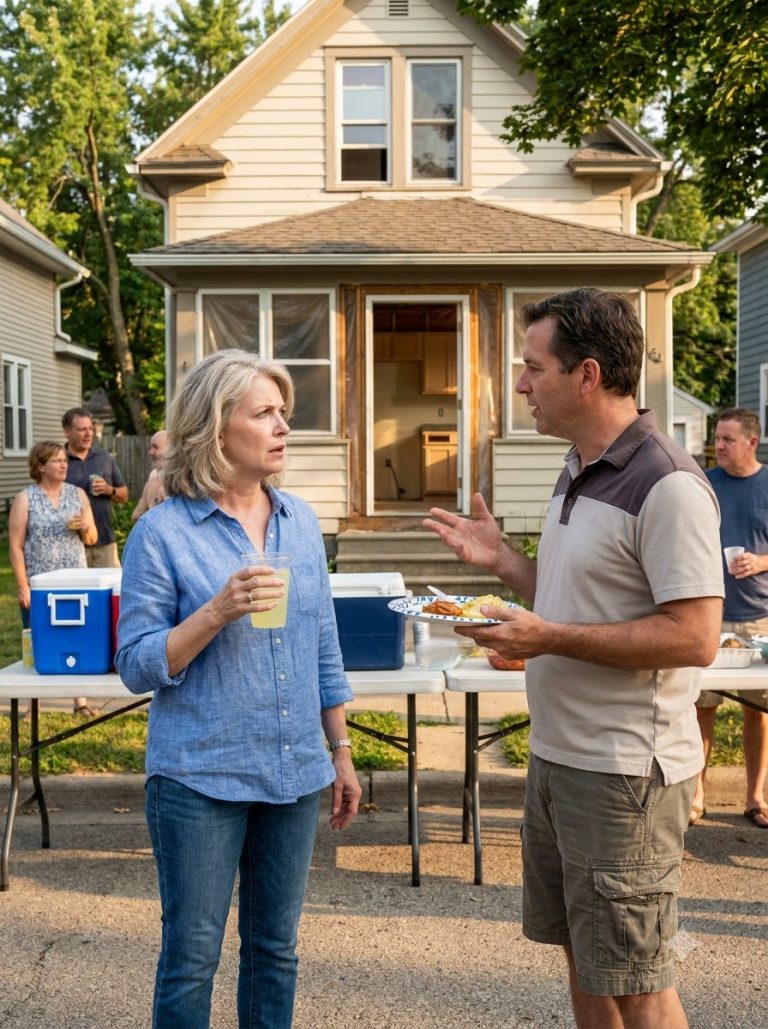
The Riverside Community League held its fall kickoff beside Courts One through Six, where every conversation competed with plastic balls and charcoal smoke. I noticed the roster board after twenty minutes.
My name was not where it had been all summer.
Competitive Women — Division B had eight names printed in two neat columns. Mine was missing.
Below that was a second sheet.
Social Play / Flexible Substitutes.
There I was.
VALERIE SHAW — SOCIAL / LIMITED FALL AVAILABILITY.
I stared at the line long enough that someone behind me said, “Valerie, I think Marcy moved the serving spoons.”
It was my doubles partner, Denise Hall, carrying a bowl of coleslaw and avoiding my eyes.
“Did Marcy move me too?” I asked.
Denise stopped.
That told me more than an answer would have.
At fifty-five, I had learned that people often revealed the hard part before they said anything useful. Their face arrived first. Then the explanation caught up.
“Val,” Denise said, lowering her voice, “I thought you knew.”
“Knew what?”
“That you were scaling back this fall.”
I looked at the board again.
“I’m not.”
She shifted the bowl against her hip. “Marcy said your work travel was getting heavy.”
“I have one client trip in October.”
“And that you wanted more social play.”
“I have never used the phrase social play in my life.”
Denise gave a weak smile.
I did not.
Two years earlier, after my divorce became final, I had joined Riverside because I wanted one thing with no history attached to it. Pickleball had seemed absurd enough to qualify.
I liked the clean logic of a serve that landed in or out, and that people learned me first by how I played rather than by how my marriage ended. I had not become a star. I had become reliable.
All summer, I had worked up the Riverside ladder from the bottom half of Division C into the middle of Division B. The previous Saturday I had played an official ladder block against Jean Porter, who held the eighth competitive spot. Denise had watched from the fence.
I won 11–8, lost 7–11, then won the third game 11–6.
League rules said a challenger who won the block earned the right to request a roster challenge before the next season locked.
The fall roster was supposed to lock tonight.
I turned to Denise.
“What happened to my match with Jean?”
She blinked. “What do you mean?”
“Did it count?”
“Of course it counted.”
“Then why am I on the social sheet?”
“I don’t know.”
This time I believed her. Or at least I believed she did not want to be the person who knew.
Marcy Bell was at the far end of the shelter arranging name tags in alphabetical rows. She had captained Division B for six years and had the kind of memory that could tell you who preferred the left side, who hated playing into the sun, and whose husband had knee surgery last winter. She was friendly in a managerial way. Nobody entered a tournament without Marcy knowing about it first.
I set down my plate and crossed the shelter.
“Marcy.”
She looked up and smiled. “There you are. I was just going to find you.”
“That is convenient.”
Her smile tightened by one millimeter.
I pointed toward the roster board.
“Why am I listed as social?”
“Oh.” She sounded relieved, which irritated me more than surprise would have. “That. I thought we covered it.”
“We did not.”
“Your fall availability looked uncertain, and I did not want you feeling pressured to commit.”
“I have not sent you my fall availability.”
Marcy’s hand stopped over a stack of name tags.
For a second, neither of us spoke.
Then she said, “You mentioned travel.”
“I mentioned one client trip during a conversation about hotels.”
“You also said work had been busy.”
“Work is always busy.”
“Valerie, this is not a punishment. Social players can sub into competitive nights.”
“I did not ask to become a substitute.”
She sighed, gently, as if I were making a simple thing tiring.
“I was trying to give you flexibility.”
“By taking away a choice I had not made?”
A few people nearby had gone quieter. I did not raise my voice. That almost made it worse.
Marcy glanced toward them and lowered hers.
“We can talk after kickoff.”
“I would like to talk now about one specific thing.”
Her face hardened slightly.
“My ladder match with Jean last Saturday. Where is the result?”
“It was a good match.”
“That was not my question.”
Marcy picked up a pen and set it down again.
“The coordinator had not finalized the block.”
“The block was on the official schedule.”
“We can sort out the technicality.”
I looked at her.
There are words people use when they hope you will accept fog as an answer.
Technicality was one of them.
My phone buzzed in my pocket. An email notification from Riverside League.
SUBJECT: FALL PLAYER STATUS CONFIRMATION.
I opened it.
The message thanked me for choosing Social / Flexible Substitute status for the fall season and said the change had been submitted by my division captain on August 28.
August 28 was four days before the league had even sent players the fall availability form.
I turned the screen toward Marcy.
“You submitted this before anyone asked me for my schedule.”
She looked at the date.
Then at me.
Behind us, someone called that the food was ready.
Marcy said, “Valerie, I can explain.”
I believed her.
What I no longer believed was that the explanation had anything to do with my calendar.