My Professional Association Put Me on the Presidential Ballot—But I Had Never Agreed to Run

PART 1
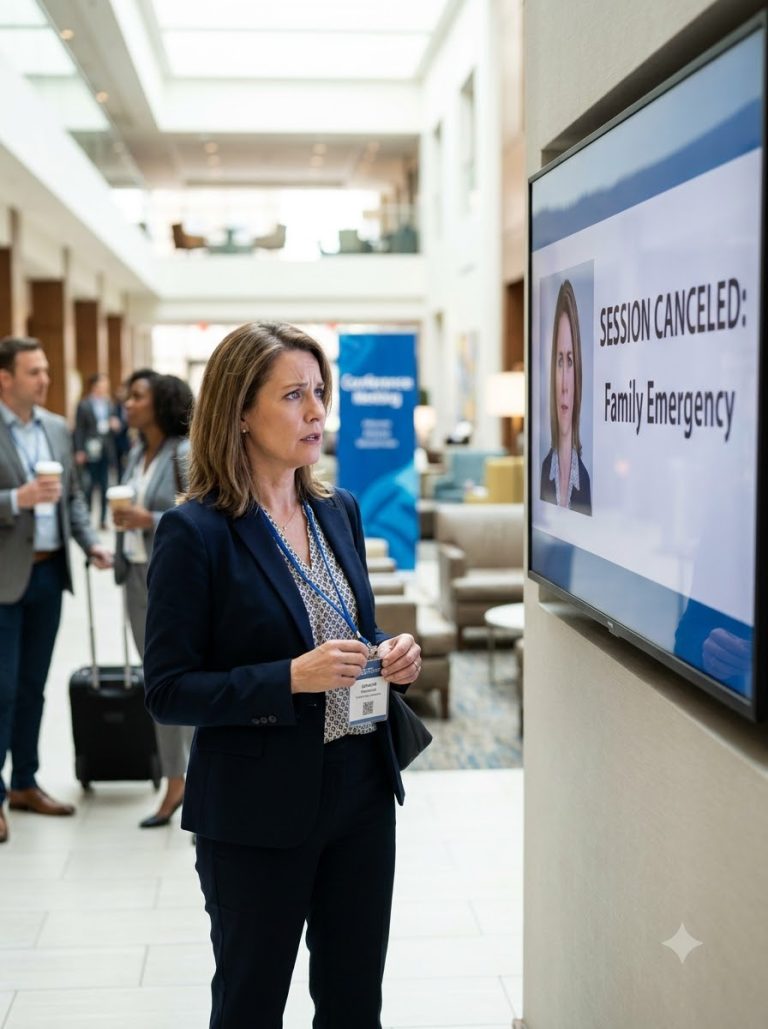
Nora Whitaker found out she was running for president because a volunteer stapled a blue CANDIDATE ribbon to her conference badge.
She had just checked in for the annual meeting of the Central Ohio Learning Professionals Association, a three-day event held every October in a downtown Columbus hotel where the carpet looked designed to hide coffee. Nora was balancing her tote bag, phone, and a paper cup when a college intern behind the registration table smiled at her name.
“Oh, congratulations,” the young woman said.
Nora smiled back automatically. “For what?”
The volunteer reached into a plastic bin, pulled out the ribbon, and clipped it under Nora’s name badge.
PRESIDENTIAL CANDIDATE.
Nora looked down at it.
Then up.
“I’m sorry. I think you have the wrong Nora Whitaker.”
The volunteer laughed. “I hope not. You’re on the ballot preview.”
There were moments when confusion arrived before emotion. Nora had learned to respect them. At fifty-three, after twenty-seven years of corporate training rooms, client meetings, and one marriage that had ended without anyone throwing a plate, she knew that the first explanation offered in an awkward moment was often the least useful one.
“Can I see the preview?” she asked.
The volunteer’s smile faded. “Sure.”
She pulled a half-sheet from a folder.
Under PRESIDENT, three names appeared in alphabetical order.
GREG HOLLIS — incumbent
DIANE MERCER — vice president, governance committee
NORA WHITAKER — member engagement committee
Nora read the list twice.
She had agreed to serve on the member engagement committee.
She had not agreed to run for president.
In fact, six weeks earlier, when Elaine Porter, chair of the nominating committee, had called and asked whether Nora would be willing to “help more next year,” Nora had been careful.
“I’m happy to serve on member engagement,” she had said. “I’m not looking for an officer role.”
Elaine had answered, “Understood. We need steady people wherever we can get them.”
Nora remembered the sentence because it had sounded like praise.
Now it sounded like paperwork.
“Could I keep this?” Nora asked.
The volunteer handed her the page.
“Of course. I’m sorry if—”
“You didn’t do anything wrong.”
Nora unclipped the ribbon.
The volunteer looked alarmed. “Do you need that for the candidate forum?”
“I don’t know yet.”
That was the truth.
Nora moved away from registration and stopped beside a tall window overlooking High Street. Commuter buses slid through a gray Thursday morning. Inside the hotel lobby, people she had known for years hugged, compared travel delays, and complained about the coffee.
Her phone buzzed.
A text from Mark Feldman, a former colleague.
President? Look at you.
Another from Simone Alvarez, who chaired the conference program committee.
You kept that quiet!
Nora typed neither yes nor no.
Instead she opened her email and searched “nomination.”
The first result was from Elaine Porter, dated August 22.
Nora—thank you again for being willing to help however needed. Member engagement will be stronger with you involved.
That was the message Nora had answered.
Happy to help wherever I can within the committee. I don’t have bandwidth for an officer role, but I’d be glad to take on the member listening sessions.
She read her own words slowly.
Within the committee.
I don’t have bandwidth for an officer role.
Not ambiguous.
She searched “president.”
No invitation. No acceptance form. No candidate questionnaire.
A new message arrived from Elaine.
Saw you checked in! Can we grab ten minutes before lunch? I know the badge surprised you. Nothing to worry about.
Nora stared at that last sentence.
Nothing to worry about was a phrase people used when they had already decided what should count as a worry.
She called the association office.
The staff coordinator, Ben, answered from somewhere noisy.
“Ben, it’s Nora Whitaker. Quick question. Do you have a written acceptance from me for the presidential nomination?”
There was a pause.
“I’m not at my desk.”
“I can wait while you check.”
Another pause.
“I can check after registration closes.”
“Please do. I’m looking at a ballot preview with my name on it.”
Ben lowered his voice. “I assumed Elaine handled candidate confirmations.”
“That’s what I’m trying to establish.”
“Okay. I’ll pull the folder.”
Nora ended the call.
Across the lobby, a man raised his coffee cup toward her.
“Madam President!” he called.
Three people laughed.
Nora lifted one hand because ignoring him would have turned a mistake into a scene.
Then she looked at the blue ribbon in her palm.
For years, people in the association had described Nora as steady.
Reasonable.
Good in a room.
Not political.
She had liked those words.
Standing by the hotel window with her name on a ballot she had never joined, she began to wonder what else those words had made easy for other people to decide.
Her first instinct was to wait for Elaine and let someone else explain it. That was how Nora usually handled association messes: give people room to correct themselves before assigning motive. But waiting now meant letting the badge, the congratulations, and the printed preview keep doing work in public.
She opened a new note on her phone.
Question one: Who nominated me?
Question two: Who recorded my acceptance?
Question three: When was my name added to the presidential slate?
She saved the note.
Whatever this was, she was not going to solve it by being agreeable faster than she could be accurate.